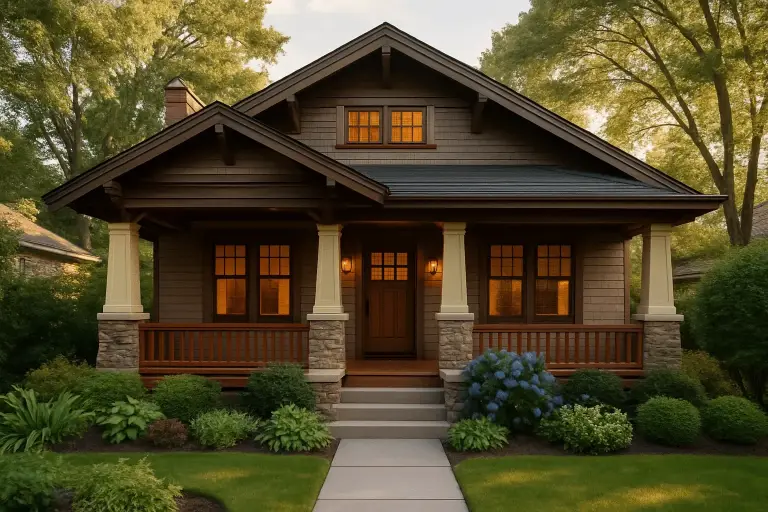
A whole home renovation in Massachusetts reworks most or all of a house in one project: the layout, kitchen, bathrooms, floors and trim, and often the wiring, plumbing, heating and insulation behind the walls. The planning steps are the same anywhere. What Massachusetts adds is its own set of rules: contractor registration under the Home Improvement Contractor law, a statewide building code enforced by your town, a strict lead law for older homes, local historic districts, Title 5 septic rules and an energy code that can differ from town to town. This guide walks through those rules, plus the timeline, where you will live during the work and what real projects in the Merrimack Valley and North Shore have cost.
Norman Builders is a design-build home builder and remodeler founded in 2007 by Ryan Norman, with an office in Newton, NH. We renovate homes in Andover, North Andover, Boxford, Haverhill, Groveland, Newburyport, Amesbury and nearby Massachusetts towns. The projects and reviews named below are our own. This is general information, not legal advice: confirm the rules for your house with your town's building department.
Why Renovate the Whole House at Once?
- Design continuity: one plan covers floors, trim, doors and finishes, so a new kitchen does not make the rooms next to it look dated.
- Layout: when the real problem is the floor plan, fixing one room at a time can mean opening the same walls twice.
- Systems: wiring, plumbing, ductwork and insulation are easiest to replace while the walls are open.
- Staying where you are: the owners of our Haverhill first-floor renovation loved their neighborhood, but the first floor no longer worked for a growing family, so they renovated rather than move.
- Aging in place: wider openings, a first-floor bedroom option or a curbless shower are simpler to build into a full renovation than to retrofit later.
Many Massachusetts homes are very old. They are often structurally sound but were not built for how families live now, which is why so many whole home renovations here start with the layout.
Planning Your Whole Home Renovation in Massachusetts
Set the Scope and Budget First
Write down what has to change, room by room, and what would be nice. Then set the number you can commit, with a contingency for what turns up behind old plaster. We cover the details in separate guides so this one can stay on Massachusetts: how much it costs to renovate a whole house, how to set and manage a whole-house budget, and how to estimate renovation costs.
Design
Design is where the plan, the budget and the house have to agree. In our design-build process that happens in four stages: defining the budget, a conceptual design and floor plan, design development (structure, mechanical, electrical, plumbing and product selections), and final construction plans. Pricing the design as it develops is what keeps a whole home renovation from being redesigned after the bids come in.
Permits
Massachusetts has one statewide building code, and your town's building department enforces it. A whole home renovation usually needs a building permit for the structural and general work, plus separate electrical, plumbing and gas permits pulled by licensed trades, with inspections at stages such as framing, rough wiring and plumbing, insulation and final. Fees are set by each town, so there is no single statewide number. Ask your contractor who pulls each permit and how inspections will fit the schedule.
Timeframe
Our 19-step renovation process guide puts a whole-home renovation at about 4 to 12 months or more, depending on the size of the house, how much is changing, product lead times and what turns up once the walls are open. Design, selections and permits come before construction starts. More on timing below.
Key Considerations for Massachusetts Homeowners
Contractor Registration and Your Contract
Massachusetts requires contractors doing most home improvement work on existing owner-occupied homes with one to four units to register as Home Improvement Contractors (HIC) under Chapter 142A. Whoever supervises structural work generally needs a Construction Supervisor License. Chapter 142A also requires a written contract for covered work and limits the deposit to one third of the contract price, or the actual cost of special-order or custom materials. Registration gives homeowners access to state arbitration and the Guaranty Fund. Our contractor license guide covers Massachusetts and New Hampshire rules, and what goes in a design-build contract covers the contract itself.
Lead Paint and Asbestos
Lead paint is common in homes built before 1978. Under the federal Renovation, Repair and Painting Rule, firms that disturb painted surfaces in those homes must be lead-safe certified and follow lead-safe work practices; Massachusetts runs that program itself through its Department of Labor Standards. Separately, the Massachusetts Lead Law requires the owner of a pre-1978 home where a child under six lives to have the lead hazards corrected. Older flooring, pipe wrap and insulation can contain asbestos, which should be tested before demolition; asbestos removal in Massachusetts is regulated by MassDEP and the Department of Labor Standards. Budget time for testing before the design is final.
Historic Preservation
Under the state's Historic Districts Act (Chapter 40C), towns can create local historic districts. Inside one, most exterior changes visible from a public way, such as windows, siding, porches, rooflines and additions, need approval from the local historic district commission before a building permit is issued. Interior work is usually not reviewed. Check whether your house is in a district before you design the exterior, because the review adds time and can limit material choices.
Septic Systems and Title 5
Many North Shore and Merrimack Valley homes are on septic. Massachusetts' Title 5 rules size septic systems by the number of bedrooms (110 gallons per day per bedroom), so a renovation that adds a bedroom can trigger a septic review or upgrade through your local board of health. Settle the bedroom count early.
Energy Code and Efficiency Upgrades
The parts of the house you alter must meet the energy code your town has adopted. Massachusetts towns use the base code, the Stretch Energy Code or the Specialized Opt-in Code, so ask your building department which applies. A whole home renovation is also the cheapest time to add insulation, air seal and replace windows, and Mass Save, the state's utility-sponsored program, offers home energy assessments and incentives for insulation and heat pumps. Our eco-friendly remodeling ideas guide covers the options.
Weather Considerations
Massachusetts winters shape the schedule. Foundation, framing, roofing and siding are easiest to do before the ground freezes, and the interior work can carry through winter once the house is closed in. Work does not have to stop for snow. George C., whose 120-year-old house in Newburyport we renovated over six months starting in October, wrote: "through the last two and a half months of the job, the men had to sometimes shovel or blow snow out of the way before they could even get into the house to work."
Popular Whole Home Renovation Projects in Massachusetts
Kitchen Remodels
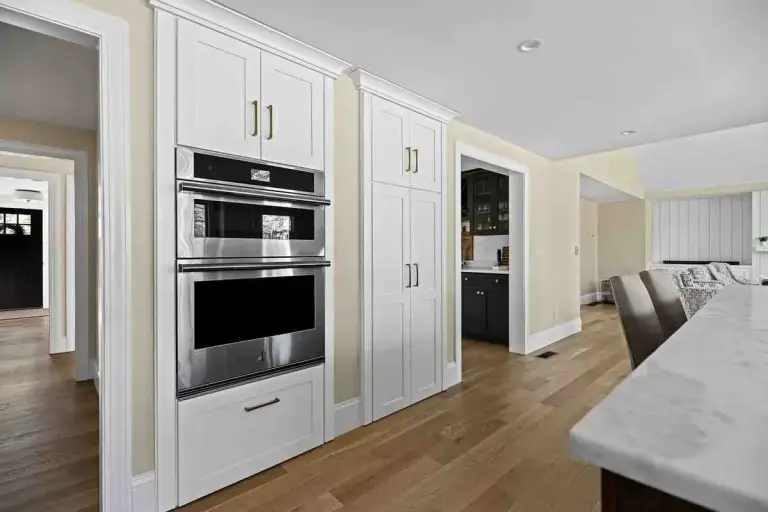
The kitchen is usually the center of a whole home renovation, because moving it or opening it up drives the rest of the layout. In our Andover whole-home renovation the kitchen got an oversized island, a full-height pantry and storage wall and a professional gas range. See kitchen remodeling for how we plan kitchens.
First Floor Remodels
Sometimes the first floor is the whole problem. In Haverhill we removed interior walls to join the kitchen, dining and living areas and enlarged the window openings. In Groveland a first-floor remodel added a large island and peninsula, a custom staircase and a family room with a vaulted ceiling, exposed beams and skylights.
Primary Suite and Bathroom Remodels
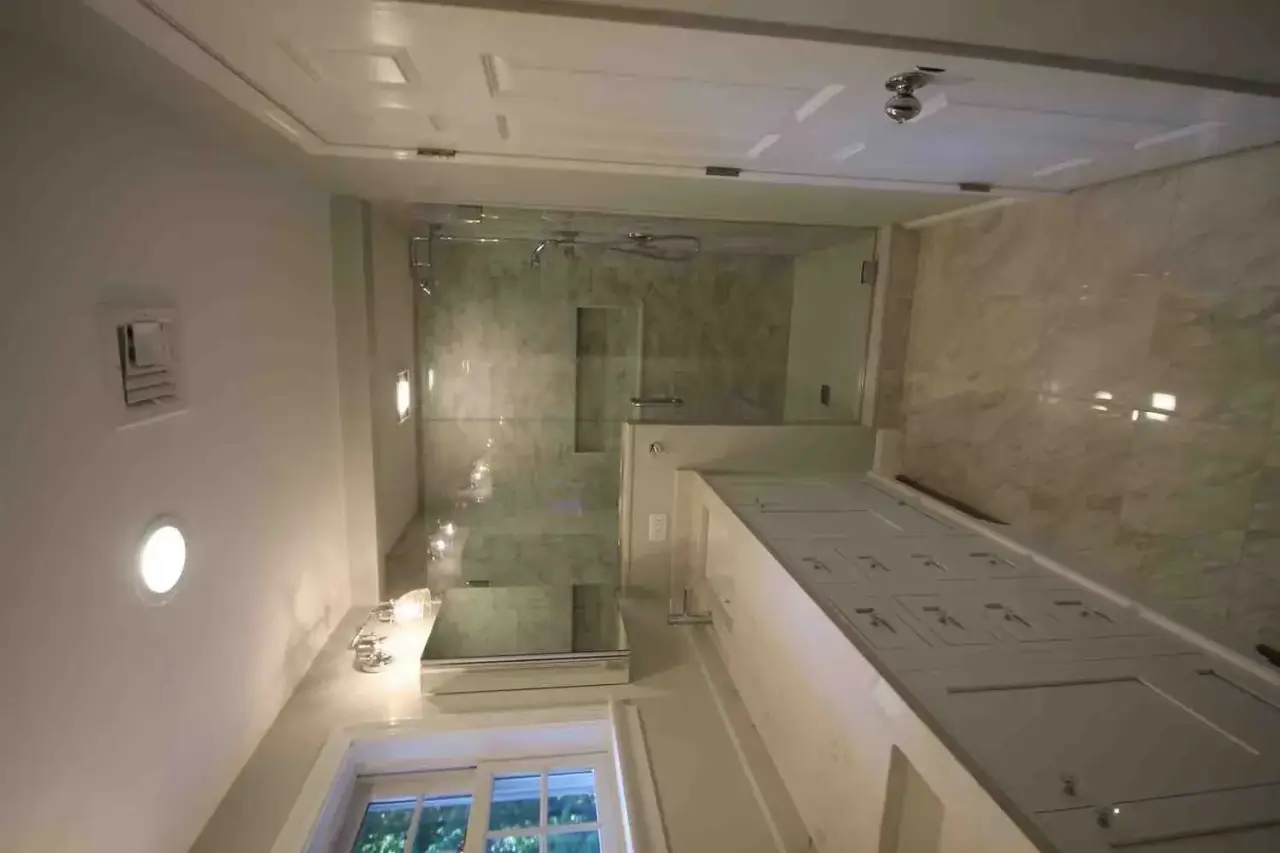
A whole home renovation often includes a primary bath. The Andover project added a curbless glass shower and double vanity; our North Andover whole-home renovation included a white oak vanity, matte black fixtures and a hex mosaic shower. See bathroom remodeling.
Mudrooms, Built-Ins and Floors
Custom mudroom storage, built-ins and one continuous floor tie a renovated house together. The Andover and North Andover projects both used wide-plank white oak and added custom mudroom storage.
Home Additions
If the house is simply too small, a renovation can include an addition. In Amesbury we added two bedrooms and a primary suite, matching the rooflines, siding and window proportions so the new space reads as part of the original house. See home additions.
How Long a Whole Home Renovation Takes in Practice
Our guide's range is about 4 to 12 months or more of construction. Three Massachusetts reviews show how that plays out on real jobs of different sizes:
- Virginia T., Andover: "Norman Builders began our project at the end of June 2014 and completed the work at the beginning of November 2014."
- George C., Newburyport, 120-year-old house: "work never stopped from October 1st thru the end of the job six months later."
- Dan M., Andover, a project with structural work, framing, roofing, plumbing, HVAC and sewer work: "The project was finished ahead of schedule, on budget."
Older houses add uncertainty. As George C. put it, "once the walls were opened up there were many obstacles to be negotiated to meet the design specifications." A schedule with some slack, and decisions made before work starts, keeps those surprises from turning into long delays.
Where You Will Live During the Work
For a full gut or a project that takes out the kitchen and baths at once, most families move out. Dan M. wrote: "With two little kids we needed to move out of our house for 4 months." For a renovation done in phases, you may be able to stay, with the work area closed off. Jane P., whose kitchen, laundry and bath renovation we did in Haverhill, noted that "even though the house was disrupted, the workers kept the area clean and neat at the end of every day." Decide this early, because rent or a short-term lease belongs in the budget.
What Our Projects Cost
These are budget bands from our own Massachusetts whole-home and first-floor projects, as published on each case study. They are not quotes; your scope and house will set your number.
| Project | Town | Year | Budget band | Scope |
|---|---|---|---|---|
| Whole-home renovation for modern family living | Andover, MA | 2026 | $1,000,000 | 2,900 sq ft, 4 bed, 2.5 bath: kitchen, pantry wall, mudroom, primary bath, built-ins, wide-plank white oak, energy-efficient windows and doors |
| Luxury whole-home renovation | North Andover, MA | 2023 | $700,000 | 3,000 sq ft, 4 bed, 2.5 bath: kitchen with walnut island, fireplace wall, beverage station, primary bath, mudroom |
| Complete first-floor transformation | Haverhill, MA | 2026 | $250,000 | Walls removed for an open plan, new kitchen, enlarged windows, red oak floors |
| Coastal-inspired whole-home renovation | Andover, MA | 2026 | $200,000 | Opened kitchen, dining and family room, dual islands, fireplace built-ins, powder room, mudroom |
More examples are on our whole-home renovation projects page.
Choosing the Right Contractor for Your Renovation
For a project this size, look for a company that has finished whole-house work in homes like yours, is registered and licensed in Massachusetts, gives you an itemized estimate with clear allowances, names who will run the job, and explains how changes are priced. Our guide to choosing a whole house renovation company goes through each check and the questions to ask.
Frequently Asked Questions
Do I need a permit for a whole home renovation in Massachusetts?
Yes, for almost every whole home renovation. Structural changes, new or moved walls, electrical, plumbing, gas and mechanical work all need permits and inspections from your town. Cosmetic work such as painting usually does not. Your town's building department has the final say.
How long does a whole home renovation take?
About 4 to 12 months or more of construction, according to our renovation process guide, plus time beforehand for design, selections and permits. The Andover and Newburyport client projects quoted above ran about four to six months.
Can I live in my house during a whole home renovation?
Sometimes. If the kitchen, bathrooms and systems are all being replaced at once, most families move out for the heavy phases. If the work can be phased, for example one floor at a time, living at home is often possible with dust control and a working bathroom.
What Massachusetts rules affect an older house?
The most common are the lead rules for homes built before 1978, asbestos testing before demolition, local historic district review for exterior changes, Title 5 if you add a bedroom on septic, and the energy code for the parts you alter.
Ready to Plan Your Renovation?
If you are planning a whole home renovation in the Merrimack Valley or on the North Shore, call Norman Builders at (978) 833-7337 or request an estimate. You can also see how we approach whole-house renovations and read what clients say on our reviews page.