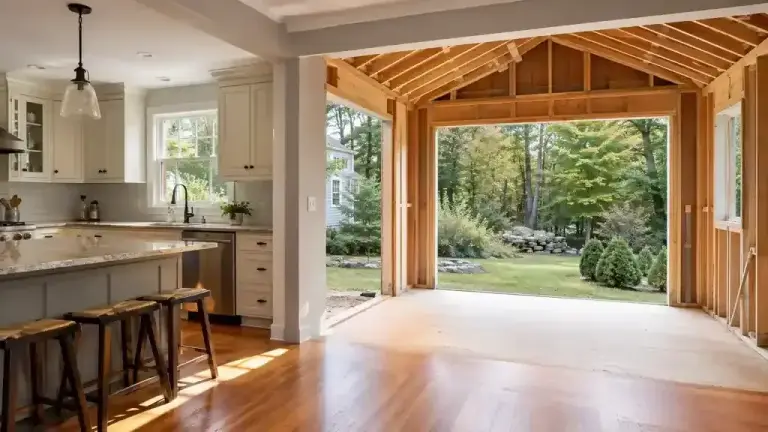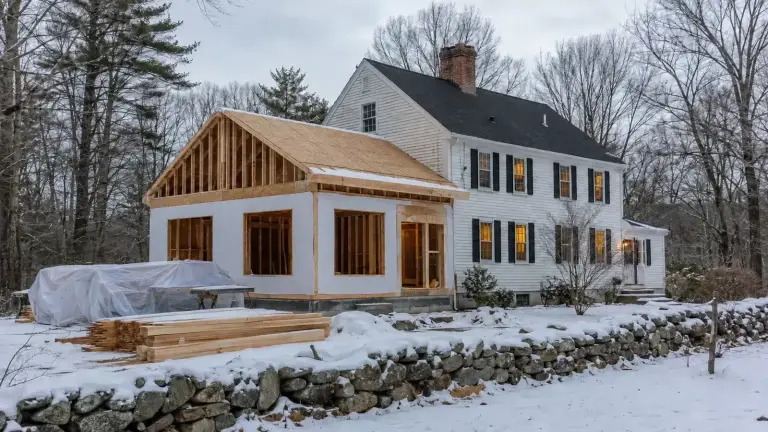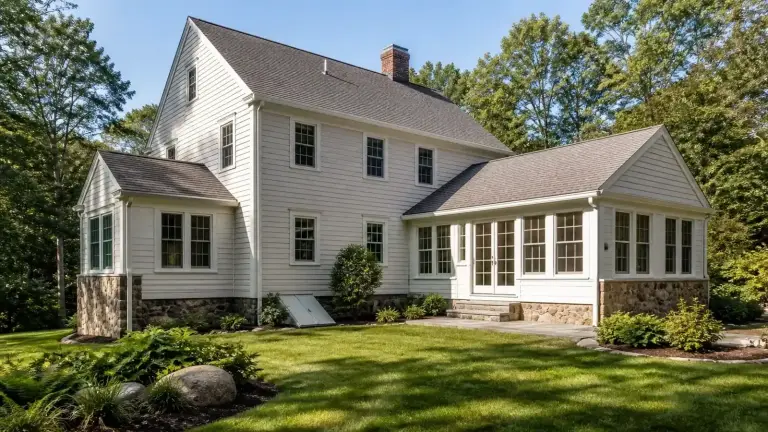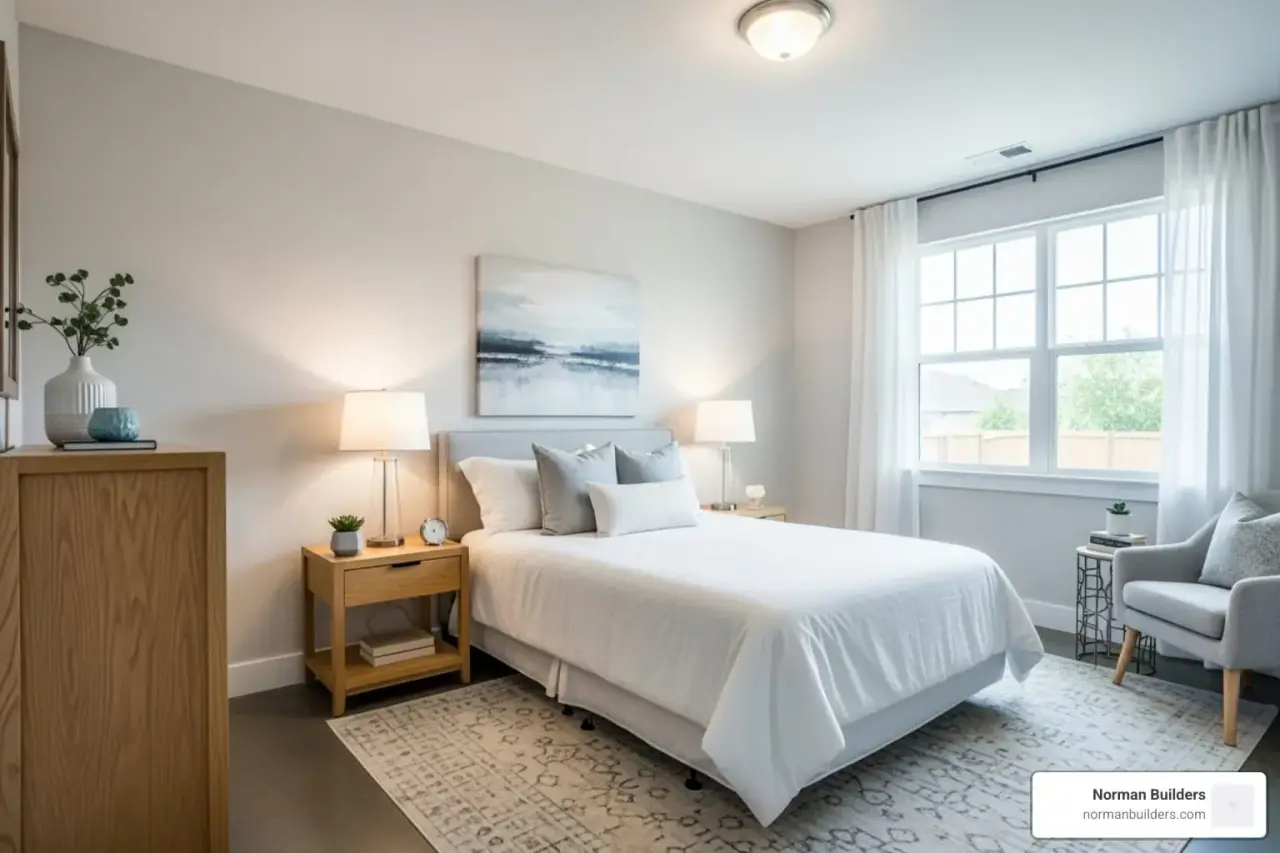
How much does an additional bedroom add to home value? There is no fixed percentage that holds everywhere, and any single number you see online is a national guess. An extra bedroom adds the most value when four things are true:
- It moves your house up a bracket buyers pay for. Going from three bedrooms to four in a neighborhood of four-bedroom homes usually matters more than adding a sixth.
- It is legally a bedroom. Without egress, heat and enough space, an appraiser will call it a bonus room.
- It is above grade. Appraisers report basement space separately from the main living area.
- It looks original. An addition that matches the house reads as part of the home, not a tacked-on room.
The way to put a number on it for your house is comps: recent sales of homes like yours in your neighborhood, with and without the extra bedroom. A local real estate agent or appraiser can pull them. In Massachusetts and New Hampshire there is one more check before you plan: if your house is on a septic system, the system is sized by bedroom count (more on that below).
Norman Builders is a design-build company founded by Ryan Norman in 2007 and based in Newton, NH. We build home additions in the Merrimack Valley, the North Shore, the Seacoast and southern New Hampshire, including a two-bedroom addition and primary suite in Amesbury, MA.
What Legally Constitutes a Bedroom?
Appraisers and buyers will not count a room as a bedroom if it does not meet code. Massachusetts and New Hampshire base their residential codes on the International Residential Code, with state amendments, so check with your town's building department. The common requirements in the 2021 International Residential Code (IRC):
- Emergency escape opening: every sleeping room needs an egress window or door that meets minimum opening sizes. This is the requirement basements and attics most often fail.
- Minimum floor area: habitable rooms generally need at least 70 square feet, which can rule out small attic rooms under sloped ceilings.
- Ceiling height: generally at least 7 feet over most of the room.
- Heat: habitable rooms need a permanent heat source, not a plug-in heater.
- Smoke alarms and wiring to current code.
The IRC does not require a closet, but most buyers expect one, so leaving it out hurts resale.
Septic Systems and Bedroom Count in MA and NH
Many homes in our area are on private septic systems, and both states size those systems by the number of bedrooms. In Massachusetts, the state septic code, Title 5 (310 CMR 15.000), sets residential design flow at 110 gallons per day per bedroom. Adding a bedroom on a septic system usually means a board of health review, and if the existing system is too small for the new count, an upgrade or a new system. In New Hampshire, the Department of Environmental Services (NHDES) approves septic designs, which are also sized by bedrooms.
This matters for value in two ways. A bedroom that the septic approval does not cover can cause problems when you sell, because buyers, lenders and boards of health check the approved bedroom count. And a required septic upgrade can change the cost of the project, so ask your board of health or a septic designer before design starts.
How Much Does an Additional Bedroom Add to Home Value?
It depends on what buyers in your market pay for one more bedroom. In a neighborhood where four-bedroom homes sell for clearly more than three-bedroom homes, a well-built fourth bedroom can capture much of that gap. Where the extra bedroom pushes your house past what anything nearby has sold for, you may not get your cost back.
A bedroom also changes who is interested in the house: growing families, people who work from home, and households with a relative living in.
The Financial Numbers: ROI and Appraisal Value
Appraisers start from finished above-grade square footage and comparable sales. A new addition adds finished square footage that shows up directly in the appraisal. Converting space you already have, like an attic, adds a bedroom without adding much finished area, so the appraisal effect can be smaller even though buyers still value the room.
On cost recovered at resale, the closest regional data point is the 2025 Cost vs. Value Report for New England: a midrange primary suite addition (a 24 by 16 foot bedroom with a bathroom) costs $181,780 and adds an estimated $70,459 in resale value, about 38.8% of its cost. A bedroom on its own is a simpler build than a full suite, but the lesson carries over: most of the payoff is in using the room, not in selling it.
How a Basement Bedroom Impacts Home Value
Basement bedrooms cost less to create but count differently. Under the ANSI Z765 measuring standard, which Fannie Mae requires for most appraisals, below-grade space is not included in a home's gross living area. It is reported separately and usually counts for less than the same space upstairs. A basement bedroom still needs a code-compliant egress window or door, enough light to be livable, and moisture control so the space stays dry. It also counts toward the septic bedroom total.
Breaking Down the Costs: Conversion vs. Extension
There are two ways to add a bedroom: convert space you already have, or build an addition. For prices, see our guide to how much a home addition costs. The short version is below.
Option 1: Converting Existing Space
Converting a basement, attic or garage is usually the cheapest and fastest option because you work inside the existing footprint. The work still adds up: egress windows in basements, dormers and floor reinforcement in attics, and insulation, heat and a raised floor in garages. Plumbing for a new bathroom adds more. If you are considering the space above a garage, read the downsides of a room over the garage first.
Option 2: Building a Home Extension
An addition adds new above-grade square footage, which has the strongest effect on appraisal, but it costs more and needs full plans, permits and inspections. A ground-floor addition needs a new foundation below the frost line, and a roof and siding that match the house. A second-story addition may need the existing structure reinforced. Our bump-out vs. full addition guide compares the two sizes. As a guide, our renovation process guide puts a home addition at 3 to 9 months.
From Our Projects
These are real additions we built. The budget is the band published on each project page, and it covers the whole scope of each job, not only the new bedrooms.
- Two-bedroom addition and primary suite, Amesbury, MA (completed 2025, budget band $700,000). The project added two bedrooms, a primary suite and a primary bath. The family was growing and chose to add on instead of moving. We matched the rooflines, siding and window proportions so the new rooms would feel natural.
- Coastal kitchen and spa bath addition, Andover, MA (completed 2024, budget band $700,000). An addition and renovation with an open kitchen and living area and a primary bath with an oversized walk-in shower.
- Navy and white kitchen addition, Andover, MA (completed 2024, budget band $650,000). An addition built around a large kitchen with a navy island and glass doors to outdoor living.
The Amesbury project is the bedroom addition. The two Andover projects centered on a kitchen and a primary bath, and they show what a full addition with those rooms has cost in our area.
Past clients have also written about how their additions turned out. Debbie White of Hampstead, NH had planned a kitchen remodel and ended up adding an addition and expanding the master bathroom and closet. She wrote: "This project has definitely increased the value of our home." Roland M. of North Andover, MA wrote: "The addition is a real enhancement to our home and well worth the effort."
Maximizing Your Return: Key Factors That Influence Value
- Quality of work: poor workmanship or cheap materials lower value instead of adding it.
- Design continuity: the new bedroom should match the rest of the house in flooring, trim, rooflines and siding.
- Functionality: a bedroom you can only reach through another bedroom turns buyers off. The room should fit a bed and dresser and have a closet.
- Permits, code and septic approval: unpermitted work, or a bedroom count the septic approval does not cover, causes problems at sale and can wipe out the value you added.
Above-Grade vs. Below-Grade: What Buyers Prefer
Buyers generally prefer above-grade bedrooms for light, access and air quality, and appraisers count above-grade space as gross living area. A walk-out basement, with direct access outside, narrows the gap.
How Location and Comps Affect Value
- Local demand: towns with many growing families tend to reward an extra bedroom.
- Comparable sales: if four-bedroom homes in your area sell for more than three-bedroom homes, your addition is likely to capture some of that difference.
- Avoiding over-improvement: every neighborhood has a price ceiling. A local agent can tell you where it is before you design.
Is a Bedroom Addition the Right Move for You?
The decision is about your family as much as resale. Think about why you need the room, how long you plan to stay, your budget, whether your lot and septic system allow it, and whether the house has a sensible place to add on. Our guide to whether home additions are worth it covers the decision in more depth.
When It Makes Financial Sense
- You are moving from two or three bedrooms to the number most homes nearby have. That widens the pool of buyers.
- Demand for larger homes is strong in your town.
- You need a home office, guest room or space for a relative.
- You plan to stay for several years, so you use the room long enough for it to pay off in daily life.
Smart Alternatives to Increase Home Value
- Bathroom remodel or addition: in the same Cost vs. Value data, a midrange New England bathroom addition recoups about 44% of its cost. See our bathroom remodeling page.
- Kitchen renovation: the room buyers look at first. See our kitchen remodeling page.
- Curb appeal: landscaping, paint or a new front door make a first impression for less.
- A family room or office instead of a legal bedroom: if egress or septic rules block a bedroom, the space can still be useful.
Conclusion
An extra bedroom adds the most value when it is legal, above grade, covered by your septic approval, well built and in line with what homes nearby offer. Comps tell you what it is worth in your neighborhood; the build quality decides whether you capture it.
If you are thinking about adding a bedroom, start with our home additions page, browse our addition projects or request an estimate. Our design-build process starts by defining the budget and an estimated project cost before design goes further. Norman Builders is based at 63 Peaslee Crossing in Newton, NH. Call (978) 833-7337.