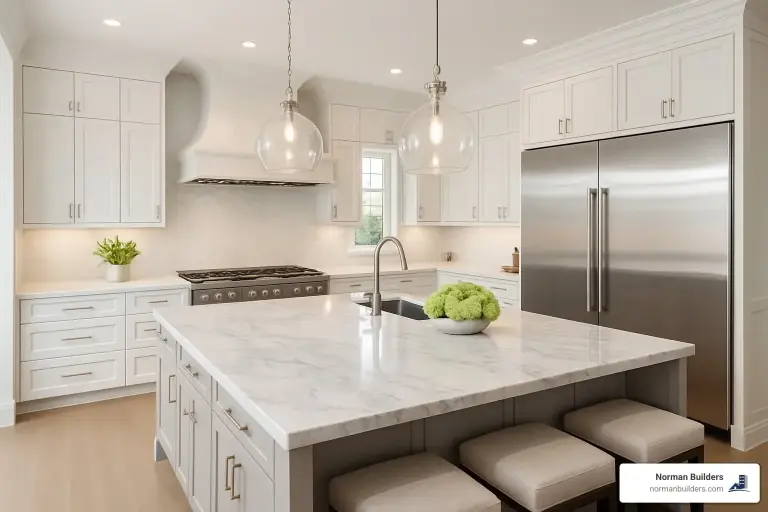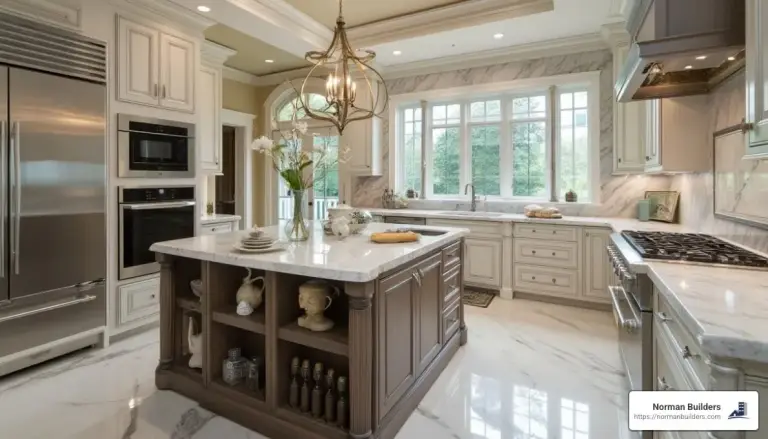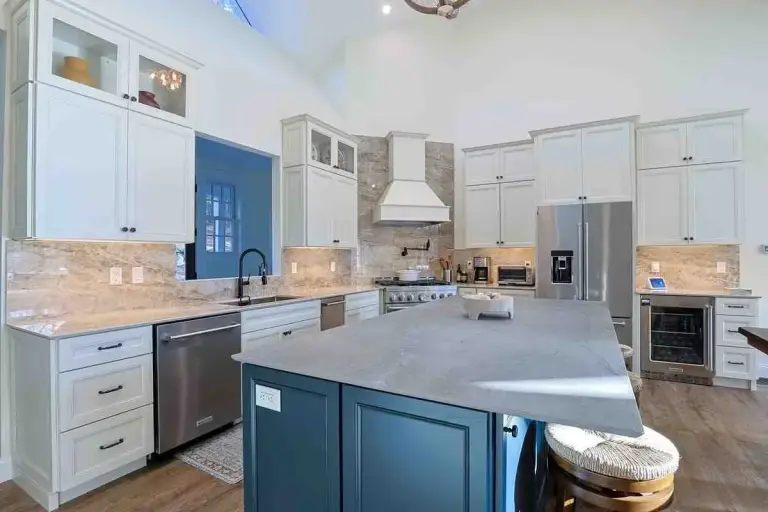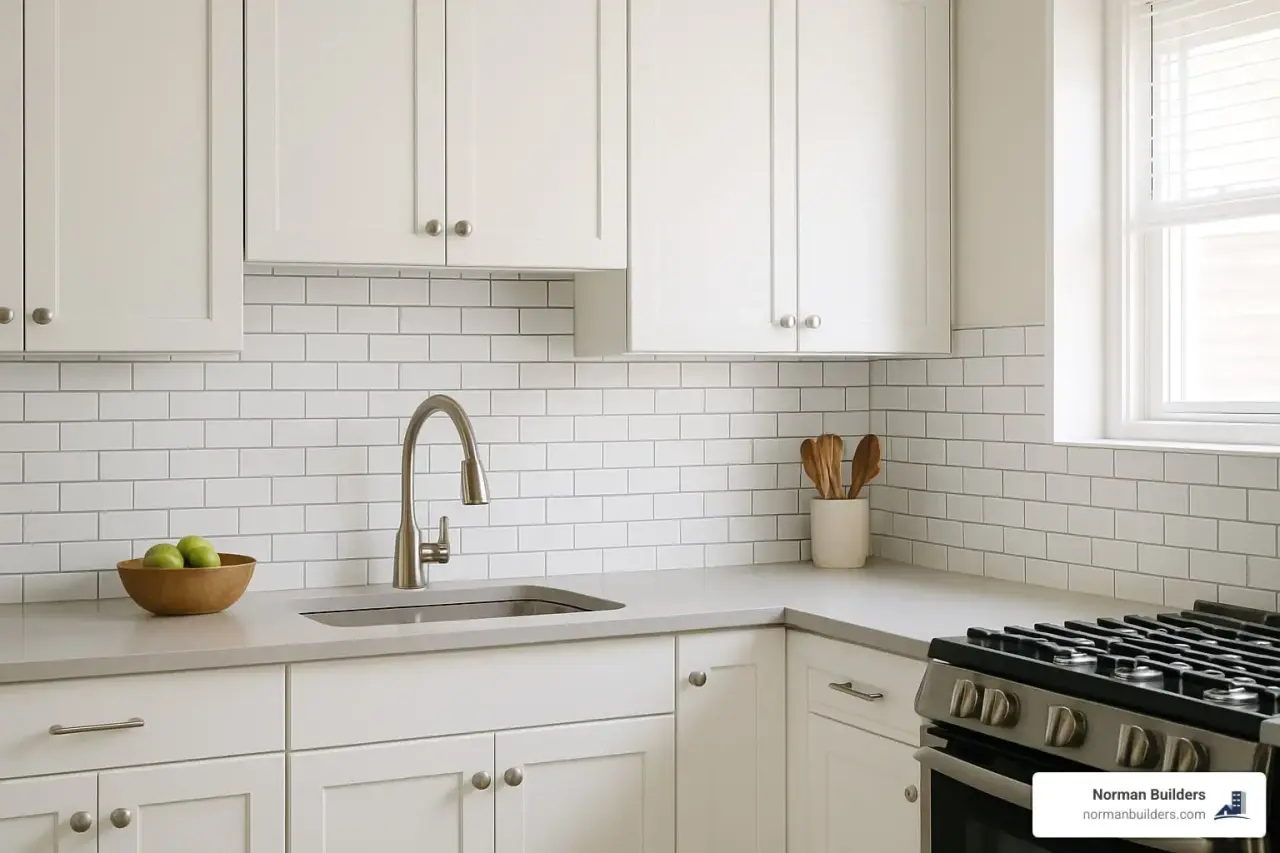
A backsplash makeover is the smallest change that still shows up in the whole kitchen. The wall between the counter and the upper cabinets is at eye level, so new material there changes the room more than its size suggests. This guide covers the materials worth considering, how to choose between them, what is realistic as a do-it-yourself job, and when to bring in a pro. If you are also weighing cabinet work, see our guide to DIY kitchen upgrade ideas for a wider list of projects.
Why a Kitchen Backsplash Makeover Is Worth Doing
A backsplash does two jobs. It is a wall covering that takes grease, steam and water, and it is one of the few places in a kitchen where color, pattern and texture are easy to add. Because the area is small, even a premium material is a modest purchase compared with new counters or cabinets. That is why it is a common first step for an owner who wants a fresher kitchen without a full remodel.
Quick Kitchen Backsplash Makeover Options
- Peel-and-stick tile: fastest to install and needs no grout. Best for light-use areas, and less durable close to a hot range.
- Paint made for tile: a way to change the color of existing tile without removing it. It needs careful cleaning and the right primer, and it will wear sooner than new tile.
- Glass or metal sheets: large pieces with few seams that wipe clean easily. They need accurate cuts around outlets.
- Ceramic or porcelain tile: the long-lasting choice, from simple subway tile to patterned or handmade-look tile.
What a Backsplash Protects
When oil heats on a stovetop, tiny droplets travel farther than most people expect, and they settle on the nearest wall. Steam from boiling pots and from the dishwasher adds moisture. Without a hard, non-porous surface the wall absorbs both, stains, and becomes harder to clean. A tiled or sheet-covered backsplash lets you wipe the surface instead. Building codes and the range manufacturer's instructions set some requirements around the cooking area, so ask your remodeler or the town building department before you finalize materials behind a stove.
Backsplash Materials and Trends
Subway tile and simple ceramic
Subway tile is the long-running default because it fits almost any cabinet color and is forgiving to install. Laid in a herringbone pattern it feels more custom. In our 2026 Haverhill first-floor renovation, the backsplash behind the range is herringbone ceramic tile, with subway tile on the other walls.
Full-height tile
Running tile from the counter to the ceiling gives a clean, continuous wall. The 2024 Navy & White Kitchen in Andover uses full-height soft gray-white subway tile against a navy island.
Natural and textured materials
Brick, stone and handmade-look tile bring warmth and variation. The kitchen in our 2022 Groveland first-floor remodel has an exposed brick backsplash behind the professional-style range, set inside a custom hood surround. Slab or large-format stone has fewer grout lines to clean, but it is a specialty job with careful templating and cutting.
Back-painted glass
Glass can be made in nearly any color and is easy to wipe. It must be cut precisely for outlets and edges, so it is usually installed by a fabricator.
How to Choose a Backsplash
- Start with the counters and cabinets. If the counter has strong veining or pattern, a plain backsplash lets it lead. If the counter is plain, the backsplash can carry the pattern.
- Look at the cooking wall separately. It takes the most heat and grease, so choose a durable, easy-to-clean material there even if you pick something lighter elsewhere.
- Think about cleaning. Small tiles mean more grout lines. Larger tiles and sheet materials mean fewer.
- Check samples in your own light. Look at them on the wall, morning and evening, next to the counter sample.
DIY or Hire a Pro
Peel-and-stick, tile paint, and small ceramic tile on a flat wall suit a patient homeowner. The work is mostly preparation: clean the wall, protect the counters, plan the layout from the center, and keep your cuts tight around outlets. Turn off power at the breaker before you remove outlet covers. Hire a tile setter or a remodeler when the wall is not flat, when it has water damage, when outlets must be moved, or when the material is heavy or fragile, such as stone slab or glass. If the backsplash is part of a larger remodel, it is normally installed after the counters, so one crew can sequence the work correctly. Our kitchen remodeling team handles that sequence on full kitchen projects.
Frequently Asked Questions
Why is a kitchen backsplash makeover worth doing?
The backsplash is a small area that sits at eye level behind the counters and the range. Changing it alters how the whole kitchen looks, and it is a smaller job than replacing cabinets or counters. It also keeps grease, steam and splashes off the wall.
What are some quick kitchen backsplash makeover options?
Peel-and-stick tile, paint made for tile, glass or metal sheet panels, and new ceramic or porcelain tile are the common choices. Peel-and-stick and paint are the fastest, but they are the least durable, especially behind a range.
Can I do a backsplash makeover myself?
Often yes. Small tile with a forgiving layout, peel-and-stick and sheet panels suit a careful DIYer. Tile behind a gas range, large slabs, and any job that means moving outlets or opening the wall are better left to a tile setter or a remodeler.
What does a kitchen backsplash actually protect?
It gives the wall between the counter and the upper cabinets a hard, wipeable surface. Cooking grease, steam from pots and the dishwasher, and water from the sink all land there, and bare painted drywall absorbs them and stains.
Does a new backsplash raise resale value?
It can help a kitchen look current and cared for, but we cannot promise a return, and we do not quote a percentage. A clean, well-installed backsplash that suits the cabinets and counters is what buyers notice.
Planning a Larger Kitchen Project?
If a new backsplash is the first step in a bigger update, browse our completed kitchen projects or request an estimate. You can also call us at (978) 833-7337.