

How long does it take to build a custom home? Generally, constructing a custom home can range anywhere from several months to over a year. The typical timeline is 8 to 16 months, heavily influenced by factors like design complexity, weather conditions, and local permitting processes.
Building a custom home is an incredible opportunity to create a living space custom precisely to your needs and tastes. However, it’s crucial to manage expectations right from the start. Unlike pre-built homes where the timeline is more predictable, custom home construction is a journey marked by various phases—each with its own set of challenges and rewards. The appeal of a custom home lies in its uniqueness and personalization, offering a space that truly reflects who you are.
I’m Ryan Norman, founder of Norman Builders. With a solid background in technology, real estate, and property management, I’ve been guiding homeowners through the construction process since 2007. My experience gives me a deep understanding of how long does it take to build a custom home and how to steer each step effectively.
How long does it take to build a custom home terms explained:
– how does building a custom home work
– how much do custom homes cost to build
– how to choose a custom home builder
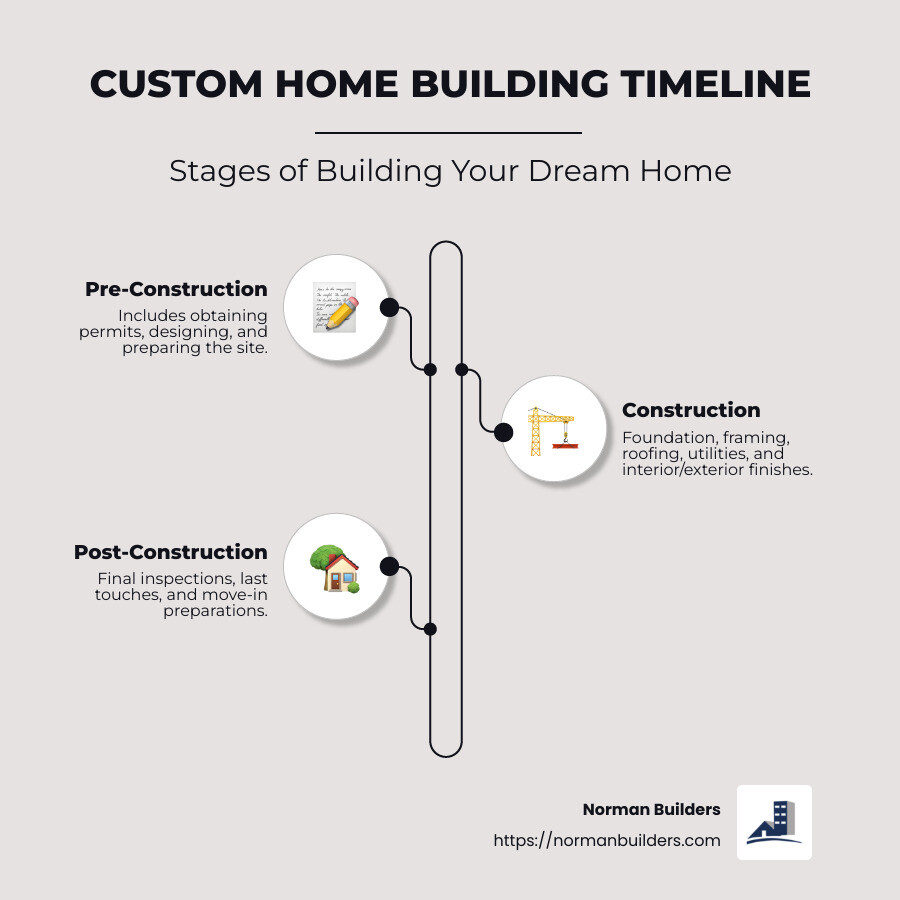
Building a custom home is a journey that can take anywhere from 8 to 16 months, depending on various factors. Let’s break down the timeline into three main phases: Pre-Construction, Construction, and Post-Construction.
The pre-construction phase is all about preparation. It’s a crucial time when you lay the groundwork for your dream home, literally and figuratively.
The construction phase is where your vision starts to take shape. This phase includes several critical steps:
The final phase is all about putting the finishing touches on your new home and preparing for move-in.
Building a custom home is a complex process, but with careful planning and a good team, it can be a rewarding experience that results in a home custom just for you.
When considering how long does it take to build a custom home, several key factors come into play. These include location, weather, permits, design complexity, and the efficiency of your builder. Let’s explore each of these elements to understand their impact on the construction timeline.
Temperature Shifts: In many parts of the country, extreme temperatures can significantly affect construction. For instance, temperatures below freezing can complicate concrete curing or paint drying. On the other hand, temperatures above 100 degrees can also pose challenges, potentially affecting both materials and crew productivity. Fortunately, areas like Houston rarely face these extremes, but other regions may not be as lucky.
Precipitation: Rain, sleet, and snow can all delay construction, especially during the early phases. High precipitation levels can turn a construction site into a muddy mess, delaying site work, foundation pours, and even framing. However, once a home is “dried in” (roofed and weatherproofed), precipitation becomes less of a concern.
Local Regulations: Navigating local building regulations and obtaining the necessary permits is crucial. The time required for this can vary widely depending on where you are building. Some cities have streamlined processes, while others might take months to approve permits. A missing permit or delayed inspection can halt progress, so start this process early.
Inspection Schedules: Inspections are a necessary part of ensuring your home meets safety and building codes. Scheduling these inspections can sometimes cause delays, especially if there are any issues that need to be corrected before moving forward.
Architectural Details: The complexity of your home’s design will directly influence the timeline. A simple design will generally take less time to complete than a more intricate one. Grand designs with unique architectural features require more time and careful execution.
Client Revisions: Changes to the design mid-project can lead to significant delays. It’s essential to work closely with your architect and builder from the start to finalize your design. While some changes are unavoidable, frequent revisions can disrupt the timeline and increase costs.
Builder Efficiency: Choosing the right builder is crucial. An organized builder with a strong network of reliable subcontractors can help keep your project on track. One bad subcontractor can cause a domino effect of delays, so it’s important to work with a builder who has a proven track record.
Understanding these factors can help you plan better and set realistic expectations for your custom home building journey. Next, we’ll explore the common stages in building a custom home, from site clearing to the final touches.
Building a custom home is like assembling a complex puzzle, with each piece fitting together to create a beautiful picture. Let’s break down the common stages involved in this intricate process, focusing on Foundation to Framing, From Walls to Roof, and Interior and Exterior Finishes.
Site Clearing and Preparation
Before anything else, the site must be cleared of trees, rocks, and debris. This stage is crucial to ensure a clean slate for laying the foundation. Depending on the location, this might involve significant work, especially if the land is sloped or densely wooded.
Foundation Laying
Once the site is ready, the next step is laying the foundation. This involves pouring concrete into forms to create a stable base for the home. In areas with challenging terrain, foundation work might include additional steps like erosion control or leveling.
Concrete Pour and Curing
After pouring, the concrete needs time to cure properly. This process can be affected by weather conditions, particularly temperature and humidity. Proper curing is essential for the foundation’s strength and longevity.
Initial Inspections
Before moving on, initial inspections ensure that the foundation meets all building codes and standards. This step is critical to catch any issues early and avoid costly fixes later.
Framing
With the foundation inspected and approved, framing begins. This is where the skeleton of the house takes shape, including walls, floors, and roof trusses. Framing is a complex task requiring precision and skill to ensure structural integrity.
Sheathing and Weatherproofing
Once the frame is up, sheathing is applied to the exterior walls. This layer adds rigidity and acts as a base for siding. It’s followed by weatherproofing, which protects the home from moisture and drafts.
Structural Inspections
After sheathing and weatherproofing, another round of inspections checks the structural integrity. These inspections are crucial to ensure the home can withstand natural elements.
Roofing
The roof is then installed, which is a major milestone as it “dries in” the house. With the roof in place, the home is protected from the weather, allowing interior work to proceed without delays from rain or snow.
Drywall and Painting
Inside, drywall installation transforms the framed structure into distinct rooms. Once the drywall is up, it’s primed and painted. This stage is where the home starts to look more finished and livable.
Flooring and Fixtures
Flooring choices—whether hardwood, tile, or carpet—are installed next, adding warmth and style to the home. Simultaneously, fixtures like cabinets, countertops, and light fittings are put in place, bringing functionality and design together.
Exterior Siding and Landscaping
Externally, siding is added to improve curb appeal and protect the home from the elements. Landscaping follows, shaping the outdoor space to match the home’s aesthetics and the owner’s preferences.
Each stage in building a custom home requires careful planning and execution. By understanding these phases, homeowners can better anticipate the timeline and enjoy watching their dream home come to life. Next, we’ll discuss how to plan for potential delays and ensure timely completion of your custom home project.
Building a custom home is an exciting journey, but it’s not without its challenges. Delays can happen, and managing them effectively is crucial to keeping your project on track. Let’s explore how to steer these problems and ensure a smooth construction process.
Project Management and Contingency Planning
The key to handling delays lies in strong project management and having a solid contingency plan. An experienced project manager will anticipate potential issues and prepare solutions in advance. This proactive approach can save time and money.
Adaptable Scheduling and Experienced Crew
Having a flexible schedule allows for adjustments when unexpected events occur. An adaptable timeline, paired with an experienced crew, ensures that any setbacks are managed efficiently. Skilled workers can quickly pivot and keep the project moving forward.
Effective Communication
Clear and open communication between the builder, subcontractors, and homeowners is vital. Regular updates and meetings help everyone stay informed and aligned with the project’s progress. This transparency reduces misunderstandings and keeps the team focused.
Quality Materials and Skilled Labor
Using high-quality materials and hiring skilled labor are foundational to a successful build. These elements not only ensure the home’s durability but also minimize the risk of rework, which can cause delays.
Regular Monitoring and Inspections
Consistent monitoring and inspections throughout the construction process catch potential issues early. This vigilance helps maintain quality standards and prevents small problems from becoming major setbacks.

By focusing on these strategies, you can mitigate the impact of delays and keep your custom home project on schedule. Next, we’ll dig into the key factors influencing the building timeline, such as location, weather, and design complexity.
Building a custom home is a significant milestone, and at Norman Builders, we understand the importance of this journey. Our commitment to excellence is unwavering, and we pride ourselves on delivering homes that exceed expectations.
Personalized Service
From the moment you engage with us, we ensure a personalized experience custom to your needs. We listen to your ideas, understand your vision, and work closely with you to bring it to life. Our collaborative approach means you are involved in every decision, ensuring your home is truly yours.
Exceptional Craftsmanship
Craftsmanship is at the heart of what we do. Our team is dedicated to using only the highest quality materials and employing skilled artisans to construct your home. This attention to detail guarantees that every corner of your home reflects superior quality and durability.
Trusted in New Hampshire
Having served the Merrimack Valley, North Shore, Seacoast, and Southern NH areas since 2007, we have built a reputation for reliability and trust. Our clients know they can count on us to deliver their dream homes with integrity and professionalism.
Future Home Satisfaction
Your satisfaction is our ultimate goal. We aim to create homes that not only meet your current needs but also anticipate your future desires. Whether it’s a growing family or a space for retirement, we build homes that adapt to your life.
For those ready to start on this exciting journey, Norman Builders is here to guide you every step of the way. With our commitment to excellence, your custom home will be a place of comfort and joy for years to come.
Find more about our services in Andover, MA and how we can help make your dream home a reality.

We specialize in high-quality home construction and remodeling services, delivering exceptional craftsmanship tailored to meet your vision and needs. Whether you’re planning a renovation, new construction, or a custom remodel, our experienced team is committed to exceeding expectations with precision, attention to detail, and reliable service.
Our service area includes the Merrimack Valley, North Shore, Seacoast, and Southern NH Areas. We take pride in the quality of our workmanship and our prompt professionalism.
Contact us today to bring your project to life!