

Looking for eco-friendly remodeling ideas to transform your home? Here are the top options at a glance:
Eco-friendly remodeling ideas are no longer just a trend—they represent a fundamental shift in how we think about home improvement. With construction and demolition waste accounting for up to 40% of the national waste stream according to EPA estimates, green renovations offer a powerful way to reduce your environmental footprint while creating a healthier, more efficient living space.
The benefits extend far beyond environmental impact. Green-certified homes sell for approximately 8% more than non-certified homes, according to an Earth Advantage Study. Meanwhile, eco-friendly upgrades like proper insulation and energy-efficient windows can reduce heating and cooling costs by up to 30%.
Whether you’re planning a complete home change or smaller targeted updates, incorporating sustainable practices and materials can dramatically improve your home’s comfort, reduce utility costs, and contribute to a healthier planet.
I’m Ryan Norman, founder of Norman Builders, and I’ve witnessed how thoughtfully implemented eco-friendly remodeling ideas have transformed our clients’ homes into more comfortable, efficient, and valuable spaces while reducing their environmental impact.
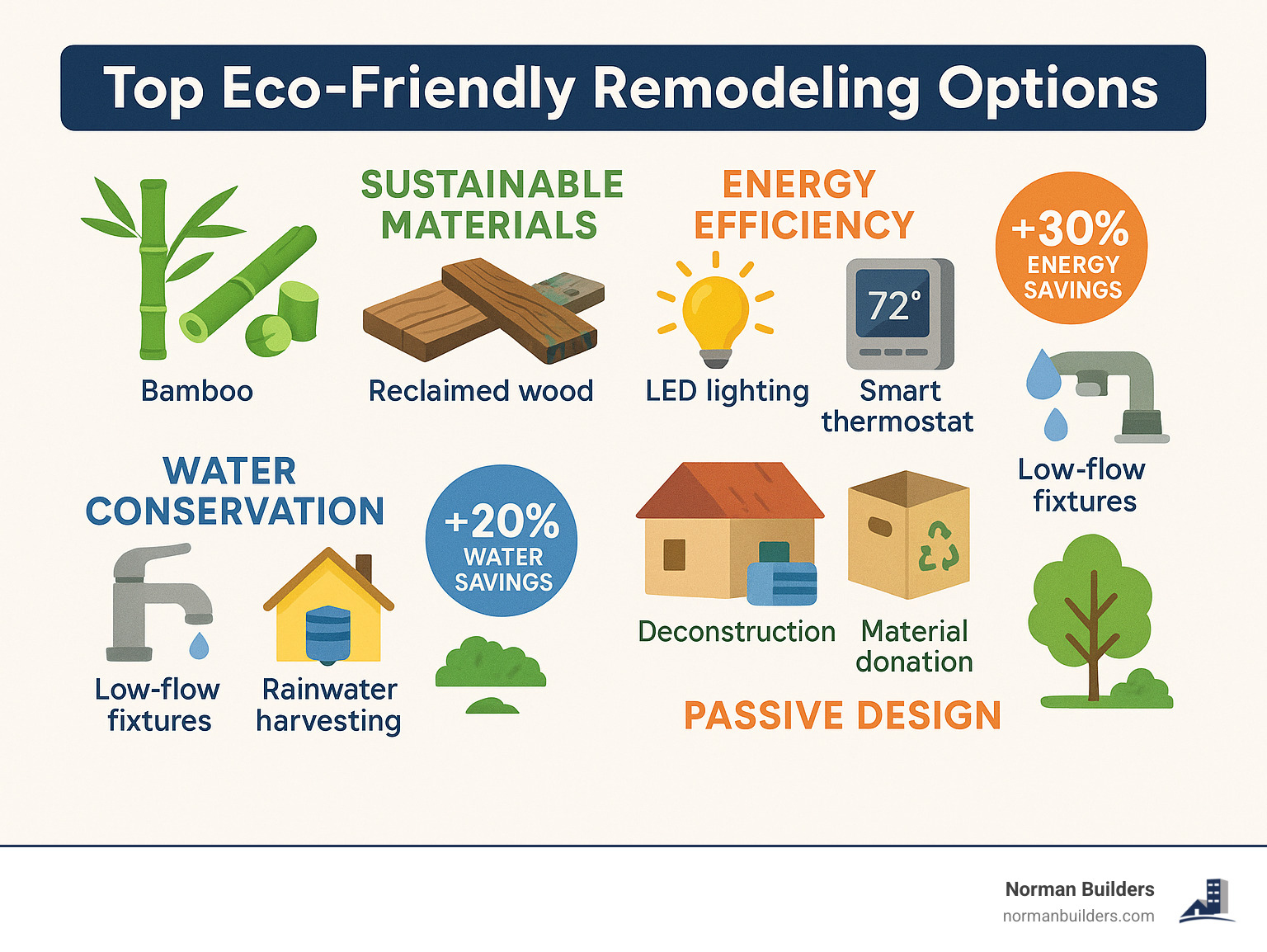
Eco-friendly remodeling ideas terms explained:
– bold accent wall ideas
– creative wall partition ideas
– whole house renovation checklist
When homeowners think about eco-friendly remodeling ideas, they’re often surprised to find we’re talking about much more than just trendy green features. Sustainable remodeling represents a thoughtful approach that delivers real benefits to your family, your wallet, and our planet.
I’ve seen how these choices transform homes. As one client told me after we completed their renovation, “I never expected our home to feel so different – it’s not just beautiful, it’s comfortable in a way I didn’t know was possible.”
The numbers tell a compelling story about why these choices matter. Homes upgraded with solar panels, double-glazed windows, and smart lighting systems typically reduce energy consumption by up to 30%. Meanwhile, simple switches to low-flow plumbing fixtures can achieve impressive water savings between 25%-60%, significantly lowering your monthly bills while conserving a precious resource.
Indoor air quality – something many homeowners don’t consider until they experience problems – improves dramatically with eco-friendly renovations. Traditional building materials often release harmful volatile organic compounds (VOCs) at room temperature, contributing to respiratory issues and allergies. By choosing low or zero-VOC alternatives for paints, sealants, and finishes, you create a significantly healthier living environment for your family.
The financial benefits extend beyond monthly utility savings. According to the Earth Advantage Study, homes with eco-friendly certifications sold for approximately 8% more than comparable conventional homes. That premium makes going green not just environmentally responsible but financially smart as well.
Construction waste represents nearly 40% of the national waste stream according to EPA data. When we implement eco-friendly remodeling ideas like deconstruction instead of demolition, we’re keeping tons of material out of landfills. The EPA’s research on residential toilets shows that upgrading to efficient models alone can save thousands of gallons of water per household annually.
The advantages of implementing eco-friendly remodeling ideas extend across multiple aspects of homeownership:
Your utility bills decrease significantly as energy-efficient upgrades like quality insulation and smart thermostats reduce heating and cooling costs by up to 30%. Your family enjoys a healthier living environment with improved indoor air quality from natural materials and low-VOC finishes. And when it’s eventually time to sell, your property value benefits from that approximate 8% green premium that certified eco-friendly homes command.
Beyond personal benefits, your choices create ripple effects. By reducing waste, conserving resources, and lowering carbon emissions, you’re contributing to broader environmental goals. Many sustainable upgrades qualify for federal tax credits, state rebates, and utility incentives, making them even more affordable. The improved comfort from proper insulation and efficient systems creates living spaces with fewer temperature fluctuations and drafts.
I remember a family in Andover who was skeptical about the value of green renovations until their first winter after we completed their project. They called to tell me their heating bills had dropped by nearly 40% after we upgraded their insulation, windows, and thermostat system. “We’re saving money every month,” they said, “but what we really love is how comfortable our home feels now – no more cold spots or drafts.”
When comparing traditional renovations to green remodels, the return on investment consistently favors sustainable choices. While a conventional kitchen remodel might return 75% of its cost at resale, the same kitchen with energy-efficient appliances, sustainable materials, and water-saving fixtures can return 85-90% while delivering ongoing utility savings.
Please note: Our services are exclusively available in Massachusetts, specifically in Andover, MA, the North Shore, and New Hampshire, covering the Seacoast and Southern NH regions.
Selecting the right materials is foundational to any eco-friendly remodeling ideas. Today’s market offers an impressive array of sustainable options that don’t compromise on style or durability.
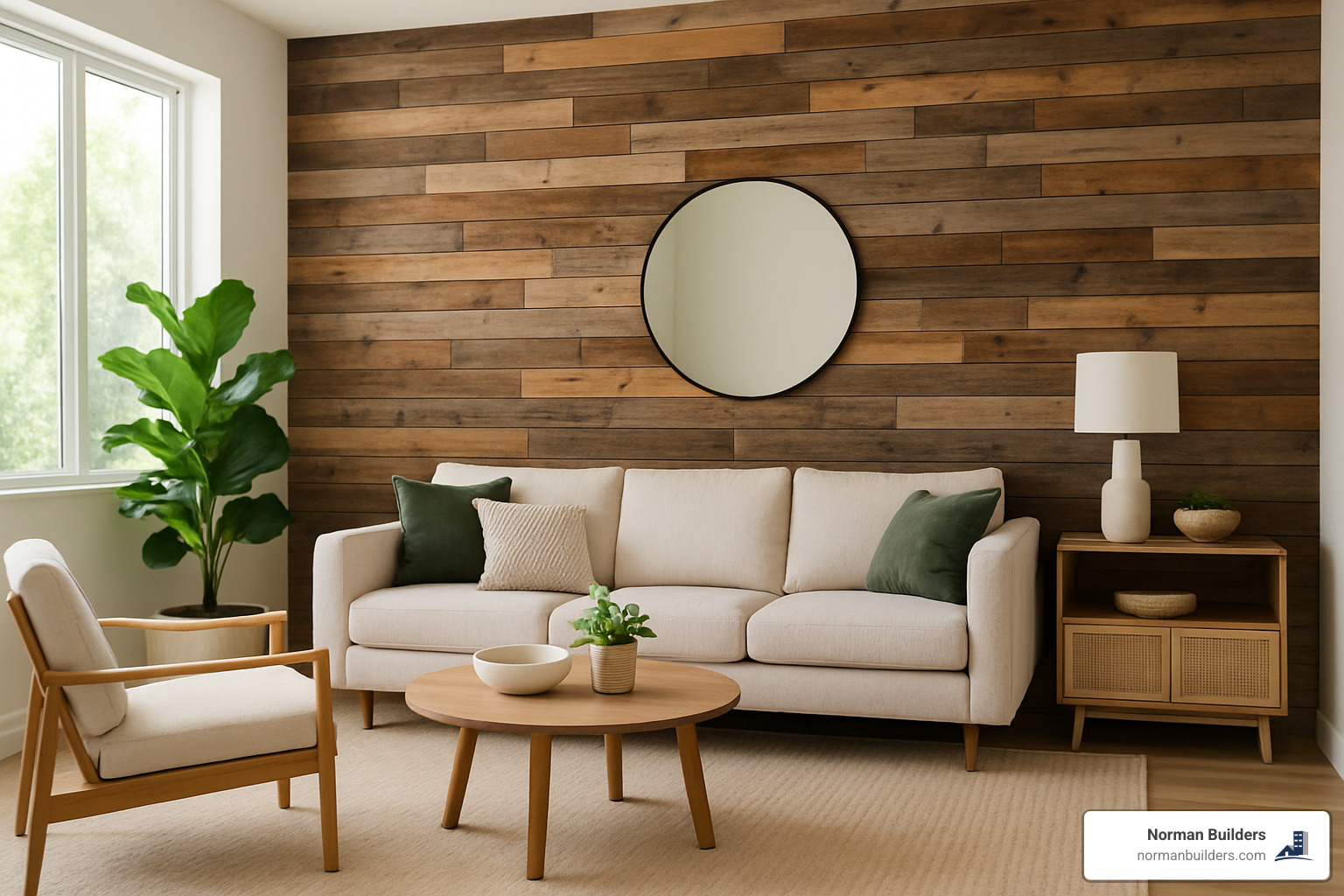
Flooring represents one of the largest material investments in any renovation project, making it an ideal place to implement eco-friendly remodeling ideas.
When I walk clients through flooring options, bamboo often steals the show. This remarkable grass (yes, it’s not actually wood!) reaches maturity in just 3-5 years, compared to decades for hardwood trees. Some bamboo species grow up to 35 inches daily—nature’s own renewable resource superhero! Available in various colors and finishes, bamboo offers hardwood-like durability without the environmental cost.
Cork flooring is another favorite of mine for clients seeking comfort and sustainability. Harvested from the bark of cork oak trees without harming them, it creates a warm, soft surface that’s naturally sound-dampening. I love telling homeowners that the trees live up to 100 years, with periodic bark harvesting actually promoting their health. Plus, cork’s natural resistance to mold and pests makes it perfect for kitchens and bathrooms.
Many clients are surprised when I show them real linoleum samples. “This isn’t the vinyl flooring from my grandmother’s house,” they often remark. True linoleum is completely natural—made from cork dust, linseed oil, tree resin, wood flour, and limestone on a jute backing. It’s incredibly durable, often lasting 40+ years, and naturally antibacterial. Marmoleum, a popular brand, comes in countless colors and patterns that work beautifully in modern homes.
For something truly eye-catching, recycled glass tiles create stunning visual impact. One Exeter client’s kitchen floor became the talk of every gathering, with visitors marveling at how something made from 100% post-consumer glass could look so neat. The tiles’ reflective properties brightened their space considerably, an unexpected bonus that reduced their lighting needs.
When it comes to wall finishes, what you don’t smell matters most. Traditional paints release harmful VOCs for years, but healthier alternatives deliver beautiful results without sacrificing indoor air quality.
Zero-VOC paints have come so far in recent years. During a recent Andover renovation, our clients were amazed that there was no “new paint smell” when they moved back in. Their children, who had previously experienced headaches with conventional paint, noticed the difference immediately. These paints perform beautifully while protecting your family’s health.
For wood finishes, I often steer clients toward natural stains and sealers made from plant oils and waxes instead of petroleum-based polyurethanes. These allow wood to “breathe” while providing excellent protection. They’re my go-to recommendation for children’s spaces, where health concerns are paramount.
For clients seeking something distinctive, clay plasters create beautiful textured surfaces that regulate humidity and reduce noise. One North Shore client described their clay-plastered bedroom as having “the most peaceful acoustic quality” of any space in their home. These toxin-free finishes can last generations with minimal maintenance.
The most sustainable piece of furniture is often one that already exists. Incorporating vintage or repurposed items adds character while reducing environmental impact.
Reclaimed wood furniture brings warmth and history to any room. As I tell clients, “Each scratch and mark tells a story.” Whether it’s a dining table made from old barn boards or a headboard crafted from salvaged doors, these pieces become focal points that spark conversation. The natural patina and character simply can’t be replicated in mass-produced furniture.
I love helping clients source vintage fixtures that add unique charm while keeping perfectly functional items out of landfills. A Kingston family integrated brass doorknobs from their grandmother’s home into their renovation, creating a meaningful connection between past and present. Their children now know which doorknobs “came from great-grandma’s house,” adding an emotional dimension to their home.
Upcycled creations often become favorite elements in our renovations. We’ve transformed old ladders into pot racks, repurposed doors as dining tables, and converted vintage suitcases into bathroom vanities. These one-of-a-kind pieces not only reduce waste but also create visual interest that mass-produced items simply can’t match.
From bamboo floors to zero-VOC paints to furniture with history, sustainable materials create healthier, more soulful spaces. As one client put it, “Our home not only looks beautiful, but it feels good knowing every choice we made was better for our family and the planet.”
More info about Eco-Friendly Home Renovations
Construction and demolition waste accounts for a staggering 25% to 40% of the national waste stream in the United States. Implementing eco-friendly remodeling ideas that reduce this waste not only helps the environment but can also save money and uncover hidden treasures.

When we start a renovation, there’s a fork in the road right at the beginning: deconstruction or demolition? While demolition might feel satisfying (who doesn’t love a good sledgehammer moment?), careful deconstruction preserves materials that still have plenty of life left in them.
I remember working with a family in Newbury who chose deconstruction for their kitchen remodel. Instead of filling dumpsters, we carefully removed their cabinets, countertops, and fixtures. Those items found new homes through a local architectural salvage organization, the homeowners received a nice tax deduction, and together we kept valuable materials circulating in our community rather than buried in a landfill.
Salvaging and donating reusable materials is easier than ever. Organizations like Habitat for Humanity ReStores welcome everything from doors and windows to light fixtures and hardware. One homeowner’s “outdated” is another’s “vintage find.” We’ve seen 1970s pendant lights that were headed for the dumpster become the highlight of someone else’s dining room!
Consider the charm of pre-owned elements in your renovation. Nothing compares to the character of an antique mantel or the patina of reclaimed flooring. These pieces tell stories that new materials simply can’t match. Plus, they’ve already proven their durability by standing the test of time.
For kitchen updates, cabinet refacing works wonders. By keeping the existing cabinet boxes and replacing only the doors, drawer fronts, and hardware, you can completely transform the look while generating about 75% less waste. It’s typically about half the cost of all-new cabinets too – a win-win for your wallet and the planet.
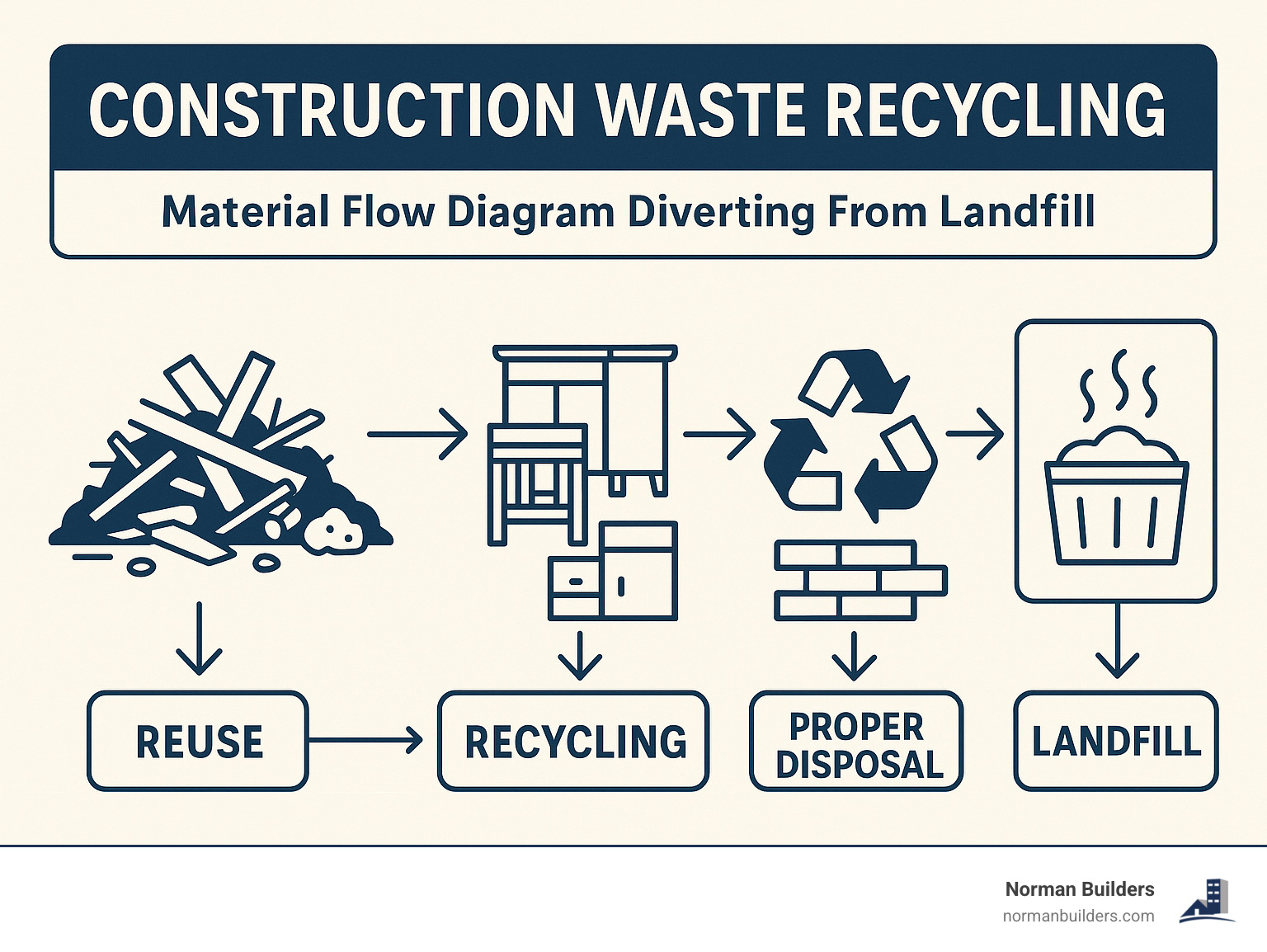
Don’t underestimate the impact of recycling construction waste. Materials we might think are destined for landfills often have useful second lives: drywall can become soil amendment, wood can be chipped for mulch, metals can be melted down and reformed, and concrete can be crushed for use as aggregate in new projects.
A recent Hampton, NH renovation really showcased what’s possible when waste reduction becomes a priority. Our team implemented a comprehensive sorting system that diverted over 80% of construction waste from landfills through a thoughtful combination of salvage, donation, and recycling.
When it comes to green renovations, energy and water efficiency upgrades deliver the biggest bang for your buck. These eco-friendly remodeling ideas not only shrink your environmental footprint but often pay for themselves faster than other sustainable improvements.
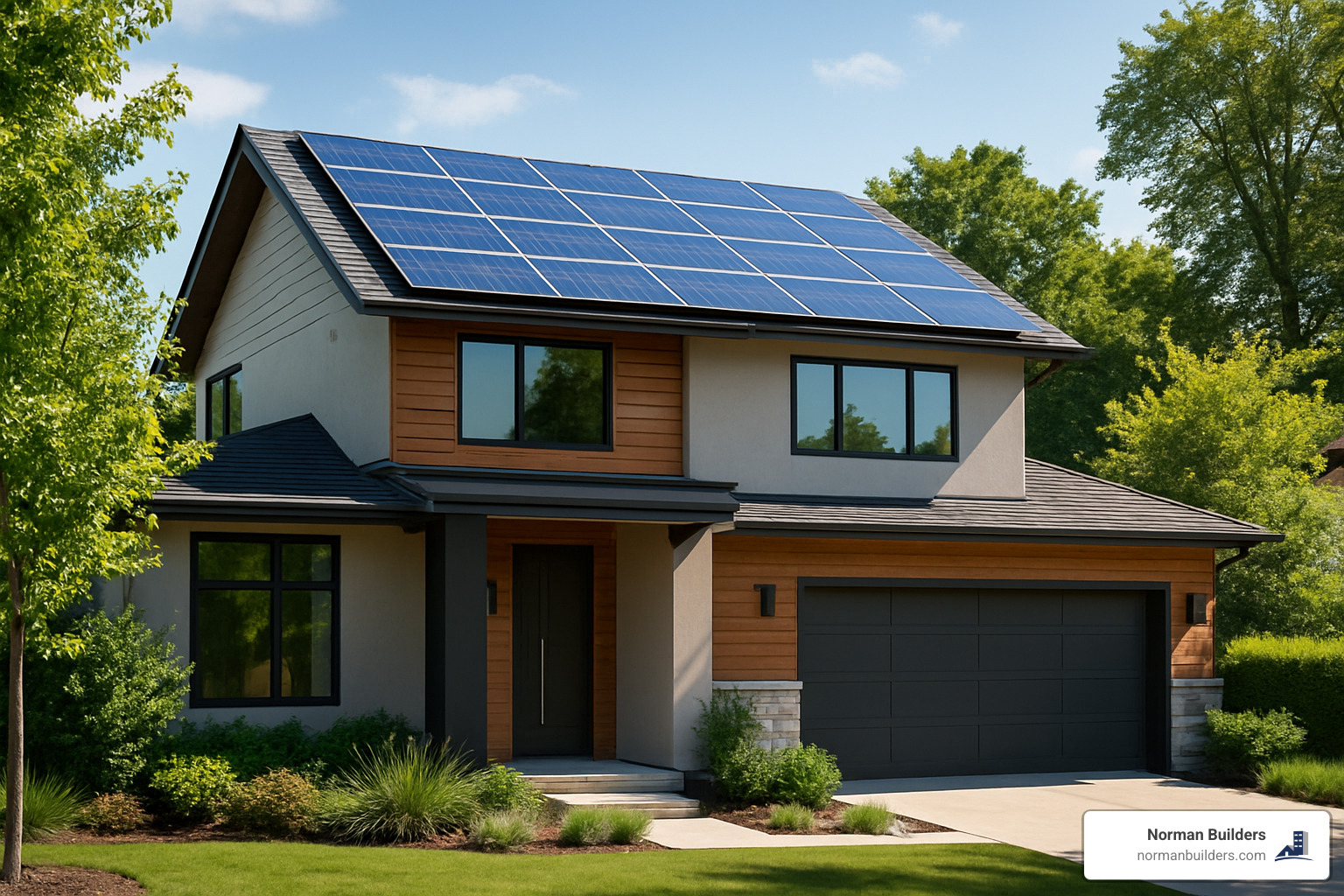
Remember opening your winter heating bill and feeling that little jolt of shock? You’re not alone. The good news is that smart energy upgrades can dramatically reduce those numbers while making your home more comfortable.
Solar panels have become the superheroes of home energy efficiency. While the upfront investment averages around $16,000, most systems pay for themselves within a decade through utility savings. The cherry on top? The federal Investment Tax Credit currently lets homeowners deduct 26% of installation costs for systems installed through 2022 (dropping to 22% for 2023 installations).
I’ll never forget when our Andover clients called after their first summer with new solar panels. “We actually got a credit on our electric bill last month,” they told me. “It feels like we’re printing our own money!” Their system now produces surplus electricity during sunny months, effectively zeroing out their electric costs for part of the year.
LED lighting might seem like a small change, but it packs a mighty punch. These bulbs use up to 90% less energy than traditional incandescents and last up to 25 times longer. For a typical home, that translates to about $225 in annual savings—enough for a nice dinner out every month or a weekend getaway.
When shopping for new appliances, look for the Energy Star certification. These models use 10-50% less energy than standard versions, with minimal price differences. During kitchen renovations, we always discuss the long-term savings of efficient refrigerators, dishwashers, and other appliances, which can amount to hundreds of dollars annually.
Smart thermostats have revolutionized home climate control. Beyond the convenience of adjusting temperatures from your phone, these devices learn your habits and automatically optimize settings for comfort and efficiency. Many homeowners see heating and cooling costs drop by 10% or more after installation. Some models even generate detailed energy reports that help identify additional savings opportunities.
Windows are often the weakest link in your home’s thermal envelope. Double-pane windows with low-emissivity coatings can dramatically reduce the 25-30% of energy typically lost through windows. A West Newbury family we worked with noticed the difference immediately after upgrading from single-pane windows. “The drafty feeling near the windows completely disappeared,” they reported. “And our heating bills dropped by nearly a third.”
Water conservation is becoming increasingly crucial, even in regions not traditionally associated with drought. Fortunately, today’s water-saving fixtures perform better than their water-wasting predecessors.
Did you know that nearly 30% of household water literally goes down the toilet? Low-flow toilets use a maximum of 1.28 gallons per flush compared to older models that guzzled 3.5 to 7 gallons. The EPA’s research on residential toilets confirms these fixtures can save the average family nearly 13,000 gallons of water annually without sacrificing performance.
Taking this concept further, dual-flush toilets offer two options—a lighter flush for liquid waste and a stronger one for solid waste. This simple innovation can save a family of four up to $140 in water costs per toilet each year. As one client quipped, “Who knew saving water could be as simple as pushing a different button?”
Tankless water heaters represent another upgrade. Unlike traditional units that constantly heat a large tank of water, tankless models heat water on demand. According to the U.S. Department of Energy’s research on tankless water heaters, homes using less than 41 gallons of hot water daily can achieve 24%-34% greater energy efficiency with these systems. Beyond the savings, you’ll never run out of hot water in the middle of a shower again!
For outdoor needs, rainwater harvesting systems collect roof runoff for garden irrigation. These setups range from simple rain barrels to sophisticated filtration systems that can supply water for toilets or washing machines. An Exeter client’s rainwater system now provides all the water needed for their extensive vegetable garden, completely eliminating their need for municipal water outdoors.
For the ultimate in water recycling, gray water systems capture and treat water from showers, bathroom sinks, and washing machines for reuse in toilets or irrigation. While more complex to implement, especially in retrofits, these systems can slash household water consumption by 30-50%. One North Shore homeowner told us, “It seemed strange at first to think about reusing shower water, but once the system was in place, we forgot all about it—except when our water bill arrived!”
When considering water efficiency upgrades, small changes add up. Installing aerators on faucets, choosing WaterSense-labeled fixtures, and setting up drip irrigation for gardens are affordable starting points that deliver immediate water savings.
Please note: Our services are exclusively available in Massachusetts, specifically in Andover, MA, the North Shore, and New Hampshire, covering the Seacoast and Southern NH regions.
Some of the most effective eco-friendly remodeling ideas don’t require fancy gadgets or constant maintenance. Passive design works with nature instead of against it, creating comfortable spaces that need less energy to heat and cool.
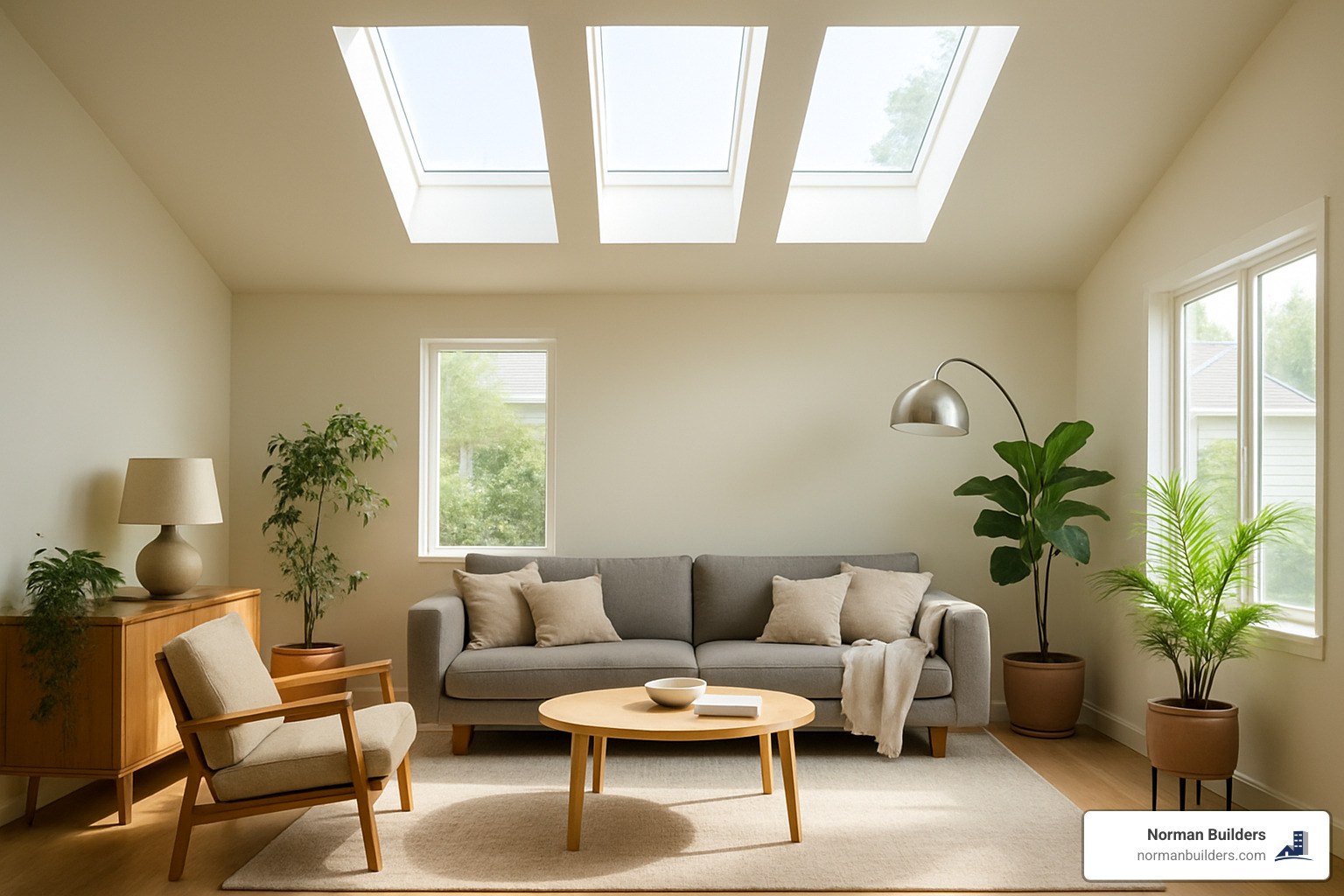
Home orientation matters more than most people realize. While you can’t pick up your existing house and turn it, understanding how the sun moves across your property helps guide smart renovation decisions. South-facing windows can be wonderful for capturing winter warmth, but might need proper overhangs to block that same sun in summer when you’re trying to stay cool.
“Just as the wrong plant in the wrong place is a weed, the wrong house in the wrong place is an energy hog,” one architect told me recently. I couldn’t agree more. Working with your home’s natural characteristics rather than fighting against them saves both energy and money.
Passive solar gain uses the free energy from the sun combined with thermal mass materials like concrete floors or stone walls. These surfaces absorb heat during daylight hours and slowly release it at night, creating a natural temperature-regulating system. One of our clients in Andover installed a beautiful slate floor in their sunroom during a renovation, and they’re amazed at how it keeps the space comfortable through chilly evenings without cranking the heat.
Skylights and light tubes bring natural daylight deep into your home, reducing the need to flip on lights during daytime hours. Modern skylights are well-sealed and many include automated shades to prevent overheating in summer. We recently completed a project in Newton, NH where strategically placed skylights virtually eliminated the need for daytime electric lighting in the main living areas. The homeowners love how the natural light changes throughout the day, creating different moods in the space.
Smart landscaping offers shade exactly when and where you need it. Deciduous trees planted on the south and west sides of your home provide cooling shade in summer but drop their leaves in winter to let that valuable sunlight through when you want the warmth. Meanwhile, evergreens on the north side can block harsh winter winds. It’s like your landscape knows exactly what you need each season.
Airtight building envelopes are essential before investing in expensive heating or cooling systems. What good is an efficient furnace if your warm air is escaping through countless tiny leaks? Professional energy audits using thermal imaging and blower door tests can identify these problem areas. Many utilities subsidize these audits, making them quite affordable. One Newburyport client was shocked when we showed them the thermal images of their home – heat was pouring out around windows, doors, and through poorly insulated walls.
High-performance insulation might not be the most exciting part of a renovation, but it delivers serious comfort and savings. Well-insulated homes can reduce heating and cooling costs by up to 30%. When we open up walls during renovations, we almost always recommend upgrading to higher R-value insulation. Eco-friendly options have come a long way and now include:
Cellulose insulation made from recycled newspaper treated with non-toxic fire retardants is a fantastic option that fills cavities completely. Sheep’s wool insulation offers excellent moisture management while being completely natural and renewable. Recycled cotton insulation made from manufacturing scraps and post-consumer denim provides great sound dampening along with thermal properties. And recycled glass insulation contains up to 80% recycled content while performing admirably.
Green roofs covered with vegetation provide outstanding insulation, absorb rainwater, reduce urban heat island effect, and can double or triple a roof’s lifespan—up to 60 years in many cases. While more complex to implement, they typically repay their investment in 8-21 years through reduced energy and maintenance costs. They also create beautiful, living surfaces that support pollinators and wildlife. We recently helped a client in Portsmouth implement a small green roof over their garage addition, and it’s become their favorite feature to show visitors.
Thermal mass floors store heat from sunlight during the day and release it slowly at night, helping maintain comfortable temperatures naturally. Solar chimneys use natural convection to draw hot air up and out of your home. Ventilated façades create an air gap between exterior cladding and the home’s structure, improving insulation performance and preventing moisture problems.
Interested in learning more about environmentally-friendly design? Check out our guide to The Top 10 Environmental Home Design Ideas for additional inspiration.
When it comes to creating truly comfortable, energy-efficient homes, sometimes the oldest principles work best. At Norman Builders, we blend these time-tested passive strategies with modern materials and techniques to create homes that are kind to both the environment and your utility bills.
For homeowners looking to push the boundaries of sustainable living, several innovative eco-friendly remodeling ideas offer both environmental benefits and cutting-edge design features.
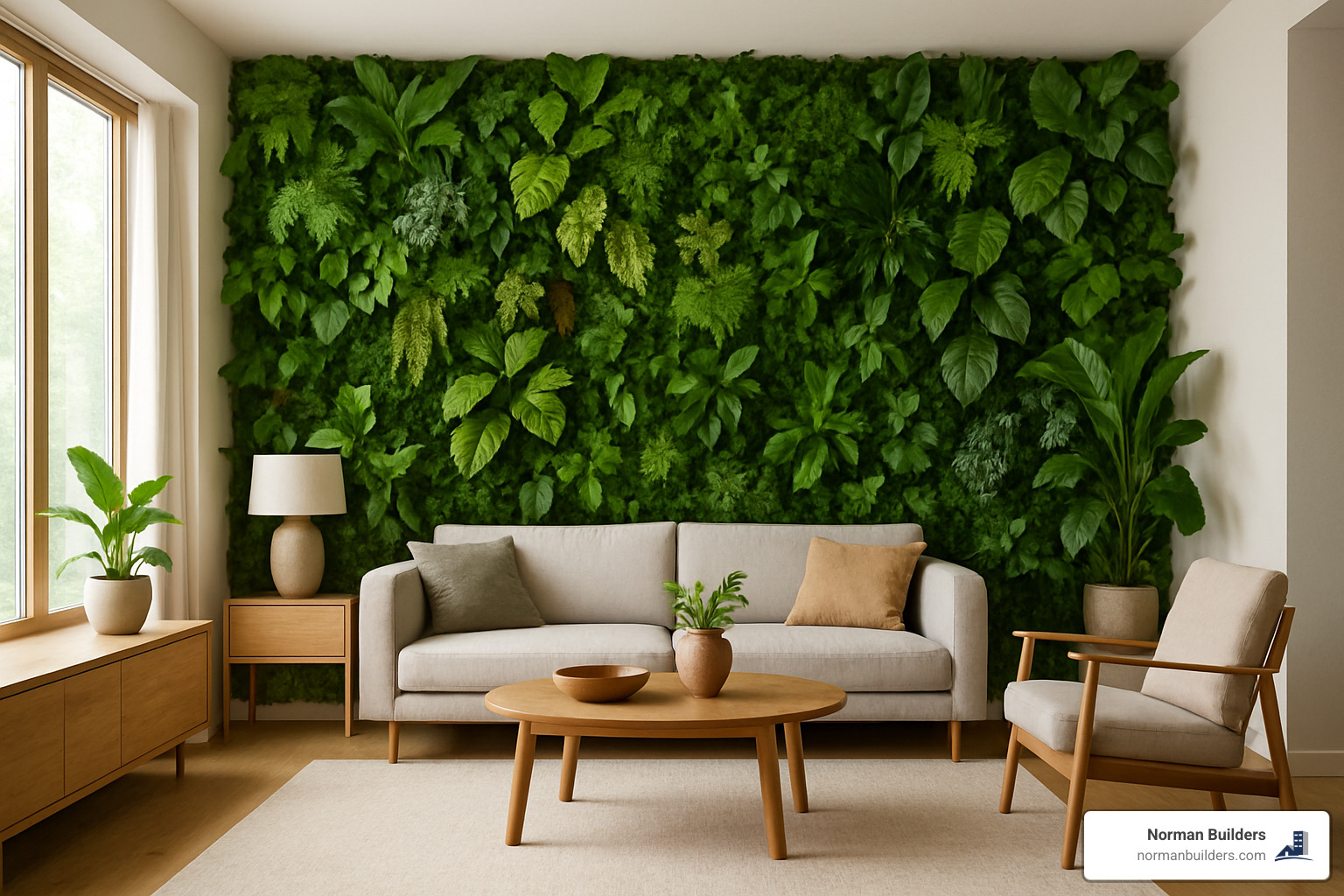
Living Walls transform ordinary spaces into breathtaking natural sanctuaries. These vertical gardens don’t just look beautiful—they actively purify your air, absorb sound, and create a sense of calm that’s hard to match with traditional décor. I’ve watched clients’ faces light up when they see their completed living wall for the first time. One Andover homeowner told me, “It’s like having a piece of the forest inside my home. I find myself just sitting and staring at it.”
Modular and Adaptive Spaces represent a smarter way to think about how we use our homes. Instead of building bigger, we’re helping clients build smarter with flexible room designs that evolve with changing needs. Sliding wall panels, convertible furniture, and multipurpose rooms maximize functionality without increasing your carbon footprint. As one of our clients wisely noted, “My home now adapts to my life, not the other way around.”
The principles of Biophilic Design tap into our innate connection to nature, bringing the outdoors in through natural materials, abundant plants, and designs that mimic natural patterns. It’s not just about aesthetics—research consistently shows these elements reduce stress and improve cognitive function. A North Shore client incorporated a small indoor water feature during their renovation, and months later shared, “The sound of water has become the heartbeat of our home. I didn’t realize how much tension it would release until we had it.”
Taking steps toward Net-Zero Ready Construction doesn’t mean you need to do everything at once. We often recommend a phased approach that begins with creating an ultra-efficient building envelope through superior insulation and air sealing. This foundation makes it possible to add renewable energy sources later when budget allows. A Hampton Falls family we worked with followed this exact path—creating an efficient home first, then adding solar panels two years later. They now produce nearly all the energy they consume and have utility bills close to zero most months.
Smart Home Energy Dashboards bring awareness to your fingertips, showing real-time energy use throughout your home. These intuitive systems help identify energy hogs and optimize consumption patterns. One Exeter homeowner told us, “Seeing our energy use in real-time changed our habits almost immediately. It’s like having a fitness tracker for your home.”
With electric vehicles becoming mainstream, installing an Electric Vehicle Charging Station during your renovation makes perfect sense. Level 2 chargers provide significantly faster charging than standard outlets and can add substantial value to your home as EVs continue gaining popularity. A forward-thinking client in Newburyport installed one during their garage renovation despite not yet owning an electric vehicle. “It’s future-proofing,” they explained. “And it’s already been a conversation starter with neighbors considering making the switch.”
Going green doesn’t have to break the bank. Smart homeowners leverage available incentives to make sustainable choices more affordable.
Federal Tax Credits can significantly offset the cost of renewable energy systems. Solar installations, for example, currently qualify for a substantial tax credit that can reduce your out-of-pocket expenses by thousands of dollars. These credits essentially represent free money that makes the return on investment even more compelling.
State and Local Rebates vary by location but can be surprisingly generous. Many Massachusetts and New Hampshire utilities offer substantial rebates for energy-efficient appliances, insulation upgrades, and HVAC equipment. We always encourage clients to check with their local utility company before finalizing renovation plans—these programs change regularly and can sometimes influence which upgrades make the most financial sense.
The Inflation Reduction Act has created exciting new opportunities for homeowners considering green renovations. Among its many provisions is up to $840 for electric stoves—a timely benefit for anyone planning a kitchen remodel. The act represents one of the most significant investments in climate and energy in American history, with numerous provisions that benefit homeowners directly.
Many financial institutions now offer Green Loans and Mortgages with favorable terms specifically for energy-efficient improvements. These specialized financing options recognize that efficient homes have lower operating costs, making them better investments for both homeowners and lenders.
The financial return on many eco-friendly upgrades is compelling even without incentives. Energy-efficient windows typically recoup their cost in 5-10 years, while simple upgrades like low-flow fixtures often pay for themselves in less than a year. Solar panels generally reach payback in 7-12 years while providing 25+ years of clean energy.
At Norman Builders, we’ve seen how these innovative upgrades transform not just homes, but the daily lives of the families who live in them. Whether you’re ready to go all-in on cutting-edge sustainability or prefer to start with smaller high-impact changes, there’s never been a better time to make your home healthier, more efficient, and ready for the future.
Please note: Our services are exclusively available in Massachusetts, specifically in Andover, MA, the North Shore, and New Hampshire, covering the Seacoast and Southern NH regions.
Embracing eco-friendly remodeling ideas isn’t just a one-time project—it’s an ongoing journey toward creating a more sustainable, comfortable, and valuable home. Whether you’re planning a complete renovation or focusing on specific updates, each environmentally conscious choice contributes to both your family’s wellbeing and our planet’s health.
Ready to begin your green remodeling journey? Here’s how to get started:
Begin with a thorough assessment of your current home. A professional energy audit can reveal hidden issues and help identify the most impactful improvements for your specific situation. Many homeowners are surprised to find that simple fixes like sealing air leaks can dramatically improve efficiency before larger investments are made.
Prioritize improvements that deliver the biggest bang for your buck. Energy efficiency upgrades and waste reduction strategies often provide the quickest returns on investment while making an immediate difference in your home’s comfort and utility bills.
When researching materials and techniques, look beyond the “green” label to understand the full environmental impact. As one of our Newton, NH clients shared, “We spent extra time researching bamboo flooring options and found one that was not only sustainable but actually more durable than the hardwood we originally considered—and at a comparable price.”
Working with experienced professionals who understand sustainable building practices can make all the difference. At Norman Builders, we’ve helped countless homeowners steer the sometimes overwhelming world of green building materials and techniques, finding solutions that align with both their environmental values and aesthetic preferences.
Remember to consider the full lifecycle of materials—their durability, maintenance requirements, and eventual disposal or recycling options. Sometimes paying a bit more upfront for a longer-lasting, more easily recyclable material is the more sustainable choice in the long run.
If a complete green renovation seems overwhelming, start small. Even modest changes like switching to LED lighting, installing low-flow fixtures, or adding a programmable thermostat can make a meaningful difference in your home’s environmental footprint. You can build on these initial steps over time as your budget allows.
“When we renovated our 1950s Cape in Andover, we approached it in phases,” explains a Norman Builders client. “We started with insulation and air sealing, then upgraded our windows the following year. Eventually, we added solar panels. Breaking it into manageable projects made the process less overwhelming and more financially feasible.”
At Norman Builders, we’ve been helping homeowners throughout Massachusetts and New Hampshire implement eco-friendly remodeling ideas since 2007. Our experience has shown that sustainable renovations not only reduce environmental impact but also create more comfortable, healthier, and more valuable homes that our clients truly love living in.
Ready to explore how eco-friendly remodeling could transform your living space? We’d be delighted to help you steer the options and create a sustainable home that reflects your values while enhancing your quality of life. From whole-house renovations to targeted green upgrades, we bring quality craftsmanship and environmental expertise to every project.
Please note: Our services are exclusively available in Massachusetts, specifically in Andover, MA, the North Shore, and New Hampshire, covering the Seacoast and Southern NH regions.

We specialize in high-quality home construction and remodeling services, delivering exceptional craftsmanship tailored to meet your vision and needs. Whether you’re planning a renovation, new construction, or a custom remodel, our experienced team is committed to exceeding expectations with precision, attention to detail, and reliable service.
Our service area includes the Merrimack Valley, North Shore, Seacoast, and Southern NH Areas. We take pride in the quality of our workmanship and our prompt professionalism.
Contact us today to bring your project to life!