

Kitchen island design ideas are essential for homeowners looking to maximize both function and style in their cooking space. A well-designed island transforms your kitchen into a multi-purpose hub for cooking, dining, and gathering.
Top Kitchen Island Design Ideas at a Glance:
1. Multi-functional designs – Combine seating, storage, and prep space
2. Right-sized islands – Allow 42″ clearance on all sides
3. Material contrasts – Use different countertops or cabinet colors than perimeter
4. Smart storage – Incorporate drawers, shelves, and specialized compartments
5. Appropriate seating – Allow 24″ width per person with 12-18″ overhang
6. Lighting layers – Install pendant lights 30-36″ above the surface
The kitchen island has evolved from a simple work surface to the social and functional centerpiece of modern homes. Whether you’re renovating or building from scratch, an island offers extra counter space, additional storage, casual seating, and can dramatically improve workflow.
When designed correctly, your island becomes more than just extra counter space—it’s where family gathers for breakfast, kids do homework while parents cook, and guests naturally congregate during parties. As one designer aptly noted, “If the kitchen is the heart of the home, the island is its aorta.”
Before diving into specific designs, function should drive form. Consider how you’ll primarily use your island—for prep work, cooking, dining, or entertaining—and let that guide your decisions about size, features, and placement.
I’m Ryan Norman, founder of Norman Builders, and I’ve helped countless homeowners transform their kitchens with custom kitchen island design ideas that perfectly balance functionality, aesthetics, and the unique needs of each family.
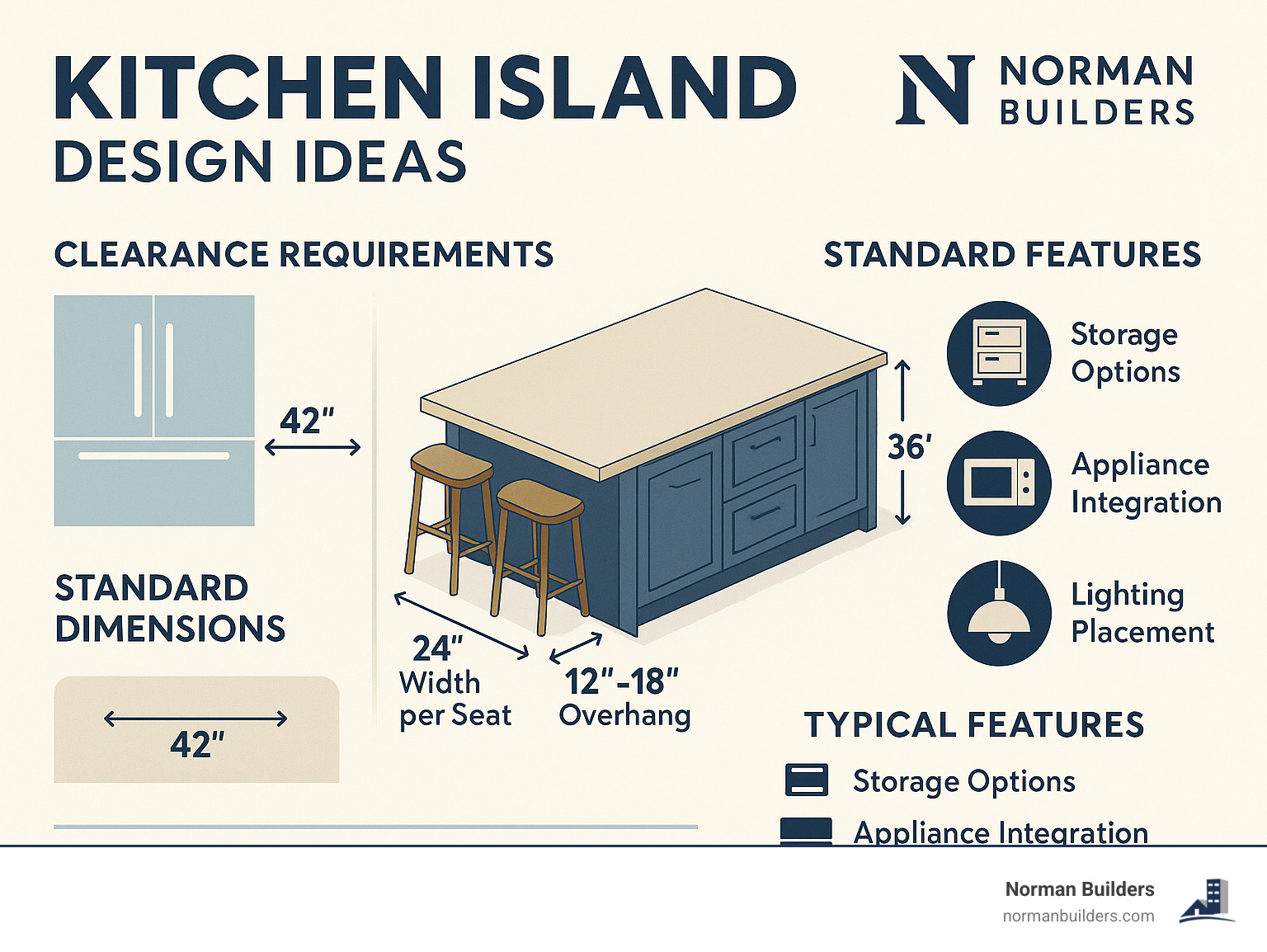
This comprehensive guide will walk you through everything you need to know about kitchen island design ideas, from measuring your space correctly to selecting materials that match your lifestyle. We’ll cover essential benefits, measurement rules, customization options, styling trends, and important safety considerations to ensure your island is both beautiful and functional.
Whether you’re working with a spacious kitchen or a compact galley layout, we’ll provide practical solutions to maximize your space and improve your home’s value. Let’s explore how to create the perfect kitchen island for your needs.
Let’s talk about why kitchen islands have become the must-have feature in modern homes. Far more than just a pretty addition, a well-designed island transforms how your entire kitchen functions and feels.
Kitchen island design ideas start with understanding the genuine benefits they bring to your daily life. Think of your island as the Swiss Army knife of kitchen features – it’s incredibly versatile while solving multiple problems at once.
When clients ask me about adding an island, I often share how these workhorses create a natural gathering spot where family life unfolds. Your island becomes the place where kids spread out homework while you prepare dinner, where friends lean in with wine glasses during parties, and where Saturday morning pancakes are served straight from the griddle.
Beyond the social benefits, islands dramatically improve your kitchen’s functionality. You gain precious counter space for meal prep, additional storage for those bulky appliances, and a natural workflow hub that optimizes your kitchen triangle – that essential path between refrigerator, sink, and stove.
The resale advantage can’t be overstated either. As one real estate agent told me, “In today’s market, a thoughtfully designed island isn’t just desirable – it’s expected in homes above a certain price point.”
Before you fall in love with island dreams, though, let’s talk space requirements. The golden rule is maintaining at least 42 inches of clearance around all sides of your island. This non-negotiable measurement ensures comfortable movement and prevents your kitchen from feeling cramped.
For kitchens under 13 feet wide, a traditional island probably won’t work. Instead, consider a peninsula or a narrow cart that provides similar benefits without sacrificing movement. Remember the 10-percent rule: your island should occupy no more than 10% of your kitchen’s total square footage to maintain proper proportion.
For more comprehensive kitchen change ideas, our Kitchen Remodeling Ideas page offers additional inspiration.
Before falling in love with specific kitchen island design ideas, take time to thoroughly evaluate your space:
Start by measuring your kitchen dimensions with precision – and I mean down to the inch. Don’t forget to account for any architectural quirks like angled walls or soffits that might impact your island placement.
Here’s a tip I share with all our Norman Builders clients: use painter’s tape to outline your proposed island on the floor. Live with this mock-up for a few days and see how it feels. Does it create bottlenecks? Does it make opening the refrigerator awkward? This simple test prevents expensive mistakes.
Don’t forget to consider your appliance swing zones. I’ve seen beautiful islands rendered frustrating because no one accounted for the dishwasher door when fully extended or the refrigerator door swing path.
Traffic patterns matter tremendously too. Your island should improve, not obstruct, the natural flow between workstations and doorways. The best islands improve kitchen circulation rather than forcing awkward detours.
Finally, evaluate your existing lighting. Most islands benefit from dedicated lighting above – usually pendant fixtures that provide both task lighting and visual interest.
When thoughtfully designed for your specific space, a kitchen island delivers remarkable lifestyle benefits.
Family gatherings happen naturally around a well-proportioned island. As one of our Andover clients shared, “Our island has become the heart of our home – it’s where we start the day with quick breakfasts and where the kids naturally gravitate after school.” Islands create that perfect middle ground where family members can interact without getting in the cook’s way.
For those who entertain, islands transform the hosting experience. Instead of being isolated in the kitchen while guests gather elsewhere, your island becomes a natural entertaining hub where you can prepare final touches while remaining part of the conversation. During buffet-style gatherings, islands provide the perfect serving station.
The workflow efficiency gains are significant too. A properly positioned island reduces the steps between your primary work zones, making cooking more enjoyable and less tiring. This central workspace often becomes the most-used area of the entire kitchen.
From a practical investment perspective, few kitchen features deliver better returns. Real estate professionals consistently report that well-executed islands help homes sell faster and often at higher prices. The resale value boost makes islands one of the smartest kitchen investments.
At Norman Builders, we carefully assess each kitchen’s unique dimensions to ensure your island improves both your lifestyle and your home’s value.
Please note: Our services are exclusively available in Massachusetts, specifically in Andover, MA, the North Shore, and New Hampshire, covering the Seacoast and Southern NH regions.
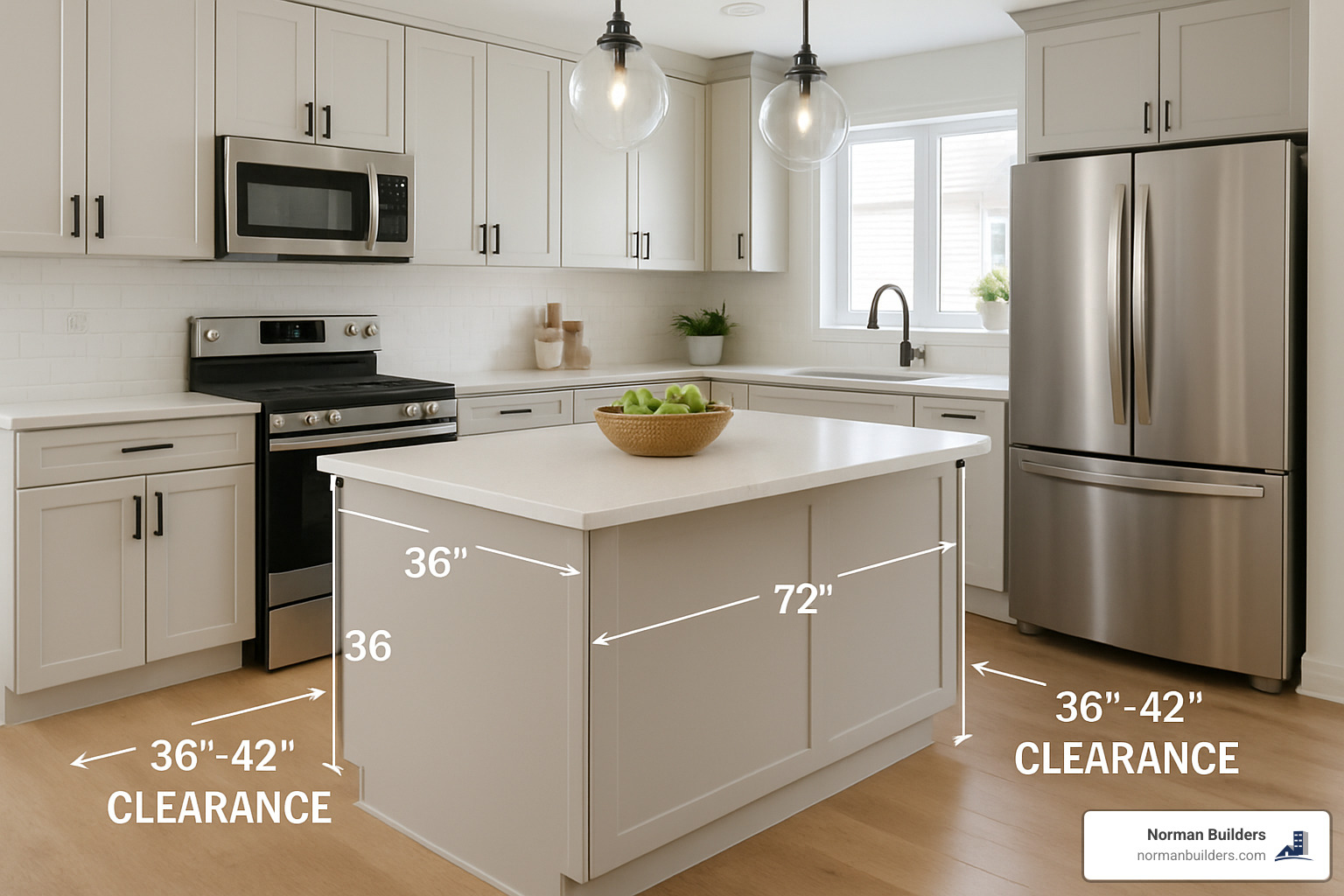
Creating the perfect kitchen island starts with getting the measurements right. After helping hundreds of families throughout New Hampshire and Massachusetts design their dream kitchens, I’ve found that proper dimensions make all the difference between an island that works beautifully and one that feels awkward.
For depth, most kitchen island design ideas work best between 24 and 36 inches. When I’m designing for clients who want to include a sink or cooktop, I typically recommend extending to 36-42 inches to provide adequate working space. One Andover homeowner told me, “That extra six inches of depth made all the difference when my kids help with dinner prep.”
Length matters tremendously too. While 4 feet is the absolute minimum to be functional, I find that 6-8 feet creates the sweet spot for most family kitchens. Your island should feel proportional to your kitchen—not too massive, not too puny—while maintaining those crucial clearances around all sides.
Speaking of clearances, they’re non-negotiable if you want a kitchen that flows well. Always maintain 42-48 inches between your island and surrounding countertops or appliances. I can’t tell you how many times I’ve walked into kitchens where islands were installed too close to refrigerators, making it impossible to fully open the doors!
For comfortable seating, plan about 24 inches of width per person. A family of four needs at least 8 feet of seating space. Don’t forget the overhang—12 inches minimum, though 15-18 inches provides ideal knee room. One of my North Shore clients laughed that before their renovation, “Our knees were constantly bumping the cabinets during breakfast.”
When it comes to layout options, the possibilities are wonderfully versatile:
Rectangular islands remain the most popular choice for good reason—they fit most kitchens and provide maximum functionality. L-shaped designs create natural work zones and can help define spaces in open floor plans. For narrower kitchens, a slim galley-style island might be the perfect solution. In grand kitchens, we sometimes install double islands—one for cooking and one for gathering.
Waterfall edge islands, where the countertop material continues down the sides to the floor, have become increasingly popular. As one Seacoast client put it, “It’s like functional sculpture in our kitchen.”
The shape of your island dramatically impacts both how it looks and how it functions. Rectangle islands work beautifully in most kitchens, offering the most surface area and storage options. They’re my go-to recommendation for families who need versatility.
Square islands create a striking focal point and work wonderfully in kitchens where space is evenly distributed. They allow equal access from all sides, which is perfect for households where multiple cooks often work together.
T-shaped islands blend work and social spaces brilliantly. The extended “table” portion creates a natural dining area while maintaining a dedicated prep space. I recently completed a T-shaped island for a family in Southern NH who loved that it let parents cook while facing children doing homework.
Furniture-style islands with legs rather than solid cabinet bases bring a lighter feel to the kitchen. They’re especially effective in smaller spaces where visual lightness helps the room feel more spacious. The open space underneath also creates convenient toe-kick areas and can make cleaning easier.
When helping clients choose, I always consider both their kitchen’s architecture and how they’ll actually use the space day to day. The perfect shape should improve your cooking workflow while supporting your family’s gathering habits.
Getting seating right transforms an island from a mere workspace to the heart of family life. The height you choose sets the tone for interactions.
Bar-height seating (42 inches) creates a casual, energetic atmosphere. It’s perfect for quick breakfasts or when entertaining, as guests can comfortably converse with someone standing to cook. The liftd height also helps hide meal prep mess—a trick I often suggest to clients who entertain frequently.
Counter-height seating (36 inches) matches your standard countertops and provides the most comfortable option for extended sitting. I typically recommend this height for families with younger children or when the island serves as the primary dining area. One Merrimack Valley client noted, “Our counter-height island has become command central for everything from breakfast to homework to family game nights.”
Two-tier solutions offer the best of both worlds, with a raised bar section providing visual separation from cooking mess. This design works beautifully in open concept homes where you might want to hide kitchen cleanup from living room views.
For truly comfortable seating, remember these crucial measurements: 24 inches width per person, 15-18 inches knee space depth, 9-13 inches toe kick space, and at least 18 inches from floor to counter bottom. Getting these details right means the difference between seating people actually enjoy using versus stools that collect clutter.
The right island seating doesn’t just provide a place to eat—it creates the social center where family moments happen, from morning coffee conversations to late-night heart-to-hearts over ice cream.
Please note: Our services are exclusively available in Massachusetts, specifically in Andover, MA, the North Shore, and New Hampshire, covering the Seacoast and Southern NH regions.
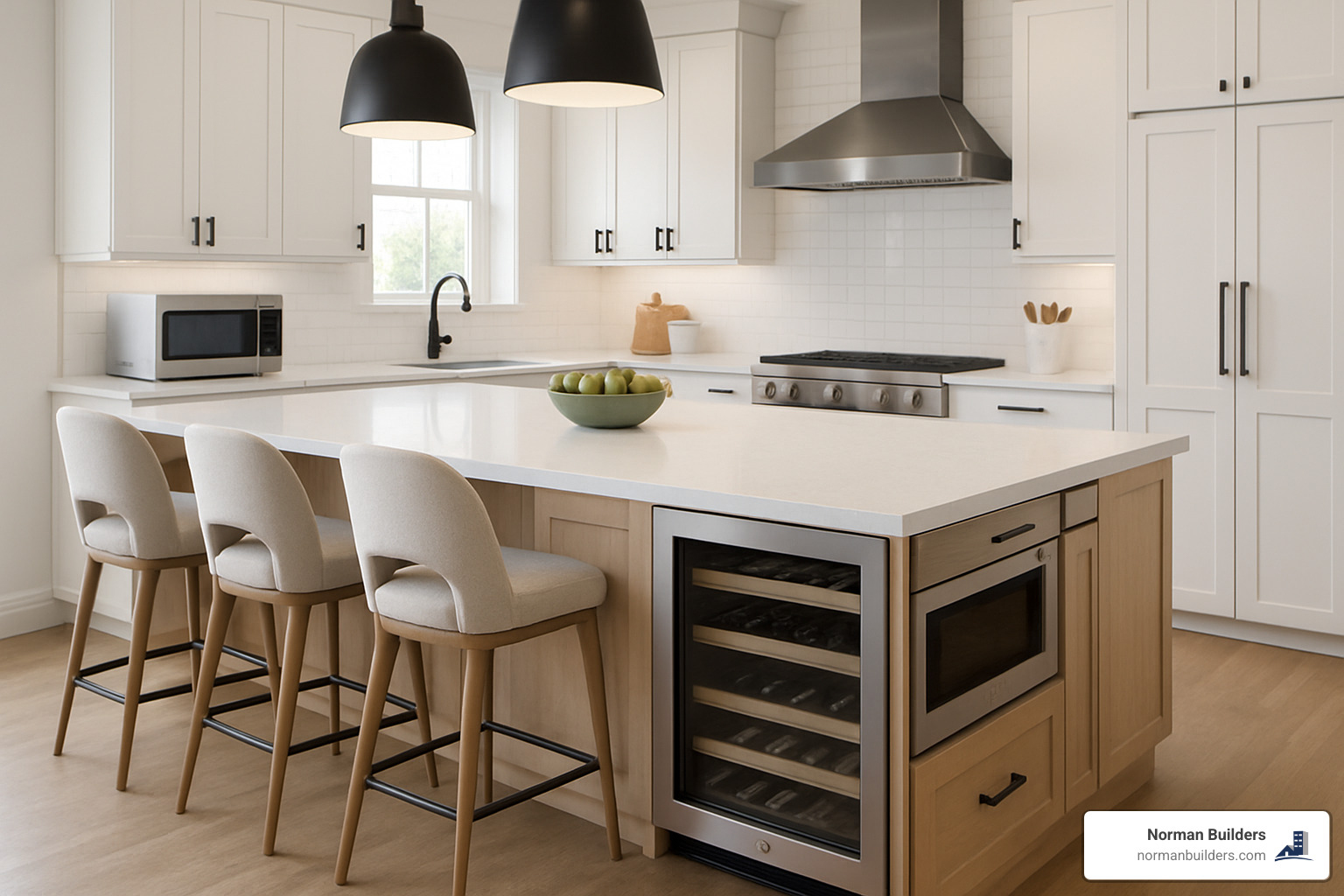
The magic of a kitchen island design ideas happens when it’s custom specifically to your family’s needs. Think of your island as a blank canvas – one that can transform your kitchen’s functionality while reflecting your personal style.
I’ve helped countless homeowners across the Merrimack Valley create islands that solve their unique kitchen challenges. One Andover family with three teenage athletes needed extra storage for snacks and meal prep, so we integrated deep drawer banks and a dedicated beverage fridge accessible from the dining area side. Their island became command central for their busy household.
Your island can include thoughtful storage like pull-out organizers that keep spices and cooking tools at your fingertips, or hidden trash compartments that disappear when not needed. Many of our clients opt for open shelving on one end – perfect for displaying cookbooks or seasonal décor without sacrificing valuable workspace.
The seating possibilities are equally versatile. Beyond traditional bar stools, consider a breakfast nook extension that creates a cozy spot for morning coffee, or a banquette-backed design that offers comfortable support for longer gatherings. One creative solution we installed for a Salem family included a corner seating arrangement that maximized their modest kitchen footprint while providing ample room for their young children.
Appliance integration takes your island to the next level of functionality. Microwave drawers free up valuable counter space while remaining accessible to family members of all heights. Beverage refrigerators keep drinks handy for guests without disrupting the cooking zone. For serious home chefs, a sink-cooktop combo turns your island into a complete cooking station.
Don’t forget the special touches that make daily life easier – charging stations with hidden outlets keep devices powered without unsightly cords, and pet feeding stations with built-in storage for food and treats can be tucked into an island end. One North Shore client even requested rolling casters on their island, allowing them to reconfigure their space for large holiday gatherings.
For more comprehensive kitchen change ideas, visit our Kitchen Remodeling Design page.
Counter clutter is the enemy of a functional kitchen. A well-designed island offers storage solutions that keep surfaces clear while keeping everything you need within reach.
Deep drawers transform how you organize your kitchen. Unlike traditional cabinets where items get lost in the back, drawers extend fully, giving you immediate access to everything inside. “I can finally see and reach all my pots and pans without digging around blindly,” shared one Exeter homeowner after we installed a bank of deep drawers in their island.
Apothecary-style units bring old-world charm with modern functionality. These drawer systems feature multiple compartments sized perfectly for organizing smaller items like spices, measuring tools, or specialty gadgets. We recently completed a kitchen in Hampton where we incorporated these distinctive drawers, complete with custom dividers for the homeowner’s collection of exotic spices.
The narrow ends of your island offer prime real estate for bookcase end caps. These slim shelves maximize otherwise wasted space and provide the perfect spot for cookbooks or display items that add personality to your kitchen. They’re also ideal for frequently used items you want visible and accessible.
For items that need specialized storage, custom inserts make all the difference. Knife block drawers keep sharp items safely stored but easily accessible. Wine bottle cradles protect your collection while keeping it handy for entertaining. One innovative client in Southern NH requested a custom drawer with charging stations for the family’s tablets and phones – genius!
The often-overlooked back of the island can be put to work too. For islands with seating on one side, we recommend installing shallow cabinets accessed from the back – perfect for storing seasonal items or special occasion serveware that doesn’t need daily access.
Comfortable seating transforms your island from a work surface into the social heart of your home. The key is getting the ergonomics right.
Proper legroom makes the difference between a quick perch and a place where people want to linger. For counter-height seating (36″), provide at least 15 inches of knee depth and 9 inches of toe space beneath the counter. One Portsmouth client told me, “We finally have an island where our teenagers actually want to sit and chat while I cook – it’s changed our family dynamic completely.”
Spacing your seating appropriately ensures everyone has comfortable elbow room. Allow a minimum of 24 inches width per person, though 30 inches is ideal if your space allows. Crowding too many seats around an island might look impressive in photos, but creates an uncomfortable dining experience in real life.
Consider placing seating on two sides of your island when possible. This dual-side seating arrangement encourages face-to-face conversation, making meals and gatherings more engaging. It’s particularly popular for family breakfasts and casual dinners where interaction is as important as the food itself.
Matching your seating height to your counter is crucial for comfort. For a standard 36-inch counter, select 24-inch stools; for a taller 42-inch bar height, 30-inch stools are appropriate. I always recommend testing the seating height before finalizing your selection – what looks right in theory might feel awkward in practice.
For extended comfort, especially in islands that serve as primary dining areas, consider stools with backs or a banquette-style setup. As one client in Andover noted with a laugh, “The banquette backing on our island solved the problem of chasing stools around the kitchen every time someone got up!”
Adding appliances to your island can dramatically improve functionality, but placement is everything. The goal is convenience without compromising workflow.
When incorporating a prep sink, position it off-center rather than in the middle of your island. This preserves uninterrupted counter space for food preparation while still providing the convenience of a secondary water source. This arrangement allows multiple cooks to work simultaneously without crowding each other – something many of our clients in larger households particularly appreciate.
Cooktops require careful ventilation planning. While retractable downdraft systems are popular for their sleek appearance, they may not offer ventilation as effective as overhead hoods. For serious cooks, we often recommend a suspended hood above the island. These can become stunning design features while providing superior ventilation performance.
Refrigerator drawers add incredible convenience without disrupting your main work triangle. Placing these at the end of an island accessible to family members reduces traffic through the cooking zone. They’re perfect for keeping beverages, snacks, or frequently used ingredients like butter and eggs within easy reach.
If adding a dishwasher to your island, position it near the sink but consider which way the door opens. A poorly placed dishwasher door can block key walkways during loading and unloading. We typically recommend placing the dishwasher to the side of the sink rather than directly opposite the main cooking area.
Microwave drawers deserve thoughtful placement too. Install them at the outer end of the island where family members can access them without entering the cook’s workspace. This strategy, which we’ve successfully implemented in several Exeter and Hampton homes, allows kids to heat up snacks or adults to warm leftovers without interrupting meal preparation.
Please note: Our services are exclusively available in Massachusetts, specifically in Andover, MA, the North Shore, and New Hampshire, covering the Seacoast and Southern NH regions.

Don’t let a cozy kitchen crush your island dreams! Even the most compact spaces can enjoy the benefits of an island with some creative thinking and smart design choices.
Small kitchens actually present a wonderful opportunity to get creative. I’ve seen homeowners transform their modest kitchens with mobile carts that offer flexibility—providing extra workspace when needed and tucking away neatly when not in use. The key is finding models with built-in storage to maximize functionality.
For particularly narrow kitchens, a console table can work wonders. Choose one that matches your counter height (typically 36 inches) for a seamless look that doesn’t overwhelm the space. One homeowner in Andover told me, “My kitchen felt twice as functional once we added our slim console island, and guests always compliment how clever the solution is.”
Narrow butcher blocks measuring just 18-24 inches wide provide dedicated chopping space without dominating your floor plan. This approach works beautifully in galley layouts where every inch counts. Similarly, islands with fold-down leaf extensions offer the best of both worlds—compact for daily use, but expandable when you’re hosting or tackling bigger cooking projects.
Don’t overlook the charm and value of repurposed furniture. A vintage dresser, desk, or dining table can become a one-of-a-kind island that adds character while saving money. As one creative homeowner shared, “We transformed an antique table into our island for just $75—$65 for the table and $10 for quality casters. It’s now the most complimented feature in our home.”
For more wallet-friendly kitchen updates beyond islands, check out our DIY Kitchen Cabinet Update Ideas page or browse through 35 Small Kitchen Island Ideas for Maximizing Space and Style for additional inspiration.
The layout you choose can make all the difference in a smaller kitchen. A galley-skinny design (18-24 inches wide) can fit perfectly in narrow spaces while still providing valuable prep area and potentially even accommodating a stool or two at one end.
For kitchens with unusual angles, consider a corner-angled placement that follows your room’s unique geometry. This approach makes use of otherwise awkward spaces and creates a more natural flow. I recently visited a home in Exeter where the angled island perfectly complemented the kitchen’s architecture, making the space feel intentional rather than cramped.
Rolling block solutions offer incredible versatility for small kitchens that need to adapt throughout the day. A substantial butcher block mounted on industrial-grade casters provides a sturdy work surface that can be repositioned as needed. One family in Portsmouth uses theirs as a breakfast bar in the morning, a homework station in the afternoon, and rolls it against the wall for extra floor space when entertaining.
If a traditional island won’t fit, consider a peninsula conversion instead. By enhancing an existing peninsula with seating, storage, or specialized features on the room-facing side, you get many island benefits without requiring the all-around clearance.
For visual spaciousness, slim open-leg designs allow light to flow beneath the island, preventing the heavy, closed-in feeling that solid cabinetry can create in small spaces. This approach works particularly well in historic homes throughout New England where period-appropriate details matter.
Creating a beautiful island doesn’t require emptying your savings account. Start with simple upgrades like milk or chalk paint to refresh an existing island. These paints require minimal preparation and create a beautiful matte finish that’s easily distressed for a vintage look that fits perfectly in New England homes.
Adding wood trim to the front panels of a basic island creates architectural interest at minimal cost. The change can be remarkable—as one designer noted after a project in Newburyport, “Who knew a few simple wood strips could be such a game-changer?”
Don’t underestimate the power of thrift store conversions. The Merrimack Valley area has wonderful secondhand shops where you can find solid wood furniture with good bones. Cosmetic issues are easily addressed, and the resulting island will have character that mass-produced options can’t match.
For a weekend project with professional results, try a DIY shiplap wrap. Pre-grooved panels can transform a plain island into a coastal-inspired focal point. The vertical lines also create the illusion of height in smaller spaces—a trick we’ve used in several New Hampshire coastal homes.
Sometimes the simplest changes make the biggest impact. Hardware updates can completely transform your island’s appearance without major construction. Choose statement pulls or knobs that contrast with the cabinetry for maximum visual interest.
If your island has a solid end panel, consider replacing it with open shelving to increase storage and display space. This modification adds both function and style without requiring a complete rebuild—perfect for homeowners who want a meaningful change without a major investment.
At Norman Builders, we’ve helped countless homeowners throughout the Seacoast and Southern NH regions achieve stunning kitchen changes through these cost-effective techniques that deliver maximum impact without breaking the bank.
Please note: Our services are exclusively available in Massachusetts, specifically in Andover, MA, the North Shore, and New Hampshire, covering the Seacoast and Southern NH regions.
The materials, lighting, and decorative elements you choose for your kitchen island can transform it from merely functional to truly spectacular. These finishing touches don’t just add beauty—they create the personality and atmosphere of your kitchen space.
When selecting countertop materials, consider both aesthetics and practicality. Quartz offers exceptional durability and minimal maintenance, making it perfect for busy families. The natural warmth of butcher block creates an inviting surface that’s gentle on knives, though it requires occasional oiling. For serious cooks who frequently work with hot pans, soapstone’s excellent heat resistance and developing patina make it an outstanding choice. Those seeking an industrial look might prefer concrete with its unlimited customization potential, while artisan metals like zinc develop beautiful character as they age with use.
“The countertop material is often the first thing people notice about your island,” says Ryan Norman. “It should reflect both your style and how you actually use your kitchen.”
Cabinet finishes present another opportunity to express your style. Many homeowners are embracing bold, contrasting colors that make the island a focal point. Dusty blue paint (like Benjamin Moore’s Atmospheric) creates a sophisticated look, while sage green and deep navy remain perennially popular choices. Architectural details like fluted panels or X-brace elements add visual interest, while waterfall edges—where the countertop material continues down the sides—create a dramatic, contemporary statement.
Lighting your island properly is absolutely essential. Pendant lights should hang 30-36 inches above the island surface, providing adequate illumination without blocking sightlines. For longer islands, space multiple pendants evenly, allowing at least 6 inches between each fixture and the edge of the island. Consider installing dimmers to adjust the mood from bright task lighting to softer ambient illumination for evening gatherings.
For comprehensive solutions that address all these elements, visit our Kitchen and Bath Renovations page.
The right lighting transforms your island from a daytime workspace into an evening gathering spot. Task-focused pendants that direct light downward ensure you can clearly see what you’re chopping, mixing, or reading. For safety and comfort, mount these fixtures 30-36 inches above the countertop—high enough to avoid blocking views across the island but low enough to provide effective illumination.
“Lighting is one of the most overlooked aspects of kitchen design,” notes Ryan Norman. “Yet it’s something our clients comment on daily once their renovation is complete.”
Always install dimmers with your island lighting. This simple addition allows bright, functional light during meal preparation and softer, more flattering illumination for dining or entertaining. The flexibility completely transforms how your island functions throughout the day.
Scale matters tremendously with pendant lighting. Select fixtures proportional to your island size—oversized pendants overwhelm a small island, while tiny fixtures disappear over a large surface. A good rule of thumb: the sum width of multiple pendants should equal about one-third the length of your island.
Don’t forget about electrical outlets—building codes require at least one on kitchen islands. Consider pop-up outlets or drawer-integrated charging stations that maintain your island’s clean lines while providing necessary functionality. These thoughtful details make a world of difference in daily use.
Durability should be your primary consideration when selecting materials for your kitchen island. After all, this surface will likely see more action than any other spot in your home.
| Material | Durability | Heat Resistance | Maintenance | Best For |
|---|---|---|---|---|
| Quartz | Excellent | Good | Minimal | Busy families, low maintenance |
| Granite | Very Good | Excellent | Moderate (sealing) | Serious cooks, natural look |
| Wood | Good | Poor | Regular oiling | Bakers, knife work |
| Soapstone | Excellent | Excellent | Occasional oiling | Heat-intensive cooking |
| Concrete | Very Good | Good | Periodic sealing | Industrial aesthetic |
For cabinets, construction quality makes all the difference in longevity. Look for solid wood frames, dovetail drawer construction, and soft-close hardware. Factory-finished cabinets typically offer superior durability compared to site-finished options, with more consistent application and curing.
Water resistance matters tremendously, especially if your island incorporates a sink. Choose cabinet materials and finishes that can withstand occasional moisture exposure without warping or damage. And consider your household’s habits—if your island will see heavy use from children or serve as an entertainment center, prioritize scratch and dent-resistant finishes.
“We always ask clients to think about how they actually live,” says Ryan Norman. “The most beautiful materials aren’t worth much if they can’t stand up to your family’s daily routines.”
The art of island styling lies in balancing beauty with function. Your island needs to work as hard as it looks good, so resist the temptation to sacrifice valuable prep space for decorative items.
A decorative tray creates an instant collection from everyday necessities like olive oil, salt, and pepper. Rather than appearing as scattered items, they become an intentional display that can be easily moved when you need the counter space. This simple trick transforms functional items into an aesthetic statement.
For cookbook lovers, a small easel or stand displays your favorite recipe book without consuming valuable work space. This adds personality and color while keeping recipes accessible during meal preparation—a perfect blend of function and style.
Living elements add warmth to any kitchen. A small potted herb or succulent brings life to your island without taking up much room. Choose low-maintenance varieties that thrive indoors, and you’ll have both beauty and fresh ingredients at your fingertips.
“The most successful island styling comes from thinking seasonally,” notes one of our designers. “Fresh fruit in summer, miniature pumpkins in fall, and festive ornaments during holidays keep your kitchen feeling current without a complete redesign.”
Perhaps most importantly, negative space is essential for a functional work surface. The most beautiful islands maintain plenty of open counter area for food preparation, homework, or impromptu gatherings. As one Andover homeowner wisely observed, “It’s better to err on the side of utility rather than decoration—you can always add more decor for special occasions.”
Please note: Our services are exclusively available in Massachusetts, specifically in Andover, MA, the North Shore, and New Hampshire, covering the Seacoast and Southern NH regions.
Space is the first consideration when dreaming about a new island. I’ve walked through hundreds of kitchens with homeowners who wonder if their space can accommodate this popular feature. The magic number to remember is 42 inches—that’s the minimum clearance needed around all sides of your island for comfortable movement.
For most homes, kitchens less than 13 feet wide simply don’t have enough breathing room for a traditional island. But don’t worry if your kitchen falls short of this measurement. We’ve helped many homeowners find creative alternatives:
A peninsula extending from existing cabinetry gives you many of the same benefits without requiring clearance on all sides. Narrow islands (24 inches wide or less) can fit in tighter spaces while still providing valuable workspace. Mobile carts offer flexibility—roll them in when needed and tuck them away when you want more floor space. Table-style islands with open legs allow light to flow underneath, making smaller spaces feel more open.
I always recommend following the 10 percent rule: your island should take up no more than 10 percent of your kitchen’s total square footage. This ensures proper proportion and maintains good traffic flow. If you’re unsure about your measurements, we at Norman Builders can evaluate your space and recommend the perfect solution for your specific layout.
This question comes up in nearly every kitchen consultation I conduct, and the answer isn’t one-size-fits-all. Both matching and contrasting approaches can create stunning results—the right choice depends on your overall design goals.
Matching your island to your perimeter cabinets creates a seamless, cohesive look that makes your kitchen feel larger and more open. This approach provides a clean backdrop that lets other design elements—like a statement light fixture or decorative backsplash—take center stage.
Choosing a contrasting island establishes it as the focal point of your kitchen. Many of our clients in Andover and along the North Shore have acceptd this trend, opting for navy blue or sage green islands paired with white perimeter cabinets. This strategy adds visual interest and can make your kitchen feel more custom and intentional.
A popular middle ground I often recommend is maintaining material consistency while varying color. For example, use the same cabinet style throughout but paint the island in Benjamin Moore’s Atmospheric for a subtle contrast that feels cohesive rather than jarring.
The most important consideration is creating a purposeful relationship between your island and surrounding elements. As I tell my clients, “Your island should feel like it belongs in the space, whether it matches exactly or stands out intentionally.”
Adding appliances to your island can transform how you use your kitchen, but it’s not the right choice for everyone. Let me walk you through the considerations that matter most.
The biggest advantage of an island sink or cooktop is the social connection it creates. You can face your family or guests while preparing meals instead of turning your back to them at a perimeter counter. This setup is particularly valuable for parents who want to supervise homework while cooking dinner.
An island with integrated appliances also optimizes your kitchen’s work triangle, reducing the steps between cooking, cleaning, and storage zones. For serious home chefs, this efficiency can be game-changing. As one client in Hampton told me, “Having my prep sink in the island cut my meal preparation time almost in half.”
However, these benefits come with tradeoffs. Appliances reduce your available counter space for other activities like baking or buffet-style serving. The installation requires complex plumbing or ventilation work that increases your project cost. And for families with young children, hot cooking surfaces in a gathering area can pose safety concerns.
Your cooking habits and lifestyle should guide this decision. If you entertain frequently and value conversation while cooking, an island appliance might be worth every penny. If you prefer a clean, uninterrupted workspace for serving or projects, keeping appliances at the perimeter might better suit your needs.
At Norman Builders, we take time to understand how you actually use your kitchen before making recommendations. There’s no universal right answer—only the solution that works best for your family’s specific needs.
Please note: Our services are exclusively available in Massachusetts, specifically in Andover, MA, the North Shore, and New Hampshire, covering the Seacoast and Southern NH regions.
A thoughtfully designed kitchen island does more than just provide additional counter space—it truly transforms how your entire home functions. By serving as both a practical workspace and social hub, the right kitchen island design ideas improve workflow, encourage family interaction, and create a natural gathering point for guests.
When planning your kitchen island, remember these essential principles that we’ve seen make the biggest difference for our clients:
First and foremost, let function drive form. Determine exactly how you’ll use the island before finalizing its design. Will it primarily be for meal prep, casual dining, homework station, or entertaining? Your unique needs should shape every decision.
Proper sizing matters tremendously. I’ve seen too many beautiful islands that simply don’t work because they’re too large or too small for the space. Always maintain that critical 42-inch clearance for comfortable movement around all sides.
Your island should thoughtfully integrate with the overall kitchen design. Whether you choose a matching or contrasting approach, ensure your island has a purposeful relationship with the surrounding elements rather than feeling like an afterthought.
Quality materials make all the difference in longevity. The island typically sees the heaviest use of any kitchen surface, so invest in durable countertops and cabinetry that will withstand years of daily life. This is no place to cut corners!
Finally, don’t forget those personalized details that make the space truly yours. From specialized storage solutions to unique lighting fixtures, these thoughtful touches reflect your specific needs and style while making everyday tasks more enjoyable.
At Norman Builders, we’ve been creating custom kitchen solutions for homeowners throughout the Merrimack Valley, North Shore, Seacoast, and Southern NH areas since 2007. Our team understands that a kitchen island isn’t just a trending feature—it’s a significant investment in your home’s functionality and value.
Whether you’re considering a complete kitchen renovation or simply updating your existing space with a new island, we invite you to explore our comprehensive approach to Whole-House Renovations and kitchen changes.
The perfect kitchen island strikes that delicate balance between practical considerations and aesthetic appeal. It works seamlessly with your lifestyle while making a design statement that reflects your personal taste. With careful planning and expert guidance, your island can truly become the heart of your home for years to come.
Please note: Our services are exclusively available in Massachusetts, specifically in Andover, MA, the North Shore, and New Hampshire, covering the Seacoast and Southern NH regions.

We specialize in high-quality home construction and remodeling services, delivering exceptional craftsmanship tailored to meet your vision and needs. Whether you’re planning a renovation, new construction, or a custom remodel, our experienced team is committed to exceeding expectations with precision, attention to detail, and reliable service.
Our service area includes the Merrimack Valley, North Shore, Seacoast, and Southern NH Areas. We take pride in the quality of our workmanship and our prompt professionalism.
Contact us today to bring your project to life!