

How long does a whole house renovation take? This common question is crucial for homeowners planning to transform their living spaces. A whole house renovation is a significant endeavor that generally spans 16 to 24 weeks. However, the actual timeline can vary based on several factors like the home’s size and the project scope.
Renovating a home is a major life change, but with proper planning, it can be a rewarding and fun trip. Effective scheduling is vital to ensuring a smooth process, from the initial design phase to the finishing touches. Whether it’s securing permits or managing construction timelines, every step requires careful thought and coordination.
I’m Ryan Norman, and with my expertise, I guide clients through understanding how long does a whole house renovation take based on personal experience and lessons learned over the years. My background in technology, real estate, and construction management allows me to craft renovation plans that align with your dream vision, while sticking to timelines.
How long does a whole house renovation take vocab explained:
– before and after home renovations
– home renovation costs
– interior home remodeling
When considering how long does a whole house renovation take, several factors can significantly influence the timeline. Understanding these elements can help set realistic expectations and prepare for potential delays.
The scale of your renovation project is a primary determinant of the timeline. Are you updating a single room or undertaking a complete home overhaul? The difference is substantial. A single-room renovation might involve minor updates and can be completed relatively quickly. In contrast, a whole house renovation, especially those involving structural changes or additions, requires more time and resources. Structural changes, such as removing load-bearing walls or adding new rooms, add complexity and can extend the timeline.
The size of your home also plays a crucial role. Smaller homes naturally take less time to renovate compared to larger properties. The complexity of the design and the number of rooms involved can further complicate matters. For instance, a sprawling estate with multiple bathrooms and specialized rooms will require more planning and labor than a modest three-bedroom house.
Weather conditions can be unpredictable and often impact renovation timelines. Extreme temperatures, whether hot or cold, can affect the drying times of materials like paint and concrete. For instance, very cold weather can delay concrete curing, while high heat may lead to issues with paint adhesion. Additionally, precipitation, such as rain or snow, can halt exterior work and complicate site access. Regional considerations, like hurricane seasons or heavy snowfall periods, should be factored into scheduling.
Navigating the bureaucratic maze of permits and approvals can be a significant hurdle. City permits and HOA approvals are often necessary, and any delays in obtaining these can stall your project. In some cases, the permit office might experience backlogs, or an HOA board member might be unavailable, causing further delays. Inspection delays can also occur, especially if the project requires multiple phases of inspection.
Renovations often uncover unexpected problems, particularly in older homes. Issues such as mold, water damage, or a cracked foundation can emerge once demolition begins. These problems need immediate attention and can significantly alter your timeline. Additionally, finding old or unsafe construction materials, such as asbestos or outdated wiring, requires careful handling and can further delay progress.

Each of these factors plays a role in determining how long does a whole house renovation take. Being aware of these potential influences allows homeowners to plan more effectively and work closely with their contractors to keep the project on track.
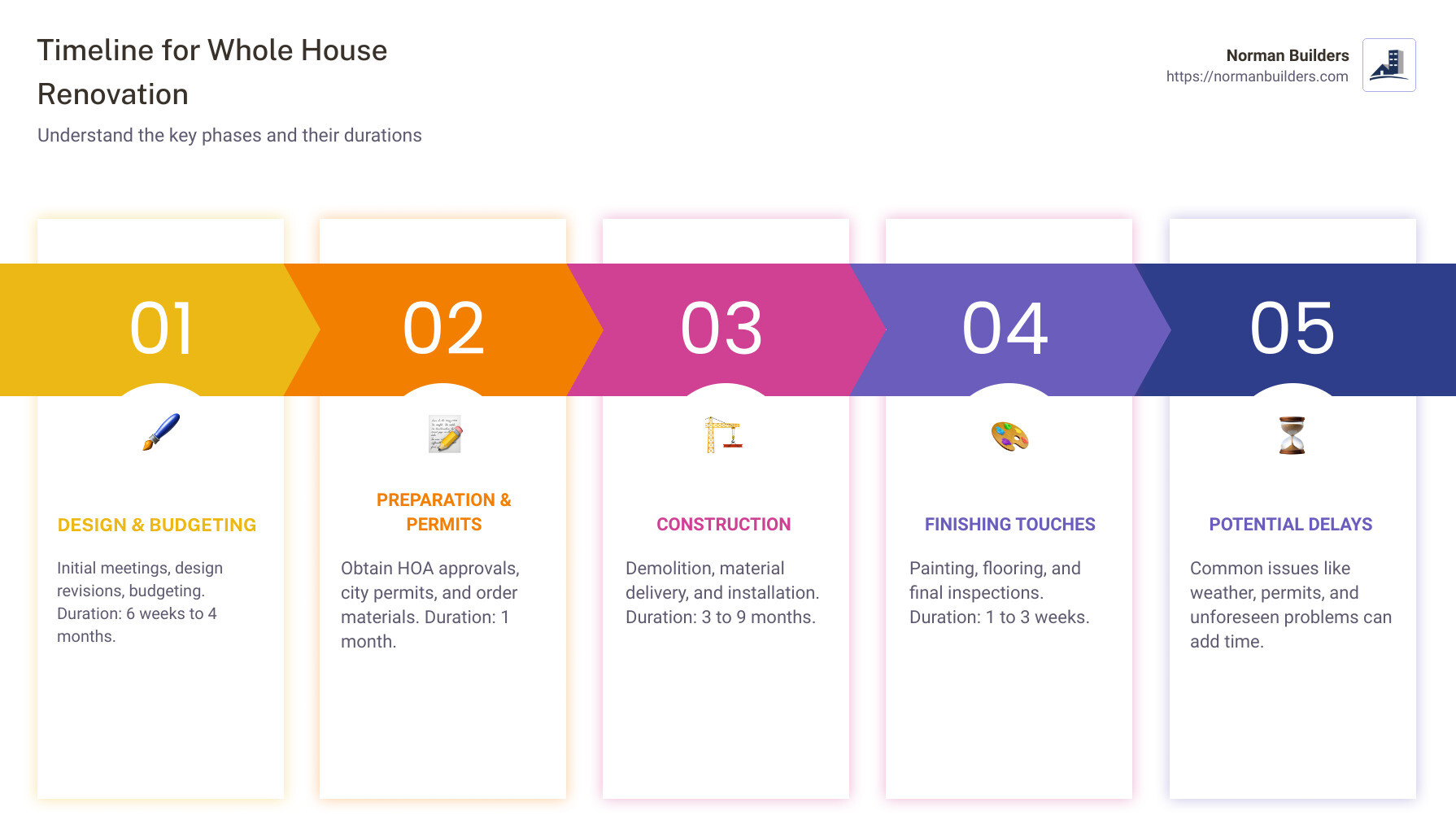
Renovating an entire house is a journey through several distinct phases. Each phase is crucial and contributes to the overall timeline, which can range from 16 to 24 weeks. Here’s a closer look at each step in the renovation process.
This initial phase sets the foundation for your project. It involves initial meetings with designers and contractors to discuss your vision and needs. During these meetings, it’s crucial to provide clear input and be open to design revisions. This phase typically lasts 6 weeks to 4 months, depending on the complexity of your project and how many changes are made to the design.
Budgeting is also a key component here. A detailed budget helps prevent overspending and ensures resources are allocated efficiently. It’s important to finalize your choices for materials and finishes early to avoid delays later on.
Once the design is set, it’s time to prepare for construction. This phase includes obtaining necessary HOA approvals and city permits, as well as ordering materials. These steps can take about 1 month, but delays in approvals or material availability can extend this timeline.
During this time, schedules for workers and subcontractors are also locked in. This ensures everyone is ready to start as soon as permits are granted and materials arrive.
This is where the bulk of the work happens, including demolition, material delivery, and installation. The construction phase can vary greatly, typically lasting 3 to 9 months, depending on the project’s scope.
For instance, tearing down walls or installing new plumbing and electrical systems can add time. Coordination is key to keep things moving smoothly, and regular communication with your project manager can help address any issues quickly.
As construction wraps up, the final stage involves painting, flooring, and final inspections. These finishing touches usually take 1 to 3 weeks. This phase is crucial for ensuring everything meets your standards and local building codes.
Final inspections are conducted to ensure all work is up to code and safe for occupancy. Any minor issues found during these inspections are addressed before the project is officially completed.
Understanding these phases helps set realistic expectations for how long does a whole house renovation take. Each step is vital to ensure a successful change of your home.
When considering a whole house renovation, one of the first questions that comes to mind is: how long does a whole house renovation take? The answer isn’t straightforward, as it depends on various factors, including the scope of the project, potential delays, and the customization involved.
For most whole house renovations, you can expect the process to take anywhere from 16 to 24 weeks (or about 4 to 6 months). This timeframe encompasses everything from the initial design phase to the finishing touches.
A typical renovation project is divided into several phases, each with its own timeline. The design and budgeting phase can take 6 weeks to 4 months, followed by the prep and construction phase, which usually lasts about a month. The bulk of the work happens in the construction phase, typically spanning 3 to 9 months, depending on the complexity and size of the renovation.
Communication is key throughout the process. A detailed schedule provided by your contractor can help you keep track of progress and anticipate any potential delays. Regular updates ensure that you stay informed and can address any issues promptly.
If you’re considering a full gut remodel, be prepared for a more extended timeline. This type of renovation involves starting from scratch, which means stripping the house down to its framework. A full gut remodel typically takes 9 to 12 months due to its comprehensive nature.
Gutting a house involves extensive demolition and often requires reconfiguring the interior layout. This can include knocking down walls, updating plumbing and electrical systems, and installing new structural elements. The complexity of these tasks contributes to the longer timeline.
Custom projects within a full gut remodel can also add time. Personalized designs and unique materials may have longer lead times, so plan accordingly. Being flexible and proactive in decision-making can help mitigate delays.
In summary, understanding the typical timeline for a whole house renovation helps set realistic expectations. Whether it’s a standard renovation or a full gut remodel, knowing the phases and potential delays can prepare you for the journey ahead.
When diving into a whole house renovation, it’s helpful to break down the project into smaller, common renovation tasks. Each of these has its own timeline and unique challenges. Here’s a closer look at some of the most frequent projects: kitchen remodels, bathroom remodels, basement finishing, and home additions.
The kitchen is often the heart of the home, and renovating it can be a major undertaking. A typical kitchen remodel usually takes between 6 to 12 weeks. This timeline covers everything from demolition to the final touches.
Regular communication with your contractor is essential to ensure that the project stays on schedule, especially when dealing with custom pieces.
Bathrooms may be smaller spaces, but they come with their own set of challenges. A bathroom remodel typically takes 3 to 10 weeks.
The complexity of bathroom renovations often lies in the details, like tiling and custom fittings, which can extend the timeline.
Finishing a basement can add valuable living space to your home. This project generally takes 1 to 2 months.
Basement projects are less disruptive to daily life since they are separate from the main living areas, but they still require careful planning and execution.
Adding a new room or expanding existing space involves more than just construction. Home additions usually take 3 to 5 months due to their complexity.
Home additions require careful planning to ensure they blend seamlessly with the existing structure, which can impact the timeline.
Understanding the timelines for these common renovation projects can help you plan effectively. Each project comes with its own set of challenges and considerations, but with the right approach, you can transform your home into the space of your dreams.
When starting on a whole house renovation, staying on schedule is crucial. Here are some practical tips to help you keep your project on track.
Experience, reliability, and transparency are key when selecting a contractor. A seasoned contractor not only brings expertise but also a network of reliable subcontractors. This can significantly reduce delays.
Engaging an interior designer early in the process can streamline your renovation. This approach ensures that design decisions are made before construction begins, helping to avoid costly delays.
Being aware of lead times for materials and products can save you from unnecessary delays.

By focusing on these key areas—choosing the right contractor, early interior design, and understanding lead times—you can help ensure your whole house renovation stays on track.
Next, we’ll dig into some frequently asked questions about whole house renovations, providing insights into budgeting, timelines, and the factors that can influence the duration of your project.
When considering how long does a whole house renovation take, budget is a critical factor. A $100,000 budget can be sufficient for a renovation, but it largely depends on the scope and scale of the project.
Renovations often extend beyond initial estimates due to various factors:
The duration of a renovation project can vary widely:
Understanding these timelines and the factors that influence them can help you better plan and manage expectations for your renovation project.
In the next section, we’ll explore common renovation projects and their specific timelines, providing further clarity on what to expect when you start on updating your home.
Starting on a whole house renovation is a significant undertaking, and understanding how long does a whole house renovation take is crucial for a smooth experience. On average, such projects can range from 16 to 24 weeks, but more extensive renovations might extend to 9 to 12 months.
The key to a successful renovation lies in meticulous planning. By understanding the phases of the renovation—from design and budgeting to the final touches—you can better manage your time and resources. This foresight helps in anticipating potential delays, such as supply chain disruptions or unforeseen structural issues, and allows for flexibility in your timeline.
At Norman Builders, we pride ourselves on our expertise and personalized service. With over a decade of experience in the Merrimack Valley, North Shore, Seacoast, and Southern NH areas, we have honed the art of delivering top-tier, custom-built homes and remodels. Our approach is centered on transparency, communication, and exceptional craftsmanship, ensuring that your renovation journey is as seamless and rewarding as possible.
Whether you’re considering a full gut remodel or updating specific areas of your home, our team is here to guide you every step of the way. We understand the importance of turning your vision into reality while respecting your budget and timeline.
For more information on our services and to start planning your dream renovation, visit our Whole House Renovations page.
With the right planning and the right team, your renovation project can transform your home into a space you truly love.

We specialize in high-quality home construction and remodeling services, delivering exceptional craftsmanship tailored to meet your vision and needs. Whether you’re planning a renovation, new construction, or a custom remodel, our experienced team is committed to exceeding expectations with precision, attention to detail, and reliable service.
Our service area includes the Merrimack Valley, North Shore, Seacoast, and Southern NH Areas. We take pride in the quality of our workmanship and our prompt professionalism.
Contact us today to bring your project to life!