

House design for renovation is a transformative journey that allows homeowners to bring their dreams to life. Key steps in this process include:
Changing a house into your ideal home starts with strategic architectural planning. This involves setting clear design objectives, aligning with lifestyle needs, and ensuring compliance with local building regulations. Prioritizing these elements not only improves living spaces but also adds long-term value.
As someone who has spent years blending technology and real estate to create unique living spaces, I’m Ryan Norman, founder of Norman Builders. With a passion for realizing clients’ visions, I’ve seen how thoughtful house design for renovation can alleviate concerns about complexity and cost. Let’s dig into crafting exceptional, personalized home experiences.
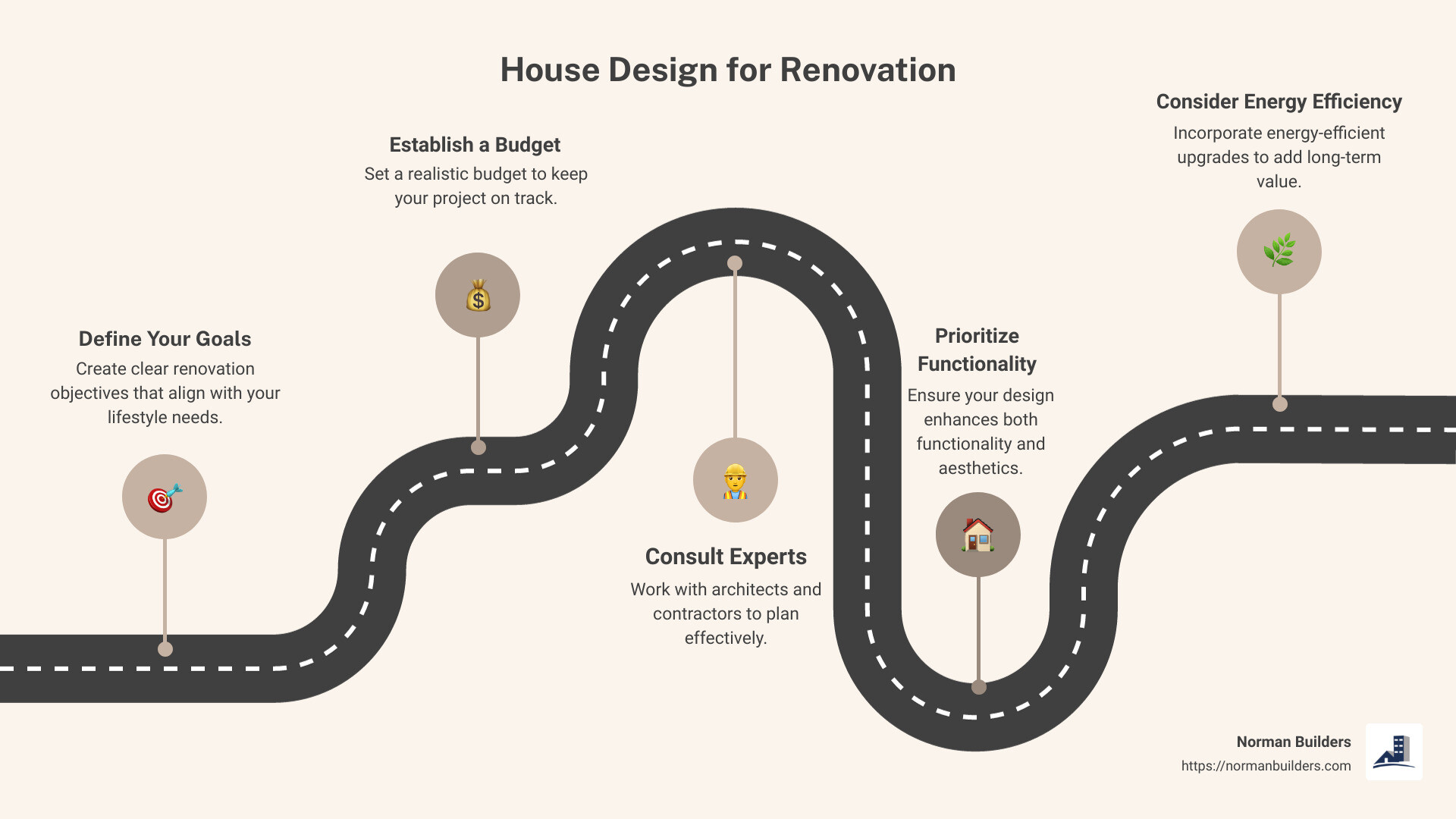
Quick look at house design for renovation:
– average cost to remodel a house
– full house remodeling
Before diving into any renovation project, it’s crucial to set a clear vision for your home. This vision acts as a roadmap, guiding every decision you make. Start by defining your design goals: Do you want more open space? Better functionality? A modern aesthetic?
Think about your future needs, too. If you plan to stay in the house for a long time, consider how your lifestyle might change. For instance, if you might need more room for a growing family or a home office, plan for these possibilities now.
Budgeting is another key aspect of setting your vision. Establish a realistic budget that includes a buffer for unexpected expenses. According to expert advice, planning for unexpected issues can prevent financial strain later on.
Finally, don’t forget about planning permission. Check local building codes and regulations. Getting the necessary permits early can save you time and stress down the road.
Once your vision is clear, it’s time to bring in the experts. Hiring the right architects and contractors is essential to turning your plans into reality.
Architects can help refine your design goals and ensure your ideas are feasible. They also assist with navigating the complex world of building codes and permits. A good architect will align your vision with the structural possibilities of your home.
When selecting a contractor, look for someone with a proven track record. Their role is to manage the practical side of the renovation, ensuring the project stays on time and within budget. Transparent communication with your contractor is key to avoiding misunderstandings and keeping the project on track.
By setting a clear vision and hiring the right professionals, you’ll lay a solid foundation for a successful home renovation. These steps ensure your project aligns with your lifestyle needs and financial goals, paving the way for a beautiful and functional living space.
Once you’ve set your vision and hired the right professionals, it’s time to get started with demolition. This phase involves removing the old to make way for the new. It’s not just about knocking down walls; it’s about carefully dismantling parts of your home that need to be replaced or reconfigured.
Safety is a top priority during demolition. Ensure all utilities are shut off to avoid accidents. Hiring experienced professionals can help prevent damage to areas of the home that are not being renovated.
After demolition, the rebuilding phase begins. This is where the new structure starts to take shape. Framing is often the first step, establishing the new layout and flow of your home. It’s vital to have a solid plan here, as the framing will dictate the final look and feel of your space.
With the structure in place, the next step is installing the mechanicals. This includes essential systems like plumbing, HVAC, and electrical. These elements are crucial for the functionality and comfort of your home.
Plumbing: Ensure that your plumbing system is efficient and up-to-date. This might involve replacing old pipes and fixtures to improve water flow and prevent leaks.
HVAC: A modern HVAC system can significantly improve your home’s energy efficiency and air quality. Consider upgrading to a system that uses less energy and provides better temperature control.
Electrical: Updating your electrical system is a must, especially in older homes. This might include adding more outlets, installing energy-efficient lighting, and ensuring the wiring meets current safety standards.
Each of these components requires skilled professionals to ensure they meet local building codes and function properly. By focusing on these critical areas, you’ll create a safe, comfortable, and efficient home environment that aligns with your renovation goals.
When it comes to house design for renovation, enhancing the layout and flow of your home is crucial. A well-thought-out floor plan can transform awkward, unusable spaces into functional, inviting areas. For instance, a poorly designed 35-year-old ski cabin was revamped by reimagining the existing floor plan to improve flow and functionality.
Space Planning: Start by assessing the current layout. Identify areas that feel cramped or disconnected. Consider how you can rearrange walls or doors to create a more open and fluid space. For small homes, space-saving features like custom cabinets, pocket doors, and bi-fold closet doors can make a big difference.
Functional Design: Think about how each room will be used. Align the design with the purpose of the space. For example, in a kitchen renovation, centering fixtures and furnishings around window placements can lift the design and make the room feel more cohesive.
Aesthetics: While functionality is key, aesthetics should not be overlooked. Choose a style that complements the architecture of your home and reflects your personal taste. A contemporary rustic look, for instance, can bring charm and warmth to a space.

Incorporating sustainable materials into your renovation is not only good for the environment but also promotes a healthy home. This approach focuses on materials that are durable, energy-efficient, and have a low environmental impact.
Eco-Friendly Options: Consider using materials like reclaimed wood, bamboo flooring, or recycled glass countertops. These materials are not only sustainable but also add unique character to your home.
Energy Efficiency: Improving energy efficiency can significantly lower your utility bills. Options include installing LED lighting, water-efficient faucets, and energy-efficient appliances. A modern HVAC system can also improve comfort while reducing energy consumption.
Healthy Home: Prioritize materials that improve indoor air quality. Low-VOC paints, natural fiber carpets, and non-toxic sealants can help create a healthier living environment.
Incorporating these elements into your renovation not only benefits the environment but also increases the resale value of your home. A sustainable, well-designed home is an attractive option for future buyers, making it a smart investment.
By focusing on improving layout and flow while choosing sustainable materials, you’ll create a home that’s both functional and beautiful, setting the stage for the next phase of your renovation journey.
Budgeting is the backbone of any successful renovation. Before you start swinging hammers, have a clear financial plan. Start by setting a realistic budget that aligns with your renovation goals. This includes not only the obvious costs like materials and labor but also hidden expenses such as permits and unexpected repairs.
Cost Estimation: Begin by getting multiple quotes from contractors to understand the range of costs. Include a contingency fund—typically 10-20% of your total budget—to cover unforeseen expenses. Renovations often uncover hidden issues, like outdated wiring or plumbing, that need addressing.
Funding Your Project: Consider various funding options, such as home improvement loans or refinancing. Some homeowners also tap into savings or use credit cards for smaller projects. It’s crucial to choose a financing method that suits your financial situation and long-term goals.
Financial Planning: To avoid financial pitfalls, track expenses carefully. Use spreadsheets or budgeting apps to keep everything organized. Regularly compare actual spending against your budget to ensure you stay on track.
Maximizing your return on investment (ROI) should be a key consideration, especially if you plan to sell your home in the near future. Focus on renovations that add the most value.
Key Areas to Invest In:
Resale Value: Consider the tastes and preferences of potential buyers in your area. Avoid overly personalized or trendy designs that may not appeal to future owners. Instead, opt for timeless styles and neutral palettes that have broad appeal.
By carefully budgeting and focusing on high-ROI projects, you can ensure your renovation not only transforms your home but also pays off financially in the long run.
Renovating a house can be a complex process, but following a logical sequence can save time and money. Here’s a common order of operations:
By sticking to this sequence, you can minimize disruptions and keep your project on track.
Renovation costs vary widely based on the scope of work, location, and materials used. However, there are general guidelines to help you estimate:
When budgeting, always include a contingency fund for unexpected expenses.

A budget of $200,000 can cover a significant renovation, but it depends on the project’s scope and location. Here’s what you might achieve with this budget:
To make the most of your budget, prioritize projects that offer the best return on investment and align with your long-term goals. Always consult with professionals to get accurate estimates and ensure your renovation dreams align with your financial reality.
At Norman Builders, we pride ourselves on delivering exceptional craftsmanship and personalized service in every renovation project we undertake. Our commitment to quality and attention to detail ensures that your home renovation not only meets but exceeds your expectations.
When you choose us for your project, you’re not just hiring a construction company; you’re partnering with a team that values your vision and works tirelessly to bring it to life. We understand that a house renovation is a significant investment, both financially and emotionally. That’s why we focus on creating a seamless experience from start to finish.
Our approach to whole house renovations emphasizes collaboration and communication. We work closely with you to understand your unique needs and preferences, ensuring that every aspect of your renovation reflects your personal style and functional requirements. From initial consultation to the final walkthrough, we are dedicated to making your renovation journey as smooth and enjoyable as possible.
Whether you’re looking to improve your home’s layout, improve its functionality, or boost its aesthetic appeal, Norman Builders is here to help. Our expertise in house design for renovation allows us to transform outdated spaces into beautiful, modern homes that you’ll love for years to come.
Ready to start on your home renovation journey? Contact us today to learn more about how we can turn your vision into reality with our personalized service and exceptional craftsmanship.

We specialize in high-quality home construction and remodeling services, delivering exceptional craftsmanship tailored to meet your vision and needs. Whether you’re planning a renovation, new construction, or a custom remodel, our experienced team is committed to exceeding expectations with precision, attention to detail, and reliable service.
Our service area includes the Merrimack Valley, North Shore, Seacoast, and Southern NH Areas. We take pride in the quality of our workmanship and our prompt professionalism.
Contact us today to bring your project to life!