

Average cost to remodel a house: What should you expect? Remodeling your home is a journey full of exciting possibilities and often, meticulous budgeting. Homeowners typically spend anywhere from $20,000 to $120,000 for a whole house renovation. If you’re focusing on specific areas, here are some average costs:
These figures can serve as a starting point for those curious about the average cost to remodel a house.
Remodeling involves more than just picking paint colors and light fixtures. Factors like labor, materials, and permits significantly influence the total cost. With strategic planning, you can optimize your budget to cover both essential renovations and unexpected surprises. By understanding these elements and planning carefully, you can transform your space into your dream home.
I’m Ryan Norman, founder of Norman Builders. With a background in technology, real estate, and a passion for changing spaces, I’ve been guiding homeowners through the remodeling process since 2007.
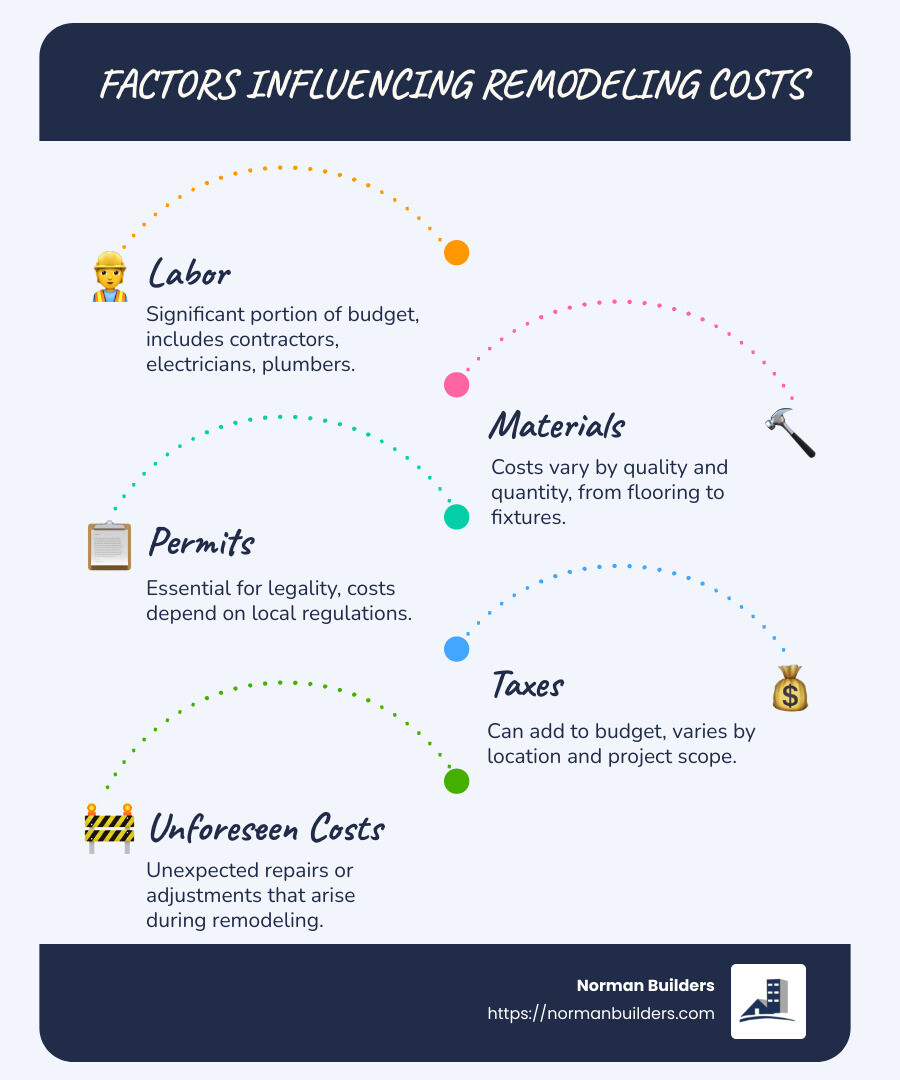
When you’re thinking about remodeling, knowing the average cost to remodel a house is crucial. This helps you set a budget and plan effectively. Let’s break down the costs and what influences them.
1. Labor: Labor is a big chunk of your remodeling budget. Different contractors charge different rates. For example, electricians might charge $40 to $120 per hour, while carpenters might charge $35 to $90 per hour.
2. Materials: The quality of materials can vary widely. Choosing high-end materials like custom cabinetry or luxury countertops will increase costs, while more budget-friendly options like laminate can save money.
3. Permits and Taxes: Depending on where you live, permits can cost anywhere from $400 to $1,800. Always check local requirements to avoid surprises.
4. Unforeseen Costs: Unexpected issues like structural repairs or outdated wiring can pop up once work begins. It’s wise to set aside a contingency fund, typically around 10-20% of your total budget.
Kitchen: The kitchen is often the most expensive room to remodel. Costs range from $10,000 to $50,000. Major upgrades include cabinetry, countertops, and appliances.
Bathroom: Bathroom remodels usually cost between $5,000 and $25,000. Common upgrades are new cabinets, showers, and tubs.
Bedroom: Remodeling a bedroom can cost between $4,000 and $40,000. This includes flooring, lighting, and sometimes structural changes.
Living Room: A living room remodel might cost $2,500 to $10,000. Updates often include new flooring, paint, and lighting.
Basement: Changing a basement into a livable space can be pricey, ranging from $20,000 to $75,000. Costs depend on whether you’re adding bathrooms or kitchens.

Every remodel is unique, and costs can vary greatly based on the scope of the project and square footage. By understanding these factors, you can better plan your remodeling journey.
When it comes to a whole house renovation, understanding costs per square foot is essential. This helps you gauge the overall budget and make informed decisions.
The cost of a whole house renovation typically ranges from $60 to $150 per square foot. This wide range depends on the extent of the renovation and the quality of materials used. For example, basic updates might be on the lower end, while high-end finishes and customizations push costs to the higher end.
A gut renovation is one of the most extensive remodeling projects. It involves stripping the house down to its structural elements and rebuilding it. This type of renovation can cost anywhere from $100,000 to $200,000, depending on the size of the home. The price includes major upgrades like new plumbing, appliances, and structural improvements.
Adding a new space to your home can significantly increase its value and functionality. The cost for a home addition varies widely, often starting at $80 to $200 per square foot. Factors such as the complexity of the design, the need for structural changes, and local labor rates all influence the final price.
Renovating a historic home is a unique challenge and often more costly. These homes may require specialized materials and techniques to preserve their original charm. Costs can soar due to the need for compliance with historical preservation standards and potential structural issues. Expect to pay a premium for these specialized services, often exceeding typical renovation costs.

Renovating a whole house is a significant investment. Understanding these cost factors can help you plan effectively and make the most of your remodeling project.
Renovating your home doesn’t have to break the bank. With a little planning and some smart choices, you can save money while still achieving your dream remodel. Here are some strategies to consider:
Getting hands-on with your remodel can be a great way to save money. Simple tasks like painting, installing a backsplash, or even demolishing non-load-bearing walls can be tackled by homeowners with basic DIY skills. However, for more complex tasks like electrical or plumbing work, it’s best to hire professionals to avoid costly mistakes.
Choosing cost-effective materials can significantly reduce your remodel expenses. For instance, consider laminate countertops instead of granite, or luxury vinyl flooring instead of hardwood. These alternatives often mimic the look of high-end materials at a fraction of the cost. Shopping at wholesale stores or during sales can also lead to substantial savings.
Did you know there are federal grants available for home renovations? Programs like the Federal Housing Administration (FHA) offer grants for specific needs, such as making homes accessible for disabled persons. Veterans can also access certain housing grants. Researching and applying for these grants can help offset some of your renovation costs.
You don’t have to renovate your entire house all at once. Phasing your projects allows you to spread out costs over time. Start with the most critical areas, like the kitchen or bathroom, and tackle other rooms as your budget allows. This approach not only helps manage expenses but also reduces the stress of living in a construction zone.
By considering these strategies, you can effectively manage your renovation budget and still achieve a beautiful change of your home. Next, let’s explore financing options that can help you fund your remodel.
When you’re ready to remodel your home, understanding how to finance it is crucial. Here are some popular options:
A home equity loan lets you borrow against the equity you’ve built in your home. This type of loan typically offers a fixed interest rate, making it a stable option for those who prefer predictable monthly payments. It’s perfect for homeowners who need a lump sum to cover large renovation costs, like a kitchen remodel or a new bathroom addition.
A HELOC is similar to a home equity loan but works more like a credit card. You can borrow up to a certain limit and only pay interest on the amount you use. This flexibility is ideal for phased projects or when renovation costs are uncertain. Though, that HELOCs usually have variable interest rates, which can lead to fluctuating payments over time.
With a cash-out refinance, you replace your existing mortgage with a new, larger one. The difference between the old and new mortgage amounts is given to you as cash, which can be used for renovations. This option can be beneficial if current mortgage rates are lower than your existing rate, potentially lowering your monthly payments while providing funds for your remodel.
A home improvement loan is an unsecured loan, meaning you don’t use your home as collateral. This can be a good option if you prefer not to tap into your home equity. However, these loans often come with higher interest rates than secured loans like home equity loans or HELOCs. They are suitable for smaller projects or if you have a strong credit score.
Each of these financing options has its pros and cons, so consider your financial situation and renovation needs carefully. Next, we’ll address some frequently asked questions about remodeling costs to help you plan your budget effectively.
Setting a realistic budget for home renovation is essential to avoid financial surprises. The average cost to remodel a house varies widely based on the scope and scale of the project. On average, you can expect to spend between $20,000 and $100,000 for a whole-house remodel. This translates to about $15 to $60 per square foot. For more extensive renovations, like gutting a house to the studs, costs can soar to $100,000 to $200,000 or more.
To tailor your budget, consider the size of your home, the quality of materials, and any structural changes. It’s also wise to allocate extra funds for unforeseen expenses.
In many cases, yes, $100,000 is enough to renovate a house. According to a 2022 study by Houzz, only 10% of Americans exceed this amount for renovations. However, the sufficiency of this budget depends on your renovation goals. For example, if you’re planning to remodel multiple rooms or undertake high-end projects, costs can quickly escalate.
If you focus on strategic improvements, like updating the kitchen or bathroom, $100,000 can cover a significant portion of your renovation needs. Always prioritize essential updates that improve functionality and value.
The kitchen is typically the most expensive room to remodel. This is due to the complexity of the work involved, including plumbing, electrical, and cabinetry. Kitchen renovations can range from $10,000 to $50,000 on average. Bathrooms are the second most costly, with average expenses between $5,000 and $25,000.
Beyond specific rooms, labor costs significantly impact your budget. For instance, electricians charge between $40 and $120 per hour, while plumbers range from $75 to $130 per hour. Additionally, materials like high-end appliances or custom cabinetry can also drive up costs.
Understanding these key cost drivers will help you plan effectively and make informed decisions about where to allocate your budget. Up next, we’ll explore ways to save money on your remodel without sacrificing quality.
At Norman Builders, we pride ourselves on delivering personalized service and exceptional craftsmanship in every project. Our commitment to understanding your vision and tailoring each remodel to suit your specific needs sets us apart. With over a decade of experience serving the Merrimack Valley, North Shore, Seacoast, and Southern NH areas, we have honed our skills in creating spaces that are not only beautiful but also functional.
When you choose Norman Builders for your remodeling project, you’re choosing a team that values transparency and communication. We work closely with you from start to finish, ensuring that your project stays on track and within budget. Our expert team is dedicated to using quality materials that offer both durability and aesthetic appeal, ensuring your remodeled space stands the test of time.
Whether you’re considering a whole-house renovation or updating a single room, our approach is always the same—delivering top-tier, custom-built solutions that exceed your expectations. We understand that home is where the heart is, and we’re here to help transform your space into a place you love.
For more information on how we can assist with your home renovation needs, visit our Whole House Renovations page. Let’s turn your vision into reality with the expert touch of Norman Builders.

We specialize in high-quality home construction and remodeling services, delivering exceptional craftsmanship tailored to meet your vision and needs. Whether you’re planning a renovation, new construction, or a custom remodel, our experienced team is committed to exceeding expectations with precision, attention to detail, and reliable service.
Our service area includes the Merrimack Valley, North Shore, Seacoast, and Southern NH Areas. We take pride in the quality of our workmanship and our prompt professionalism.
Contact us today to bring your project to life!