

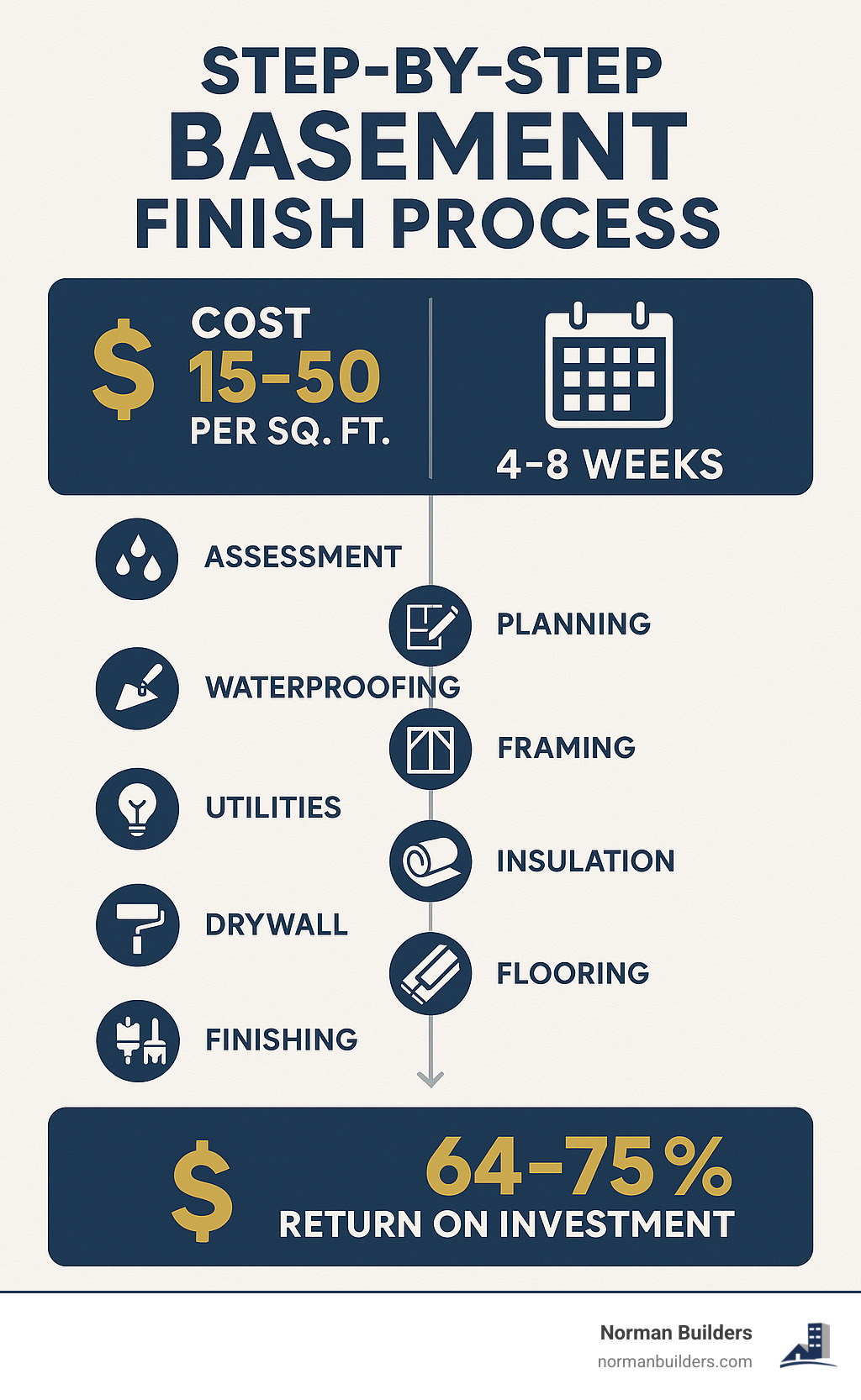
A basement finish typically costs between $15-50 per square foot, takes 4-8 weeks to complete, and includes waterproofing, framing, electrical work, insulation, drywall installation, flooring, and final touches. The project can yield a 64-75% return on investment when selling your home.
If you’re considering a basement finish project, you’re sitting on untapped potential. That dark, underused space beneath your home represents an opportunity to add valuable living space without the expense of building an addition. A properly finished basement can serve as an entertainment area, home office, guest bedroom, or even a rental unit – all while increasing your property value.
Many homeowners are surprised to learn that finishing a basement is one of the most cost-effective home improvement projects. According to the National Association of Realtors, homeowners typically recoup about 64% of basement finishing costs when selling their home, with some markets seeing returns of up to 75%.
Before you dive in, understanding the basic process is crucial:
I’m Ryan Norman, founder of Norman Builders, and I’ve helped hundreds of homeowners transform their dark, unfinished basements into beautiful, functional living spaces through professional basement finish projects that add significant value to their homes.
Basement finish further reading:
– basement insulation
– basement framing
– do you need a permit to finish a basement
Understanding the ins and outs of a basement finish project matters for three key reasons:
Before swinging a hammer or calling a contractor, proper planning is essential for your basement finish project. There’s a reason so many homeowners tackle this renovation – the benefits are substantial:
A finished basement offers an impressive 64-75% return on investment when selling your home. That’s money well spent! You’re essentially creating additional bedrooms, entertainment areas, or home offices without expanding your home’s footprint. Many of our clients are amazed at how much usable space was sitting unused beneath their feet all along.
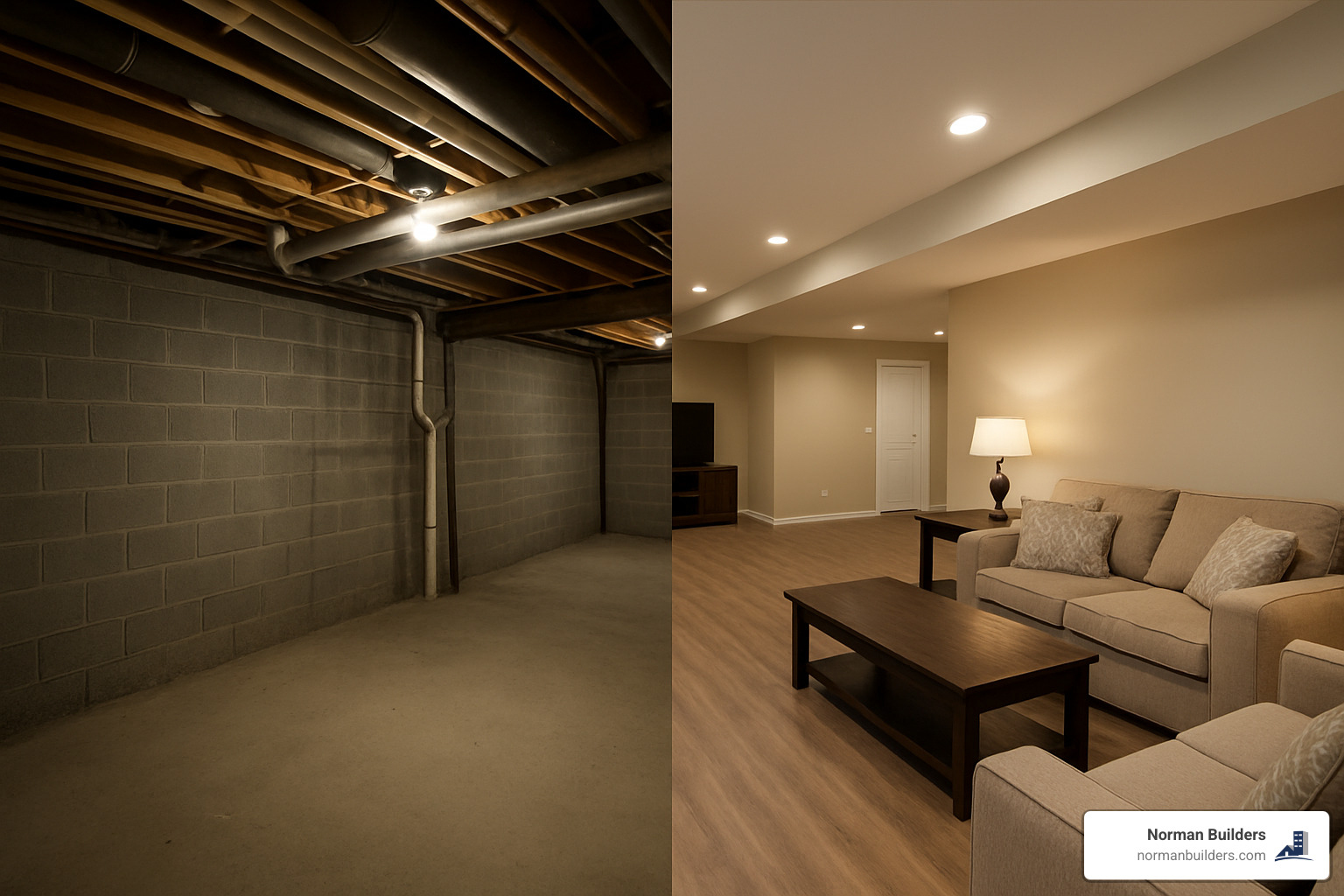
If you’re feeling entrepreneurial, a properly finished basement with a separate entrance can generate rental income. Beyond financial benefits, proper insulation during a basement finish can significantly reduce your overall home energy costs.
Before diving in, several essential pre-planning steps deserve your attention:
Permit requirements aren’t optional – most municipalities require them for basement finishing projects. These typically cost between $1,200 and $2,000, and while they might seem like a hassle, they protect both you and future homeowners. More info about permits
Zoning regulations matter, especially if you’re planning a rental unit or adding an exterior entrance. A simple moisture audit can save you thousands in future repairs. Just tape 2-foot squares of plastic sheeting to your basement walls and floors for two weeks to check for condensation issues.
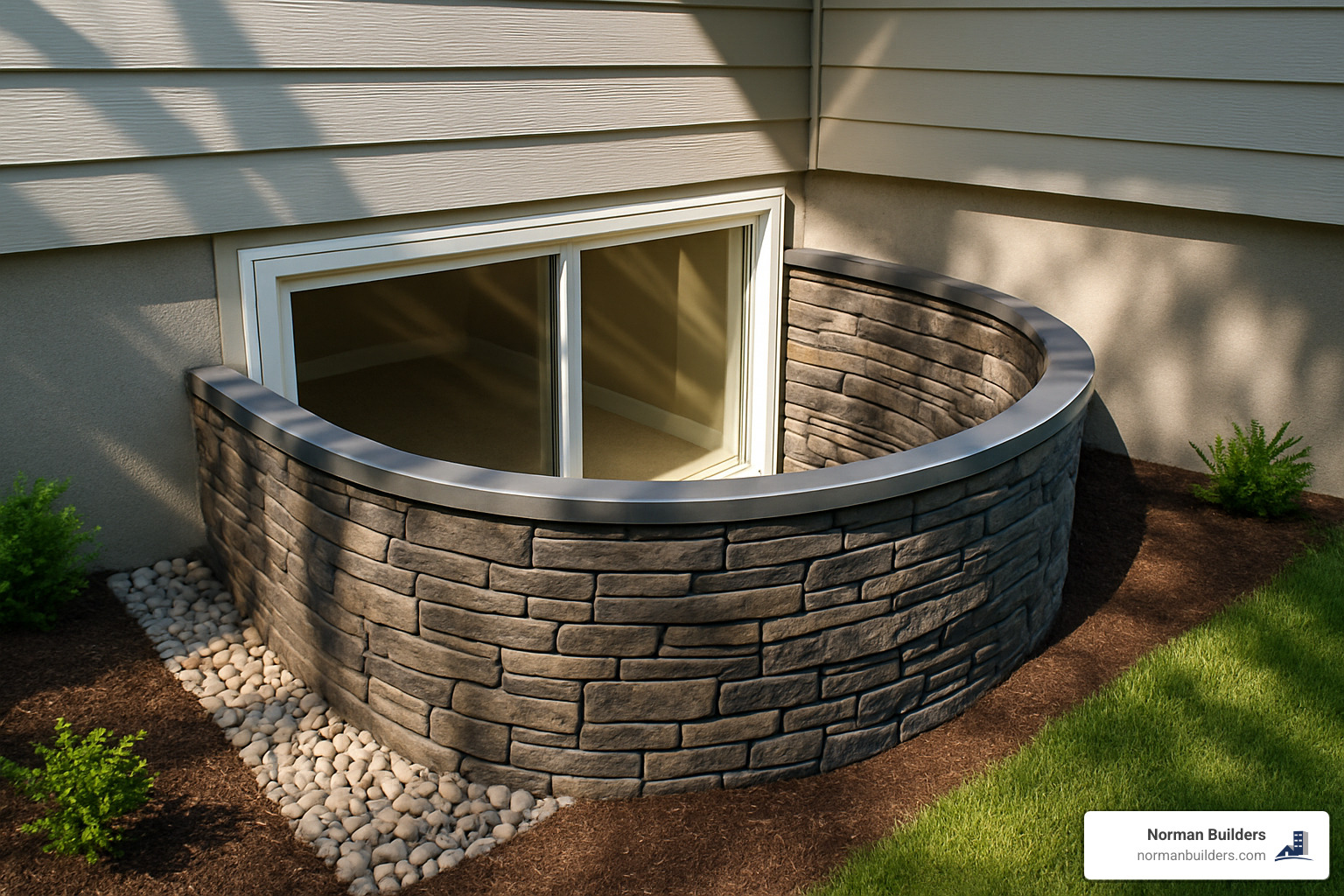
Don’t forget about egress windows – building codes require these emergency exits in basement bedrooms. Finally, measure ceiling height carefully. Most building codes require at least 7 to 7½ feet of clearance.
Creating a thoughtful layout is where your basement finish project starts to feel real. Position social areas near natural light sources like windows or walkouts. Bedrooms work best along exterior walls where egress window installation is possible. Darker corners are perfect for home theaters or media rooms where ambient light is actually unwanted. And whenever possible, locate bathrooms and wet bars near existing plumbing lines to save on costs.
When mapping your basement, balance your current needs with future resale value. While that custom wine cellar might be your dream, a flexible space that could serve as an additional bedroom often provides better long-term value. One tip our clients love: use painter’s tape to mark out room dimensions on your basement floor to get a real-world feel for the space before committing to permanent walls.
A successful basement finish must prioritize health and safety – these aren’t just code requirements, they’re what make your new space truly livable.
Moisture control tops the priority list. According to basement health professionals, addressing moisture is the single most important factor in creating a healthy below-grade living space. Scientific research on moisture control
Start outside by redirecting downspouts away from your foundation and re-grading soil to slope away from your house. Inside, seal cracks with appropriate compounds. For serious moisture issues, professional waterproofing is money well spent.
Ventilation prevents the musty smell many associate with basements. Install a humidistat-controlled bathroom fan that runs automatically when moisture levels rise. Fire safety becomes even more crucial in below-grade spaces. Install interconnected smoke detectors, ensure proper egress windows in sleeping areas, and use fire-rated materials where required by code.
Please note: Our services are exclusively available in Massachusetts, specifically in Andover, MA, the North Shore, and New Hampshire, covering the Seacoast and Southern NH regions.
Turning your unfinished basement into a beautiful living space follows a clear sequence. Here’s your roadmap to a successful basement finish:
For more details, visit our Basement Finishing Services page.
A typical basement finish project runs about 4-8 weeks from start to completion, though this varies based on size, complexity, and contractor availability.
Standard timeline:
– Week 1: Permits, demolition, waterproofing
– Weeks 2-3: Framing, rough electrical, plumbing, HVAC
– Week 4: Insulation and drywall installation
– Week 5: Drywall finishing
– Week 6: Painting, trim installation
– Week 7: Flooring installation
– Week 8: Fixtures, final touches, cleanup
Key inspections occur after framing, rough-ins, insulation, and at project completion.
The “rough-in” phase establishes critical infrastructure that will be hidden behind walls.
Electrical: Plan for outlets every 12 feet of wall space minimum, with GFCI protection where needed. Consider dedicated circuits for high-draw appliances and recessed lighting spaced at half your ceiling height.
Plumbing: Position bathrooms near existing drain lines when possible. Include backflow preventers to avoid basement flooding from sewer backups.
HVAC: Options include extending existing ductwork, installing a separate zone, or using a mini-split system for independent temperature control.
Soundproofing: Resilient channels when hanging drywall, acoustic insulation in ceiling joists, and solid-core doors can dramatically reduce sound transmission.
After completing hundreds of projects, we’ve seen these common mistakes:
Poor Drainage Solutions: Installing proper drainage systems and backup sump pumps prevents costly water damage.
Skipping Permits: Unpermitted work can lead to fines, forced demolition, insurance claim denials, and complications when selling.
Low Headroom Issues: Address hanging ducts, pipes, and beams before finishing. Most codes require minimum ceiling heights of 7-7.5 feet.
Moisture Oversights: Use moisture-resistant materials and address exterior drainage issues first.
Inadequate Lighting: Install more fixtures than you would in above-grade spaces to compensate for limited natural light.
Please note: Our services are exclusively available in Massachusetts, specifically in Andover, MA, the North Shore, and New Hampshire, covering the Seacoast and Southern NH regions.
Choosing the right materials for your basement finish isn’t just about looks—it’s about creating a space that stands up to the unique challenges basements present.
Walls are your biggest visual canvas. Standard paper-faced drywall is a no-go here—it’s practically an invitation for mold. Instead, invest in mold-resistant drywall panels specifically designed for moisture-prone areas. For bathrooms or areas near plumbing, cement board provides excellent moisture resistance.
For ceilings, you have three main options. Drop ceilings give you easy access to pipes and wires but steal precious headroom. Drywall ceilings maximize height but make accessing utilities difficult. For limited height, consider the “industrial look” with painted exposed joists and ductwork.
When it comes to flooring, moisture resistance is non-negotiable. Luxury vinyl plank (LVP) has become our most recommended option because it’s completely waterproof, incredibly durable, and available in beautiful wood-look finishes. Ceramic or porcelain tile works wonderfully in bathrooms or near exterior doors. If you’re dreaming of hardwood, stick with engineered varieties that can handle minor moisture fluctuations.
For more details on insulating your basement walls properly, check out our comprehensive Basement Wall Insulation guide.
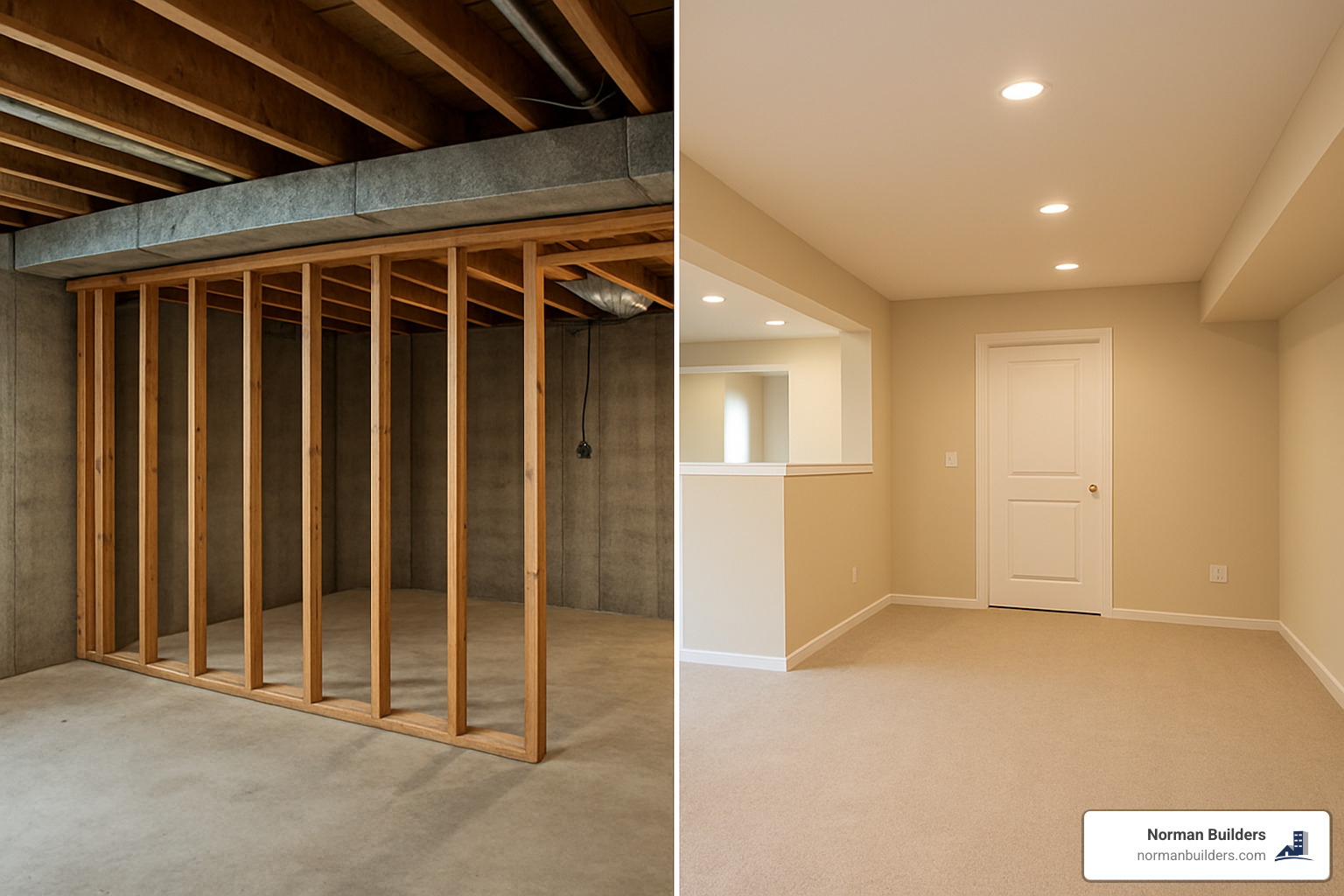
For wall systems, rigid foam insulation is worth every penny. Two inches of extruded polystyrene (XPS) not only insulates but also acts as a vapor retarder. Pair this with a dimple membrane against the foundation wall to create an air gap that allows moisture to drain downward.
Under your feet, proper subfloor systems make all the difference. Dimpled plastic subfloor panels create a crucial air gap between the concrete and your finished flooring. Alternatively, plywood on sleepers allows for airflow beneath the floor surface.
Before finishing any surface, don’t skip the sealing and waterproofing steps. Hydraulic cement can plug active leaks, while crystalline waterproofing penetrates concrete to block moisture.
Basements naturally have limited natural light, but with strategic planning, you can create bright, welcoming spaces.
Start by maximizing natural light. Where possible, enlarge existing windows or add egress windows with decorative window wells. Glass block windows offer privacy while still allowing light to filter through.
For artificial lighting, think in layers: ambient lighting (recessed can lights), task lighting (under-cabinet lights, reading lamps), and accent lighting (wall sconces, toe-kick lighting). Smart lighting systems that adjust throughout the day can mimic natural light patterns.
Beyond fixtures, amplify brightness with light paint colors, strategic mirror placement, and semi-gloss paint finishes that bounce light around the room.
Your basement finish can become virtually anything you need:
A home theater with sound-absorbing wall panels, tiered seating, and integrated sound systems creates the perfect movie night experience.
A home gym with rubber flooring absorbs impact and protects your concrete slab. Wall-mounted mirrors help with form, while good ventilation keeps the space fresh.
A basement office provides separation for productivity with ample electrical outlets, built-in desks and storage, and sound insulation for distraction-free video calls.
Entertaining spaces like a wet bar or kitchenette become natural gathering points with compact refrigerators, proper drainage, and adequate counter space.
Wine collectors love basement wine cellars because below-grade spaces naturally stay cooler and have more stable temperatures.
For more creative ideas, check out our Basement Finishing Ideas page.
Understanding the financial side of your basement finish project helps you plan effectively and avoid mid-project surprises.
Average cost range: Expect to spend between $7–$23 per square foot for basic finishes, with premium options reaching up to $50 per square foot. About 70% typically goes toward materials, while labor consumes roughly 10-25% of your budget. The remaining costs include permits ($1,200–$2,000) and any necessary waterproofing ($250-$6,400).
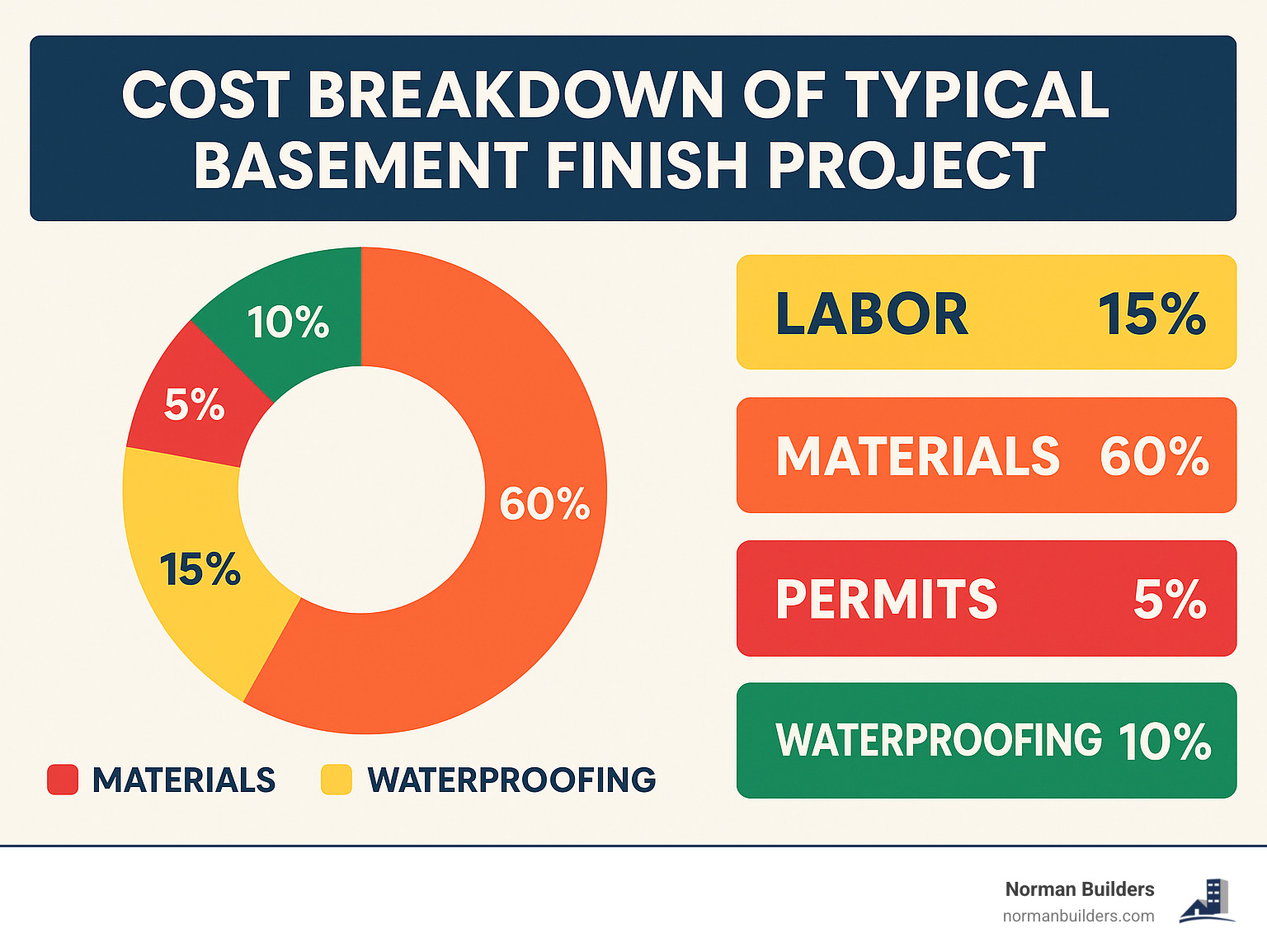
Here’s a helpful comparison of DIY versus contractor costs:
| Task | DIY Cost | Contractor Cost | DIY Time | Contractor Time |
|---|---|---|---|---|
| Framing | $700-1,800 | $2,000-5,000 | 2-4 days | 1-2 days |
| Electrical | $500-1,500 | $1,500-4,500 | 4-7 days | 1-2 days |
| Drywall | $400-1,200 | $1,500-3,500 | 5-10 days | 2-3 days |
| Flooring | $1,000-3,000 | $2,500-7,500 | 3-5 days | 1-2 days |
| Painting | $300-900 | $1,000-3,000 | 2-4 days | 1 day |
For more detailed cost information, check out our Finish Basement Cost page.
You don’t need to break the bank for a beautiful basement finish. Here are some insider tips:
A basement finish isn’t just an expense – it’s an investment in your home’s value and quality of life.
Most homeowners recoup about 64-70% of their basement finishing costs when selling. Beyond the direct financial return, finished basements offer other economic benefits:
Financing options include home equity loans or lines of credit, cash-out refinancing, and construction loans specifically designed for major home improvements.
Please note: Our services are exclusively available in Massachusetts, specifically in Andover, MA, the North Shore, and New Hampshire, covering the Seacoast and Southern NH regions.
There’s satisfaction in DIY work, but also peace of mind with professional craftsmanship. Let’s explore when to roll up your sleeves and when to call experts for your basement finish project.
Essential DIY tools include a circular saw, hammer, level, chalk line, stud finder, voltage tester, wire strippers, drill, utility knife, t-square, mud pan, taping knives, sander, and appropriate safety gear.
Professional contractors bring significant advantages: code knowledge, efficiency, warranties, liability insurance, workers’ compensation, and problem-solving ability when unexpected issues arise.
Need help finding qualified professionals? Check out our Basement Finishing Contractors Near Me page.
Some aspects of a basement finish are perfectly suited for homeowner involvement:
Certain aspects of basement finish projects typically require skilled contractors:
Whether DIY or professional, these safety features are non-negotiable:
Safety isn’t just about meeting code requirements—it’s about protecting your family and investment for years to come.
Please note: Our services are exclusively available in Massachusetts, specifically in Andover, MA, the North Shore, and New Hampshire, covering the Seacoast and Southern NH regions.
Typically, you can expect to invest between $15-$50 per square foot for a basement finish project. For a standard 1,000 square foot basement, this translates to approximately $15,000-$50,000 total.
Your budget will generally break down with about 70% going toward materials and 10-25% covering labor costs. The remainder accounts for permits, design services, and contingencies.
Several factors influence your final investment: existing moisture issues, ceiling height challenges, complexity of electrical and plumbing needs, and quality of finishes selected.
Most basement finish projects take between 4-8 weeks from start to completion, though this timeline can vary based on complexity and scope.
Typical timeline:
– Permit process: 1-4 weeks
– Waterproofing and preparation: 3-7 days
– Framing: 2-5 days
– Rough electrical, plumbing, HVAC: 3-7 days
– Insulation: 1-2 days
– Drywall installation: 2-3 days
– Drywall finishing: 3-5 days
– Painting: 2-3 days
– Flooring: 2-5 days
– Trim work: 3-5 days
– Final inspections and touch-ups: 1-3 days
In most real estate markets, a basement finish project typically doesn’t count toward your home’s official square footage in listings. Real estate standards generally require space to be above grade (ground level) to be included in the official calculation.
However, a well-executed basement renovation still adds tremendous value:
– Appraisers consider finished basement space when determining home value (typically at 50-70% of above-grade space value)
– Marketing can highlight the additional usable space beyond the official square footage
– The functional living space gained is valuable regardless of technical calculations
– Homeowners typically recoup 64-75% of basement finishing costs at resale
Please note: Our services are exclusively available in Massachusetts, specifically in Andover, MA, the North Shore, and New Hampshire, covering the Seacoast and Southern NH regions.
Changing your basement from a dark, forgotten space into a vibrant living area is one of the most rewarding home improvement projects. A completed basement finish adds functional square footage, increases property value, and improves your family’s quality of life.
As you wrap up your basement finishing journey, remember these essential takeaways:
Since 2007, Norman Builders has transformed countless dark, underused basements into beautiful living spaces throughout Massachusetts and New Hampshire. Our team brings specialized knowledge of New England’s unique basement challenges—from seasonal moisture fluctuations to the insulation requirements of our variable climate.
When you’re ready to move forward with your basement finish project, our experienced team is here to provide the guidance, craftsmanship, and personalized attention your home deserves. More info about our basement finishing
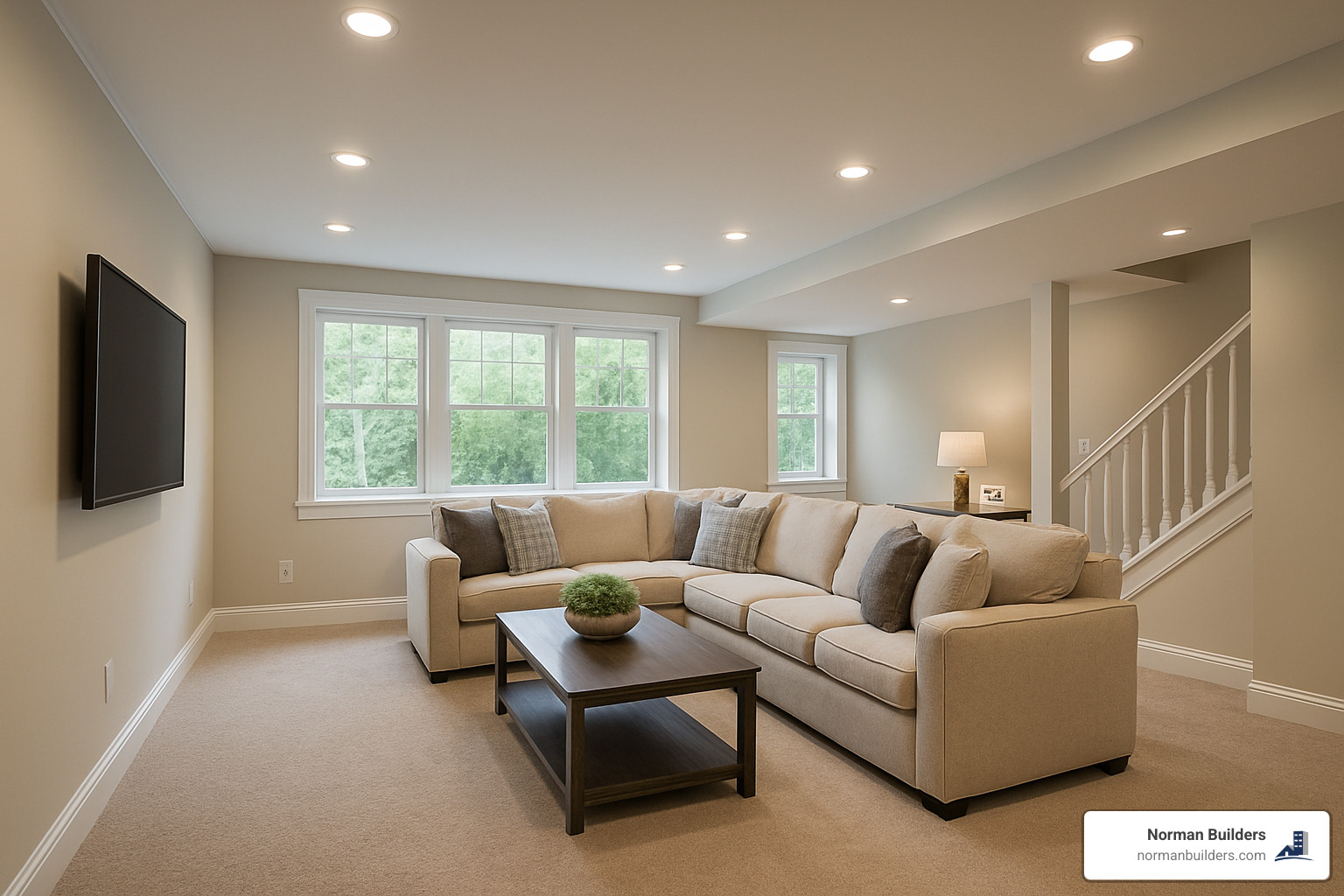
Whether you’re envisioning a cozy space for movie nights, a productive home office, or a potential income-generating rental unit, your basement holds incredible potential. With proper planning and execution, that underground space can transform from your home’s least-used area to its most beloved.
Please note: Our services are exclusively available in Massachusetts, specifically in Andover, MA, the North Shore, and New Hampshire, covering the Seacoast and Southern NH regions.

We specialize in high-quality home construction and remodeling services, delivering exceptional craftsmanship tailored to meet your vision and needs. Whether you’re planning a renovation, new construction, or a custom remodel, our experienced team is committed to exceeding expectations with precision, attention to detail, and reliable service.
Our service area includes the Merrimack Valley, North Shore, Seacoast, and Southern NH Areas. We take pride in the quality of our workmanship and our prompt professionalism.
Contact us today to bring your project to life!