

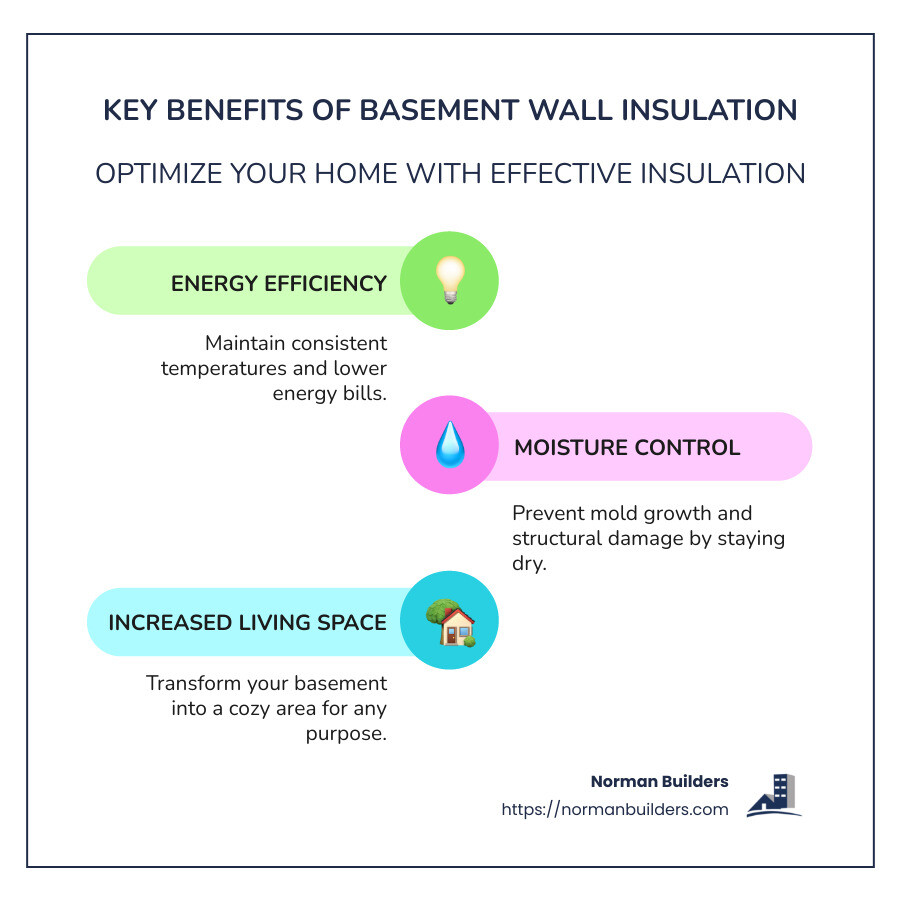
Basement wall insulation can be a game-changer for any homeowner, bringing significant benefits like improved energy efficiency, effective moisture control, and the potential for increased living space. Here’s a quick rundown of why it matters:
I’m Ryan Norman, the founder of Norman Builders, with a diverse background in real estate and construction. I’ve been helping clients optimize their homes, including basement wall insulation, since 2007. Let’s dive deeper into how this transformative solution can improve your home.
Basement wall insulation vocabulary:
– basement insulation
– basement framing
– how to finish a basement
Basement wall insulation offers a range of benefits that can significantly improve your home’s comfort and efficiency. Here’s how:
Insulating your basement walls can lead to substantial energy savings. According to the U.S. Department of Energy, properly insulated basements can save homeowners up to 10-30% on their energy bills annually. This is especially true for smaller homes where heat loss through uninsulated basements is a major concern.
By adding insulation, you reduce the workload on your heating and cooling systems, which in turn lowers your utility costs. Think of it as giving your HVAC system a break while keeping your wallet happy.
One of the standout benefits of basement wall insulation is its ability to regulate temperature. Insulated walls help maintain a consistent temperature throughout your home, preventing cold drafts in the winter and excessive heat in the summer.
This consistent temperature control means your living spaces are more comfortable year-round. No more chilly floors or hot spots—just a cozy home environment that stays steady regardless of the weather outside.
Mold can be a homeowner’s nightmare, especially in damp areas like basements. Insulating your basement walls can be a crucial step in mold prevention. Proper insulation acts as a barrier against moisture, reducing the risk of mold growth and musty odors.
By keeping your basement dry, you also protect your home’s structural integrity. Moisture control through insulation not only improves air quality but also extends the life of your home’s foundation.

Incorporating basement wall insulation is a smart move for any homeowner looking to improve energy efficiency, maintain a comfortable living environment, and safeguard their home from moisture-related issues. Let’s explore how you can prepare your basement for this upgrade.
Before you dive into installing basement wall insulation, it’s crucial to prepare the space properly. This preparation ensures that the insulation will perform effectively and last longer. Here’s a simple guide to get you started:
Moisture is a common culprit in basements, leading to dampness and mold. Conducting a moisture test helps identify any water issues that need addressing before insulation.
How to Perform a Moisture Test:
If you find moisture, you’ll need to address the source before moving forward with insulation.
Tie rods, remnants from the construction phase, can allow moisture into your basement. Sealing them is essential to prevent leaks.
Steps to Seal Tie Rods:
This creates a moisture barrier that keeps your basement dry year-round.
A clean surface is vital for insulation materials to adhere properly. Make sure your walls are free of dirt, dust, and any old paint or sealants.
Cleaning Steps:
This ensures that your insulation will stick securely, providing the best possible performance.
By taking these preparatory steps, you set the stage for a successful insulation project. With moisture under control and a clean workspace, you can move on to choosing the right type of insulation for your basement walls.
When it comes to basement wall insulation, choosing the right type is crucial for energy efficiency and moisture control. Let’s explore the most common options: rigid foam board, closed cell spray foam, and fiberglass batts.
Rigid foam board is a popular choice for basement insulation due to its high R-value and moisture resistance. This type of insulation comes in large panels, offering a continuous layer of insulation that reduces thermal bridging. It’s especially effective in climates where high R-values are required, like Climate Zones 5 and above.
Advantages:
Installation Tip: Attach the foam boards directly to the basement walls using adhesive or mechanical fasteners. Seal the seams with tape to ensure a continuous barrier.
Closed cell spray foam is another excellent option, known for its superior air sealing capabilities. This type of insulation expands upon application, filling cracks and gaps in the walls, and providing a seamless air and vapor barrier.
Advantages:
Installation Tip: Closed cell spray foam should be applied by a professional to ensure proper thickness and coverage. It’s ideal for both unfinished and finished basements, as it adheres directly to masonry walls.
Fiberglass batts are the least expensive option but require careful installation to prevent moisture issues. They are typically used in conjunction with a vapor barrier and are installed between studs.
Advantages:
Consideration: Fiberglass batts should only be used if the basement walls are dry and free from moisture issues. They are best installed after a layer of rigid foam board or spray foam to prevent condensation problems.
Each type of insulation has its own set of benefits and is suited to different basement conditions and budgets. By understanding the properties of these materials, you can make an informed decision on the best basement wall insulation for your needs.
Next, we’ll walk through the steps to install basement wall insulation, ensuring a snug, energy-efficient fit.
Installing basement wall insulation is a step-by-step process that can transform your space into a cozy and energy-efficient area. Let’s break it down into three main parts: using polystyrene panels, creating a wood grid system, and installing drywall.
Start with 2-foot-wide by 8-foot-high, 2-inch thick polystyrene insulation panels. These panels often come with tongue-and-groove joints, making them easy to fit together.
This method provides a continuous layer of insulation, crucial for minimizing heat loss and moisture intrusion.
A wood grid system provides a stable framework for attaching drywall and allows space for electrical wiring and other utilities.
This grid system not only supports the drywall but also allows for easy installation of utilities.
Now, it’s time to finish the wall with drywall. For basements, moisture-resistant green board is recommended due to its ability to withstand higher humidity levels.
By following these steps, you can achieve a well-insulated and finished basement wall, enhancing both comfort and energy efficiency in your home.
Next, we’ll address some frequently asked questions about basement wall insulation to help clarify any remaining doubts.
When it comes to basement wall insulation, two standout options are rigid foam and spray polyurethane foam. Both are highly effective at minimizing heat loss and preventing moisture issues.
The use of a vapor barrier in basement wall insulation depends on your climate and the type of insulation used. Generally, vapor barriers are not recommended if you’re using rigid foam or spray foam, as these materials inherently resist moisture.
The R-value required for basement walls varies by climate zone. The International Residential Code provides guidelines:
These values are for continuous insulation like rigid foam. If you’re using cavity insulation, the R-value requirements are higher. It’s always best to check local building codes for specific requirements in your area.
By choosing the right type of insulation and understanding the importance of vapor barriers and R-values, you can ensure your basement is well-insulated, energy-efficient, and comfortable.
Next, we’ll conclude with how Norman Builders can assist you in changing your basement into a functional and cozy space.
At Norman Builders, we understand that your home is more than just a place to live—it’s a reflection of your lifestyle and aspirations. With our expertise in custom-built homes and remodeling, we bring your vision to life with exceptional craftsmanship and personalized service.
When it comes to basement wall insulation, our team is committed to providing solutions that improve energy efficiency, moisture control, and overall comfort in your home. We take pride in changing basements into functional and inviting spaces, whether you’re looking to create a cozy family room, a sophisticated home office, or an entertainment haven.
Why Choose Norman Builders?
If you’re ready to transform your basement into a valuable extension of your home, explore our basement finishing projects and see how Norman Builders can turn your dreams into reality.
Let us help you create a space that not only meets your needs but also improves your home’s value and comfort. Reach out to us today to start your basement change journey!

We specialize in high-quality home construction and remodeling services, delivering exceptional craftsmanship tailored to meet your vision and needs. Whether you’re planning a renovation, new construction, or a custom remodel, our experienced team is committed to exceeding expectations with precision, attention to detail, and reliable service.
Our service area includes the Merrimack Valley, North Shore, Seacoast, and Southern NH Areas. We take pride in the quality of our workmanship and our prompt professionalism.
Contact us today to bring your project to life!