Adding Rooms to a House Cost: Top 5 Smart Tips 2025
Adding rooms to a house cost is an important consideration for homeowners looking to expand their living space. Whether you’re adding a bedroom, expanding a kitchen, or even building a sunroom, understanding the factors involved helps you make informed decisions:
Plan Ahead: Evaluate your goals, budget, and future plans before starting. Consider how long you plan to live in your home and the potential return on investment.
Cost Factors: Costs vary based on size, materials, labor, and even location. Building out is often cheaper than building up, but it can reduce yard space.
Interest Rates: Current borrowing rates influence costs if financing is needed. Lower interest rates can save on borrowing costs.
Adding a room can improve your home’s value and functionality. But it requires thoughtful planning and budgeting.
I’m Ryan Norman, founder of Norman Builders, with experience in construction, real estate, and project management. Over the years, my team and I have helped many homeowners successfully steer adding rooms to a house cost, always ensuring exceptional results custom to individual needs.
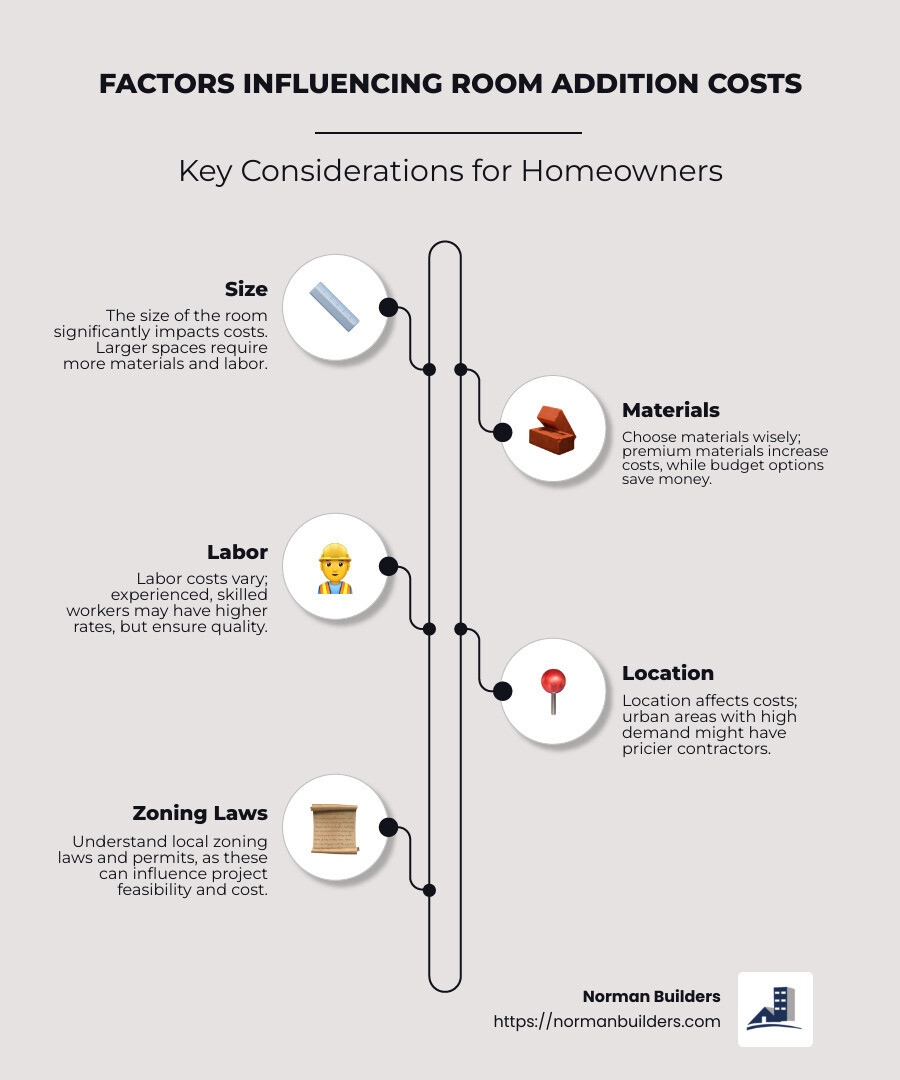
When considering adding rooms to a house cost, several factors come into play. Understanding these can help you plan your budget effectively and avoid unexpected expenses.
Factors Influencing Costs
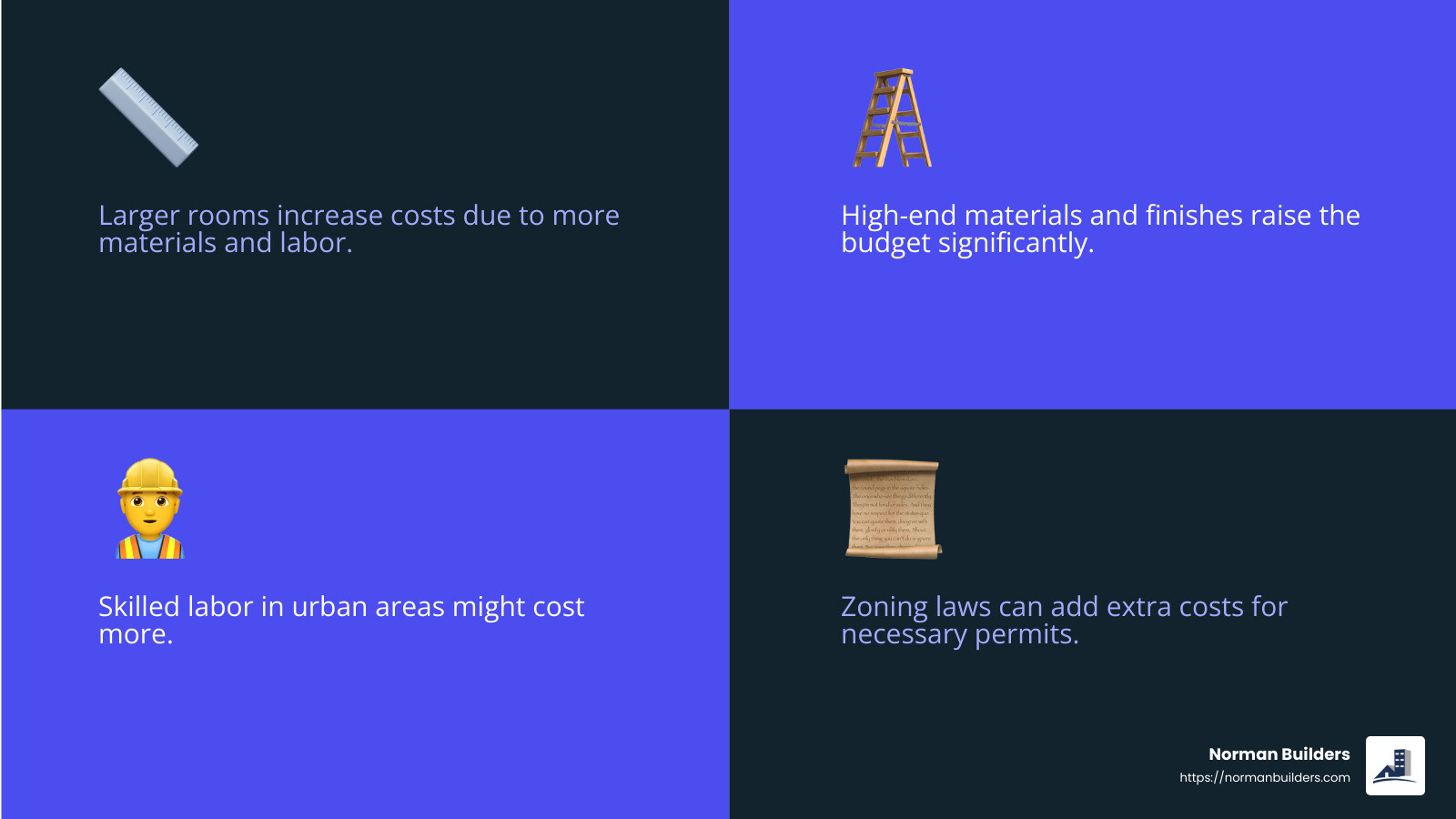
Size of the Addition: The larger the room, the more it will cost. This includes not just the square footage but also the height and any additional features like vaulted ceilings.
Materials: The choice of materials significantly impacts the cost. High-end finishes and fixtures will naturally increase the budget, while opting for more economical options can help keep costs down.
Labor: Labor costs can vary depending on the complexity of the project and the local market rates. Skilled labor might cost more but can ensure quality results.
Location: Where you live affects labor and material costs. Urban areas might have higher costs compared to rural locations.
Zoning Laws and Permits: Local zoning laws can influence what you can build and add extra costs for permits. Always check these regulations before starting your project.
Cost by Room Type
Different types of rooms have varying costs due to their specific requirements:
Bedroom: Adding a bedroom is typically one of the more straightforward projects. It generally involves flooring, walls, and basic electrical work.
Bathroom: Bathrooms can be more expensive due to plumbing needs. Fixtures like sinks, toilets, and showers add to the cost.
Kitchen: A kitchen addition or expansion is often the most expensive due to appliances, cabinetry, plumbing, and electrical work.
Sunroom: Sunrooms are a popular choice for adding space at a lower cost. They typically require less insulation and fewer internal fixtures.
Home Office: With remote work on the rise, home offices are increasingly popular. They can be relatively cost-effective, depending on the desired features.
Understanding these costs helps in budget planning. Consider the type of room you need and the specific features you want, then work with a contractor to get estimates based on these factors. This approach ensures you stay within budget while achieving your desired outcome.
Next, we’ll explore financing options for room additions, including home equity loans and HELOCs, to help fund your project effectively.
Adding Rooms to a House Cost: Key Considerations
When you’re planning to expand your home, understanding the financial and structural aspects is crucial. This section will guide you through financing options and structural choices, helping you make informed decisions.
Financing Options
Adding rooms to a house can be expensive, so it’s important to explore different financing options:
Home Equity Loans: These are second mortgages that allow you to borrow against the equity in your home. They come with fixed interest rates, making budgeting predictable.
Home Equity Line of Credit (HELOC): A HELOC operates more like a credit card. You can borrow as needed up to a certain limit, which is useful for covering varying costs throughout the project.
Both options use your home as collateral, so ensure you can manage the repayments comfortably.
Building Up vs. Building Out
Deciding whether to build up or out is a major part of planning a room addition:
Building Up: This involves adding another story to your home. While it can save yard space, it’s often more costly due to the need for structural reinforcements and additional staircases. It may also require temporary relocation during construction.
Building Out: Expanding the existing layout is generally cheaper and less disruptive. However, it reduces yard space and may be limited by zoning laws that dictate how much of your land can be built on.
Consider your long-term goals and the impact on your property when choosing between these options.
Saving on Costs
There are several strategies to keep your project within budget:
DIY Projects: Tackling some tasks yourself can save on labor costs. Painting, landscaping, or installing fixtures are areas where you might cut costs if you’re handy.
Tax Rebates: Look for tax incentives related to energy-efficient upgrades. These can reduce your overall expenses and make your home more sustainable.
Material Choices: Opt for cost-effective materials without compromising quality. Prefabricated options and synthetic materials can mimic high-end finishes at a lower price.
By carefully considering these factors, you can manage the adding rooms to a house cost effectively, ensuring your project is both affordable and aligned with your vision.
In the next section, we’ll dig into frequently asked questions about room addition costs, including specific cost-saving tips and strategies.
Frequently Asked Questions about Adding Rooms to a House Cost
How much does a 12×12 room addition cost?
Adding a 12×12 room to your home involves several cost factors. While the national average cost per square foot ranges from $86 to $208, the total expense for your specific project will depend on materials, labor, and location.
Cost-Saving Tips:
DIY Finishing Touches: Consider doing simple tasks yourself, like painting or installing flooring, to save on labor costs.
Smart Material Choices: Opt for durable yet affordable materials. Prefabricated components can also reduce expenses while maintaining quality.
Is it cheaper to add on or build up?
When deciding between building up or adding on, cost is a key consideration. Here’s a quick comparison:
Building Up: Generally more expensive due to structural reinforcement and roofing. It preserves yard space but might require temporary relocation.
Building Out: Typically more cost-effective. It involves expanding the existing footprint, which is less disruptive but reduces outdoor area.
Building Strategies:
Assess Your Needs: Consider your family’s space requirements and future plans before deciding.
Consult Local Zoning Laws: Ensure compliance with local regulations to avoid costly adjustments later.
What are the cheapest ways to add square footage?
If you’re looking to expand your home affordably, consider these options:
Bump-Outs: Small extensions that add a few feet to an existing room. They are cost-effective as they don’t require foundation work.
Sunrooms: Adding a sunroom can be less expensive than a full room addition. It offers extra living space and natural light.
Prefabricated Options: Pre-built structures can be assembled quickly and often come at a lower cost than custom builds.
By exploring these strategies, you can effectively manage the adding rooms to a house cost while enhancing your home’s functionality and value.
Conclusion
When it comes to adding rooms to a house, choosing the right partner can make all the difference. At Norman Builders, we pride ourselves on delivering personalized service and exceptional craftsmanship. Our team is dedicated to changing your vision into reality with precision and care.
Why Choose Norman Builders?
Personalized Service: We understand that every home is unique, and so are your needs. Our approach is custom to ensure that your home addition aligns perfectly with your lifestyle and future plans.
Exceptional Craftsmanship: With years of experience in the Merrimack Valley, North Shore, Seacoast, and Southern NH areas, our skilled professionals are committed to quality. From whole house renovations to new home constructions, we handle every project with meticulous attention to detail.
Comprehensive Solutions: Whether you’re considering a modest bump-out or a large-scale addition, we offer a range of solutions to suit your budget and requirements. Our expertise ensures that your investment not only adds space but also improves your home’s value.
Adding rooms to your home is a significant decision. Let us guide you through the process with confidence and ease. Explore our Ultimate Guide to Home Addition Costs in 2024 to learn more about how we can help you expand your space efficiently and affordably.
At Norman Builders, your dream home is within reach. Let’s build it together.
Table Of Contents
We specialize in high-quality home construction and remodeling services, delivering exceptional craftsmanship tailored to meet your vision and needs. Whether you’re planning a renovation, new construction, or a custom remodel, our experienced team is committed to exceeding expectations with precision, attention to detail, and reliable service.
Our service area includes the Merrimack Valley, North Shore, Seacoast, and Southern NH Areas. We take pride in the quality of our workmanship and our prompt professionalism.