

Smart home automation systems connect your devices to create an intelligent home that responds to your needs automatically. Rather than controlling individual gadgets through separate apps, these systems bring everything together under one unified platform.
Top Smart Home Automation Systems:
The magic happens when your smart lock, lights, thermostat, and security cameras work together. Picture this: you arrive home after dark, and your system automatically open ups the door, turns on pathway lights, adjusts the temperature, and disarms the security system – all triggered by your phone’s location.
Modern systems offer three key benefits. Convenience means controlling everything from one app or voice command. Security provides real-time monitoring and alerts when something’s wrong. Energy efficiency can lower your utility bills through automated scheduling and smart device management.
The difference between scattered smart devices and true automation is having a central hub that learns your routines and preferences. Professional systems like Control4 can integrate “just about everything in a house” for seamless operation, while DIY options like Home Assistant give tech enthusiasts complete control over their setup.
I’m Ryan Norman, founder of Norman Builders, and I’ve been integrating technology solutions into custom homes since 2007, drawing on my computer science background to help clients implement smart home automation systems that improve their daily lives. Whether you’re building new or renovating, the right automation system transforms how you interact with your home.
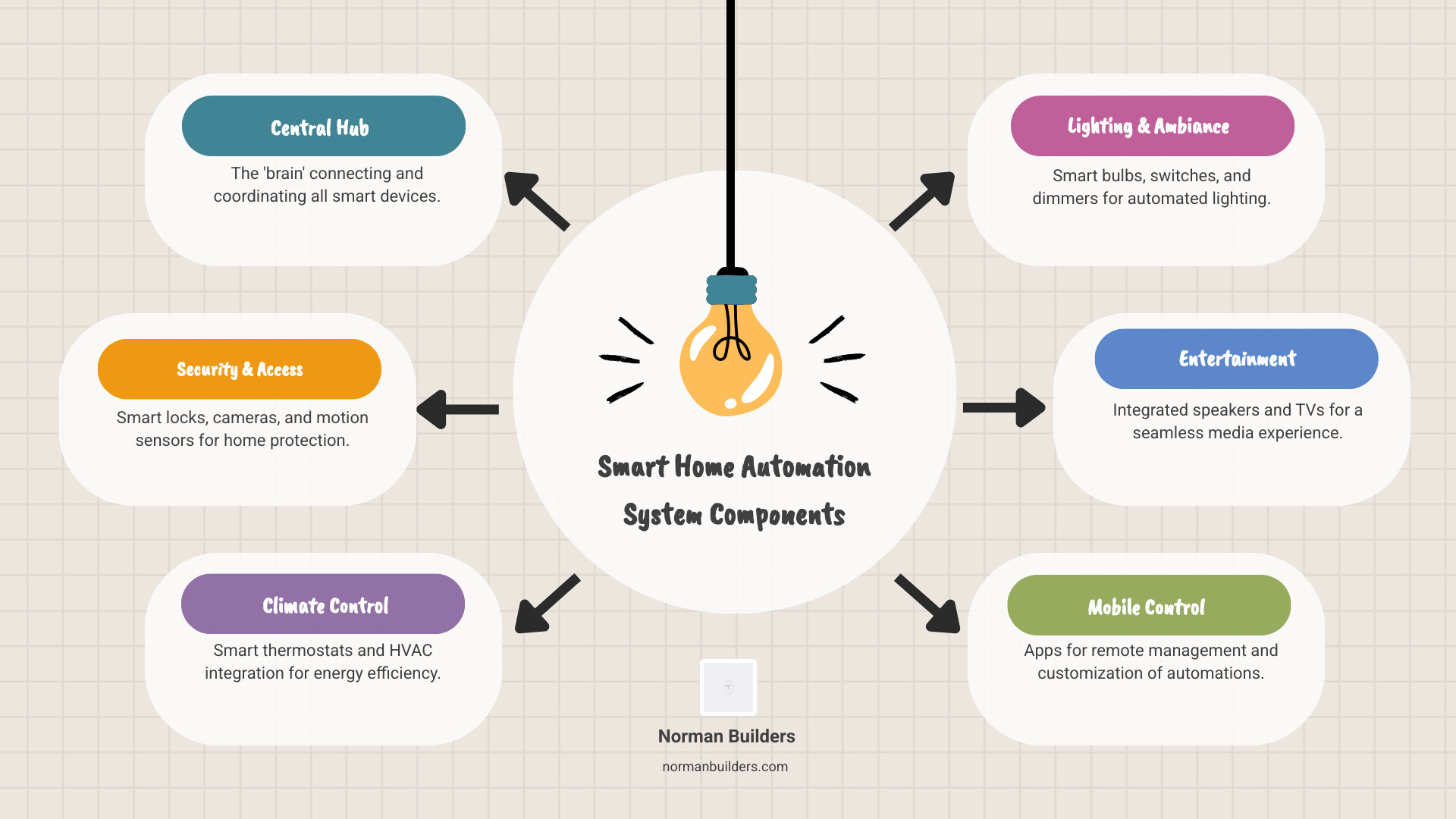
Know your smart home automation systems terms:
While individual smart devices are convenient, a smart home automation system is far more powerful. It creates a home that thinks ahead, responding to your needs automatically. True automation happens when devices work as a team. For instance, a single motion sensor can trigger a sequence: the porch light illuminates, the thermostat adjusts, and the security system disarms. That’s the magic of automation versus simple remote control.
The heart of any sophisticated automation system is a central hub or controller. Think of it as the conductor of an orchestra, making sure every instrument plays its part at exactly the right moment. This isn’t just a fancy router sitting in your closet – it’s the brain that connects all your devices and runs the software that makes your automations possible.
Different systems use different approaches for their central control. Apple HomeKit turns devices you might already own, like a HomePod or Apple TV, into your automation hub. For tech enthusiasts who love to tinker, Home Assistant offers incredible flexibility by running on various hardware setups. The key is having that central intelligence that can coordinate everything seamlessly.
Without a central controller, your smart devices are like talented musicians playing solo acts. They might sound good individually, but they can’t create the symphony of a truly automated home. The controller manages your scenes, follows your schedules, and learns your routines to create that intuitive experience where your home anticipates what you need.
Setting up a few smart bulbs might seem straightforward, but creating a whole-home automation system? That’s where things get interesting – and where professional expertise becomes invaluable.
System design expertise turns a collection of gadgets into a cohesive smart home. Professionals understand how different protocols and brands work together, preventing compatibility issues and ensuring your system improves your daily life.
Every home is unique, and your automation system should be too. Custom solutions mean we design around how you actually live – whether you’re early risers who want gradual wake-up lighting or night owls who prefer motion sensors that won’t blind you at 2 AM. Cookie-cutter approaches rarely deliver the seamless experience you’re hoping for.
Reliable installation goes far beyond plugging things in. Professional integrators understand network infrastructure, optimal device placement, and the configuration details that keep everything running smoothly. This means fewer mysterious glitches and more time enjoying your automated home instead of troubleshooting it.
The relationship doesn’t end at installation either. Ongoing support ensures your system evolves with new devices and updates. Technology moves fast, and having experts who can help you add new capabilities or resolve issues gives you confidence in your investment.
Privacy and security considerations become crucial when your home is connected. Professional integrators can guide you through security protocols and help you understand what data different devices collect. Some systems process everything locally for maximum privacy, while others rely more heavily on cloud services – understanding these trade-offs helps you make informed choices.
When you’re planning a renovation or new construction, integrating smart technology from the beginning creates the cleanest, most reliable setup. For more information on how we approach technology integration in our projects, explore our construction services.
Planning your smart home automation system is like designing a blueprint for your home—getting the foundation right is key. With over fifteen years of experience, I’ve learned that considering these factors upfront saves headaches and money.
Future-proofing should be at the top of your list. Technology moves fast, and the last thing you want is a system that becomes outdated in a couple of years. This is where emerging standards like Matter and Thread become crucial – they’re designed to keep your investment relevant as new devices hit the market. Think of it as buying a home with good bones that can adapt to your changing needs.
Interoperability is equally important. Your smart devices need to play nicely together, like musicians in an orchestra. Some systems excel at this – Home Assistant works with over a thousand different integrations, giving you incredible flexibility. Others, like Apple HomeKit, are more selective but ensure everything works seamlessly within their ecosystem.
Data privacy and system reliability go hand in hand and deserve serious consideration. Where does your personal information go? How dependent is your system on staying connected to the internet? These questions naturally lead us into one of the most important decisions you’ll make about your smart home setup.
Understanding long-term costs rounds out your planning process. The sticker price is just the beginning – you’ll want to factor in ongoing expenses, potential subscription fees, and the energy savings your system might deliver over time.
Choosing between local and cloud control is a critical decision that impacts your system’s privacy, speed, and reliability. The implications are significant, much like choosing between a home safe and a bank vault for important documents.
Cloud-based systems send your commands on a little journey to the internet before they come back to control your devices. When you tell your voice assistant to dim the lights, that request travels to remote servers, gets processed, and then returns to actually dim your bulbs. Popular systems work this way because it allows for powerful processing and easy remote access.
But this approach comes with trade-offs. Privacy becomes a consideration since your data, including voice commands and usage patterns, lives on someone else’s servers. Response speed can suffer too – you might notice a slight delay between your command and your device’s reaction, especially if your internet is having a slow day. Most frustratingly, internet outages can turn your smart home back into a regular home, leaving you fumbling for light switches in the dark.
Local control systems keep everything in-house, processing commands directly within your home network through a dedicated hub or server. Home Assistant exemplifies this approach, processing everything locally with minimal reliance on cloud services. The benefits are compelling: improved privacy since your data never leaves your home, faster response times because commands don’t need to travel to the internet and back, and greater reliability during internet outages.
In our custom home projects, we often design systems that give you the best of both worlds – prioritizing local control for essential functions while still allowing convenient features like voice control and remote access when you’re away. This approach ensures your system remains robust and responsive while protecting your privacy.
For years, the smart home world has been chaotic, with devices from different brands unable to communicate. This is changing with two new standards: Matter and Thread.

Matter is essentially creating a universal language for smart devices. This open-source connectivity standard means you can buy a smart device and know it will work with your existing smart home automation systems, whether you’re using Apple HomeKit, Amazon Alexa, or Google Home. No more checking compatibility charts or worrying about being locked into one brand’s ecosystem. Simplifying device setup and improving interoperability are Matter’s main goals, and it’s genuinely exciting for homeowners who want freedom of choice.
Thread works behind the scenes as a robust network protocol that makes everything more reliable. Unlike Wi-Fi, which can drain batteries and sometimes get congested, Thread creates a self-healing mesh network. If one device goes offline, the others automatically find new paths to communicate. It’s local-first too, which means faster responses and better reliability overall.
Together, Matter and Thread are changing the smart home experience from a technical challenge into something that just works. You’ll spend less time troubleshooting and more time enjoying your automated home. For those planning new construction or major renovations, these technologies represent a smart investment in your home’s future.
You can learn more about the technical benefits at the Thread Group’s website.
Planning your smart home budget is like planning any major home improvement – it helps to understand both the upfront investment and the ongoing costs. The good news is that smart home automation systems can fit almost any budget, from modest starter setups to comprehensive whole-home installations.
Startup costs typically begin with your central hub or controller. Based on industry data, these can range from around $50 for basic consumer hubs to $1,500 or more for professional-grade systems. A simple Home Assistant setup might start affordably on basic hardware, while comprehensive professional systems require more robust equipment.
Device costs vary dramatically depending on your goals. A basic smart bulb might cost $10-$20, while a high-end smart lock could run $200-$400 or more. If you’re outfitting an entire home with smart lighting, climate control, security cameras, and access control, individual device costs add up quickly. One typical starter setup we’ve seen included a smart hub, security system, video doorbell, smart lock, several smart bulbs, and cameras for around $900.
Ongoing expenses might include subscription services for professional monitoring, cloud storage for security cameras, or premium features. These typically range from a few dollars monthly to $50 or more, depending on the service level you choose.
Here’s the encouraging part: energy savings potential can offset some of your investment over time. Smart thermostats learn your preferences and optimize heating and cooling efficiently. Smart plugs with energy monitoring help identify devices that waste power when not in use. These savings accumulate month after month, making your smart home investment pay dividends beyond convenience and security.
Note: These are average costs based on internet data, not actual costs for Norman Builders services.
Choosing between doing it yourself or bringing in professionals is one of the biggest decisions you’ll make when building your smart home automation systems. It’s a bit like deciding whether to bake your own wedding cake or hire a professional baker – both can work, but the results might be very different!
The key factors that’ll influence your decision are complexity, time commitment, and your technical skills. If you’re planning a simple setup with a few devices, DIY might be perfect. But if you’re dreaming of a fully integrated system that makes your home feel like something out of a sci-fi movie, professional installation starts looking pretty appealing.
Here’s the thing – when you’re already planning major changes to your home, whether it’s new construction or a significant renovation, that’s the perfect time to integrate smart technology from the ground up. It’s much easier to run wires and plan network infrastructure when the walls are open! For more information about how we can help with your home projects, check out our construction services.
The DIY route is perfect for folks who love a good weekend project and aren’t intimidated by technology. It’s best for simple setups – think adding a smart doorbell, switching to smart bulbs in your living room, or installing a smart thermostat. These projects are usually straightforward: unbox, download an app, follow the setup wizard, and you’re good to go.
But here’s where it gets interesting – DIY requires technical knowledge that goes beyond just following instructions. You’ll need to understand different wireless protocols (some devices use Wi-Fi, others use Zigbee or Z-Wave), figure out network configurations, and become your own tech support when things don’t work as expected. If you’re a hobbyist who genuinely enjoys troubleshooting and learning new systems, this can actually be part of the fun.
Home Assistant has become incredibly popular in the DIY community because it gives you complete control over your setup. It’s actually the second most active open-source project on GitHub, with over a million installations – that’s a lot of people who’ve decided to take matters into their own hands!
The reality check? DIY can involve time-consuming troubleshooting. We’ve all heard stories from friends who spent their entire Saturday trying to get one device to connect, or dealing with potential compatibility issues when mixing different brands. While new standards like Matter and Thread are making things easier, you might still find yourself playing detective when devices don’t play nicely together.
If you’re envisioning a comprehensive system that transforms your entire home – or if you simply prefer to spend your weekends doing things other than troubleshooting smart switches – professional installation is often the way to go. This approach really shines for complex, whole-home systems where everything needs to work together seamlessly.
Professional integrators bring something you can’t get from YouTube tutorials: experience with real-world installations. They know how to ensure seamless integration because they’ve seen what works and what doesn’t. They understand that your smart lights need reliable power, your security cameras need proper network bandwidth, and your whole system needs to be configured so it actually makes your life easier, not more complicated.
The beauty of expert setup and support is that it frees you from becoming an unwilling IT specialist for your own home. From the initial design consultation through final testing and ongoing maintenance, professionals handle the technical details. Yes, there’s a higher upfront cost, but consider what your time and peace of mind are worth.
Professional installation becomes especially valuable during new construction or major home renovations. When walls are open and electrical work is already happening, smart home integration can be woven into the very bones of your house. This means hidden wiring, optimally placed access points, and a system designed specifically for how you live – rather than trying to retrofit technology into spaces that weren’t designed for it.
The result is a truly intelligent home that feels natural to use, rather than a collection of gadgets that sometimes work together.
Building a comprehensive smart home automation system is like creating the perfect recipe – you need the right ingredients working together to achieve something truly special. Over the years, we’ve watched the smart device market explode, and honestly, there’s now a “smart” version of almost everything in your home. But don’t worry, you don’t need to automate your toothbrush to have an effective system!
The key is focusing on devices that genuinely improve your daily life across security and access, lighting and ambiance, and climate and energy efficiency. These three categories form the foundation of most successful home automation setups, whether you’re building new or renovating an existing space.
Your home’s security system is often the heart of any smart home automation system, and modern devices offer incredible peace of mind. Smart locks have revolutionized how we think about home access – imagine never fumbling for keys in the dark again. The Ultraloq Bolt Fingerprint smart lock exemplifies this perfectly, offering keyless entry through keypads, fingerprints, or your smartphone app, all while supporting HomeKit and multiple control methods.
Video doorbells have become game-changers for home security, letting you see and speak with visitors whether you’re upstairs in your office or halfway across the country. The Arlo Video Doorbell (2nd Generation) provides crystal-clear video and seamlessly integrates with voice control systems.
Inside your home, indoor cameras serve multiple purposes beyond security. The Eufy S220 Indoor Cam offers both local and cloud storage options, while the Furbo 360 Dog Camera takes things a step further with barking notifications and even remote treat-tossing capabilities – because keeping Fido happy is part of home security too!
For exterior monitoring, outdoor security cameras like the Aqara Camera Hub G5 Pro represent the cutting edge of home protection. These cameras offer high resolution, color night vision, AI motion detection, and support for multiple protocols including Matter, Thread, and Zigbee.
The unsung heroes of security automation are motion sensors – these tiny devices trigger lights, cameras, or alarms when movement is detected, forming the backbone of many effective security automations.
Smart lighting transforms how you experience your home, going far beyond simple on-and-off control to create mood, improve security, and improve energy efficiency. Smart bulbs like the AiDot Linkind Wi-Fi Matter Smart Light Bulb showcase the versatility of modern lighting – they change colors, dim on command, and work with virtually every major platform including Alexa, Google, HomeKit, and SmartThings.
For whole-room control, smart switches and dimmers are incredibly powerful, allowing you to control entire circuits of lights, even if the bulbs themselves aren’t smart. We’ve found brands like Lutron Caseta (known for being virtually bulletproof), Inovelli, Zooz, and Leviton Decora offer robust options, with some providing local control capabilities that keep working even during internet outages.
LED light strips add that perfect accent lighting touch – the Govee Lynx Dream Outdoor String Lights, for example, can create millions of colors and dynamic effects for exterior ambiance. And don’t overlook automated blinds and shades, which integrate beautifully with lighting scenes to manage natural light and privacy throughout the day.
Optimizing your home’s climate control doesn’t just improve comfort – it’s one of the most effective ways to reduce energy costs and environmental impact. Smart thermostats are the stars here, learning your habits and adjusting temperatures based on occupancy and schedules. The Ecobee Smart Thermostat Premium includes remote sensors for consistent temperature control throughout your home, while the Amazon Smart Thermostat offers an excellent budget-friendly entry point.
Smart plugs with energy monitoring might seem simple, but they’re incredibly powerful tools. The TP-Link Kasa Smart Wi-Fi Plug Slim With Energy Monitoring transforms any regular appliance into a smart device while tracking power usage – perfect for identifying those sneaky energy vampires that drive up your electric bill.
Smart vents deserve a special mention here. While some homeowners find them useful for zoning, they can sometimes strain your HVAC system. In our custom-built homes, we often recommend well-designed HVAC systems or radiant in-floor heating as more effective solutions for precise temperature control throughout your space.
Our experience in building and remodeling means we understand how to integrate these devices seamlessly into your home’s design, whether you’re planning a complete renovation or focusing on specific improvements. For more information about our services, including bathroom remodeling, we’d love to discuss how smart technology can improve your project.
Building a truly smart home isn’t just about collecting the latest gadgets – it’s about creating a living space that genuinely understands and anticipates your needs. Throughout this guide, we’ve explored how smart home automation systems can transform scattered devices into a cohesive, intelligent network that brings real value to your daily life through improved convenience, robust security, and meaningful energy savings.
The beauty of today’s smart home landscape lies in its diversity. Whether you’re drawn to the incredible flexibility of Home Assistant with its thousand-plus integrations, the seamless ecosystem of Apple HomeKit, or the comprehensive professional solutions that we integrate into our custom builds, there’s a system that matches your lifestyle and technical comfort level.
Matching a system to your lifestyle means thinking beyond the initial excitement of new technology. Consider how you actually live in your home. Do you value privacy and local control? Are you comfortable troubleshooting technical issues, or would you prefer a system that just works? Do you want to start small and grow over time, or are you ready to automate your entire home at once?
The emerging standards of Matter and Thread are making these decisions easier by breaking down the compatibility barriers that once frustrated homeowners. Your smart devices will increasingly work together regardless of their manufacturer, giving you the freedom to choose based on features and value rather than ecosystem lock-in.
The importance of planning cannot be overstated. The most successful smart home implementations start with understanding your priorities and budget, then building a system that can grow with your needs. This is especially true when you’re undertaking major home projects like new construction or comprehensive renovations – integrating smart technology from the ground up creates opportunities for seamless implementation that simply aren’t possible with retrofits.
At Norman Builders, we’ve been helping homeowners steer this exciting intersection of technology and craftsmanship since 2007. Our background in both construction and technology allows us to integrate smart home automation systems thoughtfully into your project, ensuring that the technology improves rather than complicates your living experience.
Whether you’re planning a new custom home or considering a whole-house renovation, the right smart home system becomes an invisible but invaluable part of your daily routine – adjusting temperatures before you arrive home, securing your property while you’re away, and creating the perfect ambiance for any occasion.
Contact us to discuss integrating smart technology into your whole house renovation.
Please note: Our services are exclusively available in Massachusetts, specifically in Andover, MA, the North Shore, and New Hampshire, covering the Seacoast and Southern NH regions.

We specialize in high-quality home construction and remodeling services, delivering exceptional craftsmanship tailored to meet your vision and needs. Whether you’re planning a renovation, new construction, or a custom remodel, our experienced team is committed to exceeding expectations with precision, attention to detail, and reliable service.
Our service area includes the Merrimack Valley, North Shore, Seacoast, and Southern NH Areas. We take pride in the quality of our workmanship and our prompt professionalism.
Contact us today to bring your project to life!