

House contractors near me are essential professionals who can turn your renovation dreams into reality, but choosing the wrong one can become your worst nightmare. Whether you’re planning a kitchen remodel, home addition, or complete custom build, the contractor you select will determine the success of your entire project.
Quick Answer for Finding House Contractors Near Me:
• Search online platforms like Houzz (531,470+ contractors), Thumbtack, and Angi with verified license filters
• Ask neighbors and friends for referrals from completed projects
• Check local lumber yards and building supply stores for contractor recommendations
• Use BBB directories to find accredited contractors with ratings
• Drive neighborhoods to spot active construction sites and talk to homeowners
• Verify licensing, insurance, and bonding through state databases before hiring
• Get 3+ detailed bids from different contractors for comparison
The process of finding trustworthy contractors can feel overwhelming. As one homeowner shared in a recent forum discussion: “Googling ‘local contractors in [AREA]’ is overwhelming due to outdated websites, missing reviews, and phone-number-only pages.” This frustration is common, but with the right approach, you can find reliable professionals who will treat your project—and your home—with the care they deserve.
The stakes are high. General contractors typically charge 10% to 20% of your total project cost, with hourly rates ranging from $30 to $85 depending on location and project complexity. More importantly, the wrong choice can lead to cost overruns, delays, code violations, and poor workmanship that haunts you for years.
I’m Ryan Norman, founder of Norman Builders, and I’ve been helping homeowners steer the contractor selection process since 2007. My experience working with hundreds of clients searching for house contractors near me has taught me exactly what separates exceptional contractors from the rest—and I’m here to share those insights with you.
Handy house contractors near me terms:
– custom home construction
– cost to build a luxury house
– must have new home construction
Before you start searching for house contractors near me, understand what these professionals actually do and which type fits your specific project. Think of it this way: you wouldn’t call a heart surgeon for a broken arm, and you shouldn’t call a roofer for a whole-house renovation.
A general contractor is like the conductor of an orchestra—they don’t play every instrument, but they coordinate all the musicians to create beautiful music. In construction terms, this means they oversee your entire building process from start to finish. They handle the big picture stuff like project management, estimating costs, providing materials and tools, hiring specialized subcontractors, and keeping everything on schedule.
Here’s what makes general contractors invaluable: they pull permits, ensure code compliance, coordinate inspections, and serve as your single point of contact throughout construction. Instead of you juggling phone calls with electricians, plumbers, framers, and roofers, your general contractor handles all that coordination. Trust me, managing multiple trades yourself is essentially a full-time job that requires extensive construction knowledge.
The cost-plus model is standard in our industry, where general contractors typically charge a percentage of the total construction cost. This covers their project management expertise, coordination skills, and accountability for the entire project. Some contractors use flat fees, but this approach ensures you’re paying for the value they bring to your project.
General contractors also leverage their relationships to get better material prices than most homeowners can access on their own. They know which suppliers are reliable, which products perform best, and how to troubleshoot problems before they become expensive headaches.
Understanding the differences between contractor types will save you time and ensure you’re talking to the right professionals for your project.
General contractors are your go-to choice for complete projects involving multiple trades. New home construction, major additions, or whole-house renovations all benefit from having one person accountable for the entire scope. They handle everything from foundation work to final finishes, coordinating all the moving pieces so you don’t have to.
Remodeling contractors specialize in renovation work within existing structures. Kitchen and bathroom remodelers are particularly valuable because these spaces require specialized knowledge about maximizing small spaces, updating old systems, and working around existing plumbing and electrical. They understand the unique challenges of renovation work, like finding surprises behind walls or dealing with older building materials.
These specialists excel at creating beautiful, functional designs within the constraints of your current home. They know how to blend new work seamlessly with existing structures and can often suggest creative solutions that general contractors might miss.
Specialty contractors focus on single trades—electricians, plumbers, roofers, HVAC technicians, or structural engineers. You’d hire these professionals directly for projects that only involve their specific expertise, like replacing a roof, upgrading electrical service, or fixing a plumbing issue.
However, here’s the key insight: for projects requiring multiple trades, a general contractor coordinates these specialists far more effectively than you could manage yourself. They speak the language, understand the sequencing, and know how each trade’s work affects the others.
The design-build approach is like having a translator who speaks both architect and contractor fluently. Instead of hiring an architect separately and then finding a contractor to build their plans, you work with a team that handles both planning and construction under one roof.
This approach creates a single point of contact throughout your entire project. The designer understands what’s actually buildable and cost-effective, while the construction team knows the design intent from day one. No more playing telephone between your architect and contractor when questions arise.
This collaboration typically results in better outcomes and fewer surprises. When the people designing your project are the same people building it, they’re motivated to create plans that work beautifully in both theory and practice. Communication flows smoothly, conflicts between design and construction teams disappear, and projects often move faster and more efficiently.
If you’re considering this streamlined approach for your project, our Design and Build Contractors Near Me page explains exactly how this process works and why many homeowners find it less stressful than the traditional design-then-build method.

Finding reliable house contractors near me requires a strategic approach that combines digital savvy with old-fashioned networking. The contractors who do exceptional work aren’t always the ones with the flashiest websites or biggest advertising budgets—sometimes they’re too busy building beautiful homes to focus on marketing.
The smartest approach starts with casting a wide net using local directories and online platforms, then narrowing your list through personal connections and referrals. Houzz maintains one of the largest contractor databases with over 531,000 professionals nationwide, complete with filters for project type and verified licenses. Their platform lets you see actual project photos and read detailed reviews from homeowners who’ve been in your shoes.
Word-of-mouth referrals remain the gold standard for finding quality contractors. When you spot a beautiful addition or renovation in your neighborhood, don’t hesitate to knock on the door and ask about their experience. Most homeowners are eager to share their contractor stories—both the success stories and the cautionary tales that can save you from costly mistakes.
Social media groups in your local area often become informal contractor recommendation networks. Neighborhood Facebook groups and community forums are treasure troves of honest feedback about local contractors. People tend to be more candid in these settings than in formal review sites.
Your local BBB listings provide another layer of verification, showing contractors who’ve committed to specific business standards and dispute resolution processes. While BBB accreditation doesn’t guarantee quality workmanship, it does indicate a contractor’s willingness to be held accountable.
Thumbtack matching services and Angi cost guides can help you understand local pricing and connect with contractors actively seeking new projects. These platforms often include response time indicators, which can give you a preview of how communicative a contractor might be throughout your project.
Here’s a strategy many homeowners overlook: visit your local lumberyard or building supply store during weekday mornings when contractors are picking up materials. The staff at these locations see contractors regularly and know who pays their bills promptly, treats suppliers respectfully, and maintains professional standards. A quick conversation with the counter staff can yield insider insights you won’t find in any online review.
Drive-by scouting through neighborhoods with active construction sites offers another opportunity to see contractors’ work in progress. You can observe their job site organization, crew professionalism, and attention to cleanup—all indicators of how they might handle your project.
For specialized projects, our General Contractor Near Me resource provides additional guidance on finding contractors with the right experience for your specific needs.
Digital platforms have revolutionized how we find contractors, but knowing how to use them effectively makes all the difference. Most platforms now offer project quiz features that help match you with contractors who specialize in your type of work. These questionnaires might seem tedious, but they’re actually working behind the scenes to filter thousands of contractors down to those with relevant experience.
Verified license filters are your first line of defense against unlicensed operators. Always use this filter when available—it eliminates a significant source of potential problems before you even start your evaluation process. Licensed contractors have met minimum competency requirements and are accountable to state regulatory boards.
Pay attention to response time indicators on these platforms. Contractors who respond quickly to initial inquiries often maintain that same level of communication throughout the project. Slow responders during the courtship phase rarely improve once they’ve secured your business.
The photo galleries on these platforms deserve careful attention. Quality contractors showcase detailed shots of their craftsmanship and aren’t afraid to show close-ups of their work. Be cautious of profiles with only generic stock photos or limited portfolios—these often indicate inexperience or work quality they’d rather not highlight.
For renovation projects specifically, our Home Remodeling Contractors Near Me page offers targeted advice for finding contractors who excel at working within existing structures.
Traditional networking methods often produce the highest-quality contractor leads, partly because they rely on established relationships and proven track records. Neighbors who’ve recently completed projects similar to yours can provide detailed insights about their contractor’s communication style, problem-solving abilities, and final work quality.
Building inspectors see contractors’ work regularly and know who consistently meets code requirements. While they typically can’t officially recommend specific contractors due to professional ethics, they can provide valuable insights about local building standards and permit processes that help you ask better questions during contractor interviews.
Supplier recommendations from building supply stores, specialty shops, and trade suppliers carry significant weight. These businesses see contractors regularly and know who maintains good standing in the professional community. Contractors who pay suppliers promptly and treat trade partners respectfully often extend that same professionalism to their clients.
Trade associations and local HBA chapters (Home Builders Association) maintain member directories of contractors who’ve committed to ongoing education and industry standards. Membership in these organizations suggests contractors take their profession seriously and stay current with evolving building codes and techniques.
The relationships you build during your contractor search often prove as valuable as the final hiring decision. Even contractors you don’t hire can become resources for future projects or referrals to specialists for smaller jobs. The construction community in most areas is surprisingly tight-knit, and maintaining good relationships serves you well as a homeowner.

Finding house contractors near me is just the beginning—the real work starts when you need to separate the true professionals from those who might turn your dream project into a nightmare. This vetting process might feel overwhelming, but think of it as insurance for your investment and peace of mind.
I always tell homeowners that spending a few extra hours on research upfront can save you months of headaches and thousands of dollars down the road. The horror stories you hear about contractors usually involve homeowners who skipped these crucial verification steps.
License verification should be your first stop. Every legitimate contractor needs proper licensing for your type of work, and checking this takes just minutes online. Your state’s licensing board website will show you not only if their license is active, but also any disciplinary actions or complaints filed against them. Think of this as a contractor’s report card—you want to see a clean record.
Insurance isn’t optional—it’s your financial protection. Contractors need both general liability coverage and workers’ compensation. Here’s something many homeowners don’t know: you should request insurance certificates directly from their insurance company, not just accept a photocopy from the contractor. Insurance companies can verify coverage instantly, and this extra step weeds out contractors with lapsed or fake policies.
Bonding adds another layer of security, especially for larger projects. Bonded contractors have met strict financial and character requirements, and if they fail to complete your work properly, the bond can compensate you for losses.
The portfolio review is where you really get to know their work quality. Don’t just flip through pretty “after” photos—ask to see progress shots that show their process. Quality contractors document their work thoroughly and take pride in showing you how they handle the details that matter most.

Reference calls might feel awkward, but past clients usually love sharing their experiences. Ask specific questions about timeline adherence, communication style, and how the contractor handled unexpected problems. Every project has surprises—what matters is how professionally they’re resolved.
Here’s a strategy that works brilliantly: consider starting with a small test project if you’re planning extensive renovations. Maybe have them build a deck or remodel a powder room before committing to your whole-house renovation. This gives you experience with their workmanship, reliability, and communication style without risking your entire project.
Red flags are usually obvious once you know what to look for. Contractors who demand large upfront payments, show up at your door unsolicited, or can’t provide written estimates should be avoided entirely. Trust your instincts—if something feels off during initial conversations, it probably is.
Understanding licensing requirements in your area prevents costly mistakes. Some states handle contractor licensing at the state level, while others delegate to counties or cities. Your local building department can clarify exactly what’s required for your specific project type—and this conversation also gives you insight into which contractors they see regularly pulling permits and passing inspections.
Workers’ compensation protects you from serious financial liability. Even in states where it’s not required for smaller contractors, insist on this coverage. Without it, you could be responsible for medical bills and lost wages if someone gets injured on your property. The cost difference between insured and uninsured contractors is minimal compared to your potential exposure.
General liability insurance should provide at least $1 million per occurrence coverage, with higher amounts for larger projects. The verify a pro’s insurance process takes just a phone call to their insurance company, but it’s one of the most important calls you’ll make.
Permit history tells you a lot about a contractor’s professionalism. Contractors who regularly pull permits and pass inspections understand local codes and maintain good relationships with building officials. You can check this history through your local building department.
Face-to-face meetings reveal things that phone calls and emails can’t. You’ll quickly sense whether a contractor listens carefully to your ideas, asks thoughtful questions, and communicates clearly. Pay attention to how they explain complex concepts—good contractors can make technical details understandable without talking down to you.
Experience matching your project type matters more than total years in business. A contractor who specializes in modern new construction might struggle with a historic home renovation, while someone who excels at small remodels might feel overwhelmed by a large addition. Look for contractors who light up when discussing projects similar to yours.
Portfolio depth separates serious professionals from occasional contractors. Quality contractors can show you multiple completed projects from different angles, explain specific challenges they overcame, and provide recent client references without hesitation. Be cautious of contractors with limited portfolios or reluctance to share client contacts.
Active job site visits provide the best insight into their work practices. Clean, organized sites with proper safety measures usually indicate contractors who take pride in their professionalism. You’ll also see how they interact with workers and handle the daily challenges that arise on every construction project.
If you’re planning an addition, our Addition Builders Near Me page provides specific guidance for evaluating contractors for these complex projects that require expertise in both structural work and seamless integration with existing homes.
Let’s talk about the financial side of hiring house contractors near me—because understanding costs upfront prevents surprises later. Most general contractors charge hourly rates between $30 and $85 (based on internet data, not our specific pricing), though you’ll rarely see hourly billing for complete projects. Instead, most use flat fees or the cost-plus model.
The cost-plus approach is standard in our industry, where contractors charge 10% to 20% of your total project cost for management and coordination, plus actual material and labor costs. This gives you transparency into where every dollar goes, but requires careful expense tracking. Fixed-price contracts offer cost certainty but may include higher margins since contractors assume more risk.
Here’s something many homeowners don’t realize: regional differences can double your costs. The same kitchen renovation might cost vastly different amounts in Boston versus rural New Hampshire, reflecting local wages, permit fees, and material availability. That’s why getting multiple local bids beats relying on national cost calculators every time.
Smart homeowners build a contingency fund of 10% to 20% beyond their contractor’s estimate. Every project uncovers surprises—hidden water damage, outdated wiring that needs upgrading, or that “simple” change that requires moving a load-bearing wall. Having extra funds available keeps these findies from becoming project disasters.
Material upgrades often shock homeowners with their cost impact. The difference between builder-grade and premium finishes can easily double your project budget. Understanding what’s included in base bids versus upgrades helps you make informed decisions about where to spend and where to save.
Don’t forget about scope creep—those “while we’re at it” additions that seem minor but add up quickly. Professional contractors track these changes carefully and provide written change orders before proceeding. This protects both of you from misunderstandings about what’s included.
| Document Type | What It Includes | Best For |
|---|---|---|
| Bid | Basic cost estimate with limited detail | Initial screening of contractors |
| Estimate | More detailed breakdown with allowances | Comparing similar contractors |
| Proposal | Comprehensive scope, timeline, and terms | Final contractor selection |
Getting three detailed bids from qualified contractors is your best protection against overpaying or getting surprised by hidden costs. But here’s the catch—you need identical project specifications for meaningful comparisons. Vague bids that say “kitchen renovation” tell you nothing useful.
Detailed scope documents are your friend here. Specify exactly what work you want done, which rooms are included, and what level of finishes you expect. When every contractor bids on the same specifications, you can actually compare their pricing and approach fairly.
Pay special attention to allowances—the money allocated for finish materials like flooring, fixtures, and appliances. A bid with $5,000 for bathroom fixtures isn’t comparable to one with $15,000 allowances, even if the total prices seem similar. Make sure all contractors use similar allowance amounts for fair comparison.
Ask for unit pricing on major items. This helps you understand cost impacts if you decide to add square footage or upgrade materials. It also reveals which contractors have actually calculated their costs versus those throwing out rough guesstimates.
Finish levels make a huge difference in final costs. Specify whether you want basic, mid-grade, or premium materials so all contractors bid on the same quality level. This prevents the frustration of choosing a low bid only to find it assumes builder-grade everything.
For specialized work like basement finishing, our Basement Finishing Contractors Near Me guide covers unique considerations for these below-grade spaces that can significantly impact pricing.
Your contract is your safety net, so make sure it covers all the essentials. Start and finish dates should be specific, not vague promises like “sometime in spring.” Include provisions for weather delays and change orders that might extend the timeline.
Detailed specifications prevent arguments later about what quality was promised. Include specific brands, models, and installation methods for major items. Generic descriptions like “quality materials” are meaningless when you’re trying to resolve a dispute about whether that faucet meets contract standards.
Permit responsibility should be crystal clear. Most professional contractors handle all necessary permits, but verify this is stated explicitly in your contract. Permit delays can push back your entire timeline, so you want someone experienced managing this process.
Insurance proof should be a contract requirement, not just a verbal promise. Contractors should provide current certificates before work begins and notify you immediately if coverage lapses during your project. This protects you from liability if accidents happen.
The cleanup clause might seem minor, but it prevents daily frustration. Professional contractors remove debris regularly and leave job sites reasonably clean each day. This should be written into your contract, not left to chance.
Include arbitration clauses for dispute resolution. Nobody wants to think about problems, but having a faster, less expensive alternative to court battles protects everyone involved. Many quality contractors now offer 5-year workmanship warranties—this demonstrates confidence in their work and provides long-term peace of mind.
Understanding how projects typically unfold helps you plan your life around construction and spot potential delays early. Most renovations follow predictable phases, though timing varies based on project size and complexity.
Site preparation and demolition kick things off. This might take just a few days for minor renovations or several weeks for major overhauls. Proper demolition protects existing structures you’re keeping and prepares the space for new construction. Don’t rush this phase—mistakes here create problems throughout the project.
Rough-in work includes framing, electrical, plumbing, and HVAC installation. This phase requires multiple inspections and can’t move forward until each system passes. Plan for potential delays if inspectors find issues requiring correction—it’s better to fix problems now than after walls are closed up.
Insulation and drywall installation follows rough-in approvals. This phase transforms your space visually and marks real progress toward completion. Quality contractors prime drywall before applying final paint to ensure even coverage and professional results.
Finish work includes flooring, cabinets, trim, and final fixtures. This phase requires careful coordination to prevent damage to completed work. Professional contractors protect finished surfaces during subsequent installations—you shouldn’t see scuff marks on new floors from cabinet installation.
Final inspections and punch-list completion wrap up your project. Walk through everything with your contractor to identify any remaining items needing attention. Quality contractors address punch-list items promptly and stand behind their work long after final payment.
Please note: Our services are exclusively available in Massachusetts, specifically in Andover, MA, the North Shore, and New Hampshire, covering the Seacoast and Southern NH regions.
After helping hundreds of homeowners steer the contractor selection process since 2007, I’ve noticed the same important questions come up time and again. Let me share the answers that matter most, based on real experience working with families throughout the Merrimack Valley, North Shore, Seacoast, and Southern NH areas.
The single most important factor when choosing house contractors near me isn’t just technical skill—it’s finding someone who communicates clearly and genuinely cares about your project. Most licensed contractors can handle standard construction work, but the real difference shows up in their attention to detail, problem-solving approach, and commitment to making you happy with the results.
Local contractors offer advantages that national companies simply can’t match. We understand local building codes, have solid relationships with inspectors and suppliers, and our reputation depends entirely on keeping our neighbors satisfied. That local focus has been the foundation of our business since 2007, allowing us to provide the kind of personalized service that makes each project feel special.
The biggest red flag is any contractor demanding large upfront payments or wanting all their money before work begins. Professional contractors typically ask for modest down payments and tie the rest to completed milestones—it protects both of you.
Door-to-door solicitation should make you immediately suspicious. Quality contractors stay busy through referrals and satisfied customers, not by knocking on random doors. Be especially careful of anyone claiming they have “leftover materials” from a nearby job—that’s usually a scam.
Never hire someone who can’t provide current license numbers and insurance certificates. The few dollars you might save upfront aren’t worth the massive liability and quality headaches you’ll face later. If they resist showing proper credentials, that tells you everything you need to know.
Vague contracts or handshake agreements create nothing but problems down the road. Everything should be written down with specific details about work scope, materials, timing, and costs. Any contractor who says “we’ll figure it out as we go” is someone you want to avoid.
High-pressure tactics are another warning sign. Professional contractors provide detailed estimates and give you time to make thoughtful decisions. Anyone pushing for an immediate signature probably isn’t someone you want working in your home.
Start by making sure all the bids cover identical scope and specifications. When prices vary wildly, it’s usually because contractors are assuming different things about what’s included, not because of actual cost differences.
Break each bid down into major categories—labor, materials, permits, and overhead. This shows you where contractors differ in their approaches and helps spot line items that seem unusually high or low and need explanation.
Value goes beyond just price. The lowest bid isn’t always your best choice, especially if it comes from someone with poor references or inadequate insurance. Factor in their reputation, relevant experience, and how well they communicate.
Ask each contractor to explain their pricing and approach. Quality professionals can justify their recommendations and help you understand why they’ve suggested specific solutions. These conversations often reveal which contractors truly “get” your project.
Pay attention to payment schedules too. Contractors wanting most of their money upfront carry higher risk than those who tie payments to actual completed work.
State consumer protection laws provide your foundation, though these vary depending on where you live. Most states have licensing boards that investigate complaints and can take action against contractors who break the rules.
Bonding offers financial protection if contractors fail to complete work or fix defects. Bonded contractors have met financial requirements and posted security that can help compensate you for certain losses.
Understanding lien laws protects both sides when you follow proper procedures. These laws help you structure payments to minimize risks while ensuring contractors get paid fairly for completed work.
Mediation clauses in your contract provide faster, less expensive ways to resolve disputes than going to court. Many contractor associations offer mediation services that can solve problems without the stress and cost of litigation.
Good documentation protects everyone involved. Keep records of all communications, payments, change orders, and project progress. Photos of work in progress can be incredibly valuable if questions arise later about quality or what was actually done.
The key is building a relationship with contractors who view your project as a partnership, not just another job. When problems do arise—and they sometimes do on any construction project—professional contractors work with you to find solutions that leave everyone satisfied.
Please note: Our services are exclusively available in Massachusetts, specifically in Andover, MA, the North Shore, and New Hampshire, covering the Seacoast and Southern NH regions.
Finding the right house contractors near me takes time and effort, but it’s one of the most important decisions you’ll make for your home. The contractor you choose becomes your partner in bringing your vision to life—and the right partnership can turn what might be a stressful experience into an exciting journey.
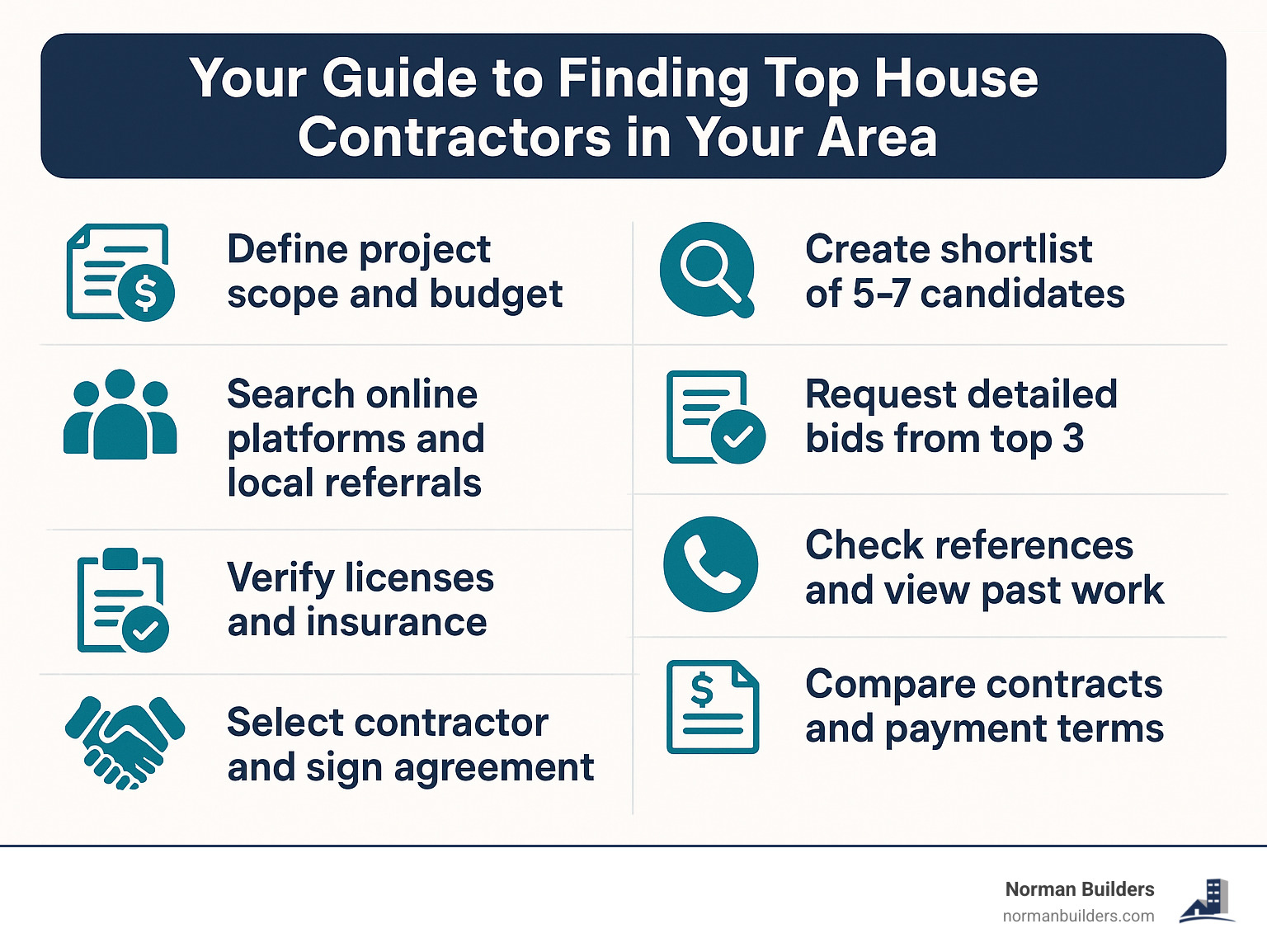
Throughout this guide, we’ve covered the essential steps: understanding what different contractors do, searching smart both online and offline, thoroughly vetting your candidates, and protecting yourself with proper contracts. These aren’t just theoretical steps—they’re the same process I recommend to friends and family when they’re planning their own projects.
The difference between a good contractor and a great one often comes down to communication and care. Technical skills matter, but most licensed professionals can handle standard construction. What sets exceptional contractors apart is their attention to your specific needs, their problem-solving approach when challenges arise, and their commitment to delivering exactly what they promised.
At Norman Builders, we’ve been part of this community since 2007, and we understand that every project is deeply personal. Whether you’re creating your forever home or updating the kitchen where your family gathers, these spaces matter. That’s why we focus on custom builds and personalized service—because your home should reflect who you are, not fit into someone else’s template.
The investment you make in finding the right contractor pays dividends throughout your project and for years afterward. Clients who take time to research and vet their contractors consistently report smoother projects, better communication, and results that exceed their expectations. Those who rush the process often face the frustrations we’ve all heard about—delays, cost overruns, and workmanship that doesn’t meet their standards.
Your next step is putting this knowledge into action. Start with defining your project scope clearly, then begin your search using the strategies we’ve outlined. Remember to verify credentials, check references, and trust your instincts about communication and professionalism.
For those ready to explore what’s possible with new construction, our new home construction page shows how we approach custom building from the ground up. Every project starts with understanding your vision and ends with a home that perfectly fits your lifestyle.
The right contractor is out there—someone who will treat your project with the same care they’d want for their own home. Take your time, do your research, and choose the professional who earns your trust and confidence.
Please note: Our services are exclusively available in Massachusetts, specifically in Andover, MA, the North Shore, and New Hampshire, covering the Seacoast and Southern NH regions.

We specialize in high-quality home construction and remodeling services, delivering exceptional craftsmanship tailored to meet your vision and needs. Whether you’re planning a renovation, new construction, or a custom remodel, our experienced team is committed to exceeding expectations with precision, attention to detail, and reliable service.
Our service area includes the Merrimack Valley, North Shore, Seacoast, and Southern NH Areas. We take pride in the quality of our workmanship and our prompt professionalism.
Contact us today to bring your project to life!