

When it comes to general contractors insurance, understanding its importance is crucial for anyone managing construction projects. As a general contractor, you’re accountable for materials, equipment, and worksite safety. Without proper insurance, you risk facing significant financial setbacks.
Quick Answer: General contractors need insurance to protect against accidents, property damage, and liability claims. It is often required by states, banks, and clients before any project begins.
I’m Ryan Norman, the founder of Norman Builders. With over a decade of experience, I understand how vital general contractors insurance is for safeguarding your business and projects. Stay tuned as we explore the types of coverage you need to protect your contracting business.
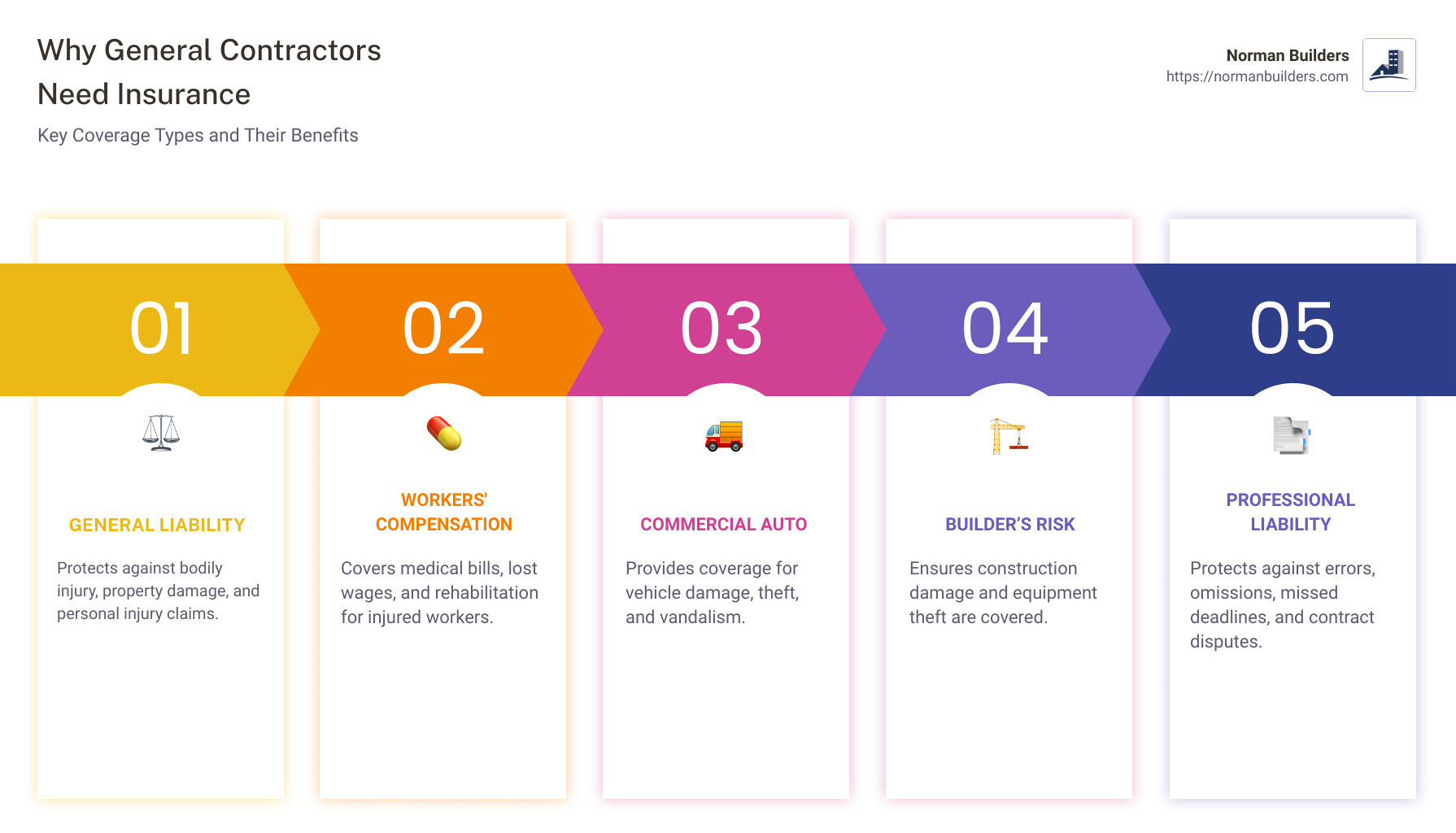
As a general contractor, you’re responsible for complex projects and multiple liabilities. To protect your business, you need a range of insurance policies. Here’s a breakdown of the essential types:
General liability insurance is the foundation of your protection. It covers expenses related to:
In New York, many commercial landlords and clients require proof of this insurance before you can start a project.
If you have employees, New York law mandates you carry workers’ compensation insurance. This policy covers:
The median cost for workers’ compensation insurance in New York is $4,799 annually, higher than the national median of $3,682.
If your business owns vehicles, commercial auto insurance is a must. It covers:
This insurance is crucial for protecting your work vehicles and ensuring compliance with state laws.
Builder’s risk insurance is essential for protecting structures under construction. It covers:
This policy is particularly useful for large projects where the financial stakes are high.
Also known as errors and omissions (E&O) insurance, this policy covers:
Professional liability insurance is crucial for safeguarding against claims of negligence or subpar work.

“Insurance is not just a safety net; it’s a business necessity,” says Ryan Norman, founder of Norman Builders. “Having the right coverage ensures you can focus on what you do best—building and renovating homes.”
In the next section, we will dive deeper into understanding general contractors insurance, including coverage, claims, and policy periods. Stay tuned to learn how to make the most of your insurance policies.
When you’re a general contractor, having the right insurance isn’t just a good idea—it’s essential. Let’s break down the types of insurance you need and what each one covers.
General liability insurance is the foundation of your coverage. It protects against three main types of claims:
A client might trip over a tool and break an ankle. Your general liability insurance will cover their medical bills and any legal fees if they decide to sue.
In New York, if you have employees, workers’ compensation insurance is mandatory. This insurance covers:
For instance, if an employee injures their back lifting heavy materials, workers’ comp will handle their medical care and part of their salary while they’re off work.
If your business owns vehicles, commercial auto insurance is a must. It covers:
Imagine one of your trucks gets into a fender bender. Commercial auto insurance will cover the repair costs and any medical bills if someone is injured.
Builder’s risk insurance is vital for protecting structures under construction. It covers:
Think of builder’s risk insurance as a safety net for your construction projects. If a fire breaks out and damages your work, this insurance will cover the costs to rebuild.
Also known as errors and omissions (E&O) insurance, this policy covers:
For example, if you miss a critical deadline on a project and the client suffers a financial loss, professional liability insurance can cover the resulting claims.
Understanding these policies and what they cover can help you choose the right insurance for your contracting business. In the next section, we’ll explore the costs associated with these insurance policies and how to manage them effectively.
Understanding the costs associated with general contractors insurance is crucial for managing your business effectively. Insurance costs can vary widely based on several factors. Let’s break down what influences these costs and how they compare in New York.
1. Coverage Needs:
The type and amount of coverage you need will significantly impact your insurance premiums. For example, a general contractor working on large commercial projects will likely need more extensive coverage than one focusing on small residential jobs.
2. Number of Employees:
If you have employees, you’ll need workers’ compensation insurance. The more employees you have, the higher your premiums. In New York, the median annual cost of workers’ compensation insurance for general contractors is $4,799, which is higher than the national median of $3,682.
3. Claims History:
Your past claims history can also affect your premiums. Frequent claims can signal to insurers that your business is high-risk, leading to higher costs.
Insurance costs for general contractors in New York are generally higher than the national average. Here are some comparisons:
These costs can add up, but there are ways to manage them effectively.
Discounts:
Some insurers offer discounts if you bundle multiple policies, like combining general liability and commercial auto insurance. A Business Owner’s Policy (BOP) can also provide cost savings by bundling general liability and property insurance at a discounted rate.
Premiums:
Your premiums will depend on the specifics of your business, including the type of work you do and the risks involved. For instance, a contractor specializing in high-risk projects like roofing may face higher premiums than one focusing on interior renovations.
By understanding these factors, you can better manage your insurance costs and ensure you have the right coverage for your business.
In the next section, we’ll discuss how to choose the right insurance for your contracting business and tailor policies to meet your specific needs.
Choosing the right insurance for your contracting business can seem daunting, but breaking it down into steps makes it manageable. Here, we’ll cover how to evaluate insurance providers and tailor policies to your specific needs.
Assessment: Start by assessing your business needs. Identify the types of projects you undertake, the risks involved, and the number of employees or subcontractors you have. This will help you determine the necessary coverage types and limits.
Comparison: Once you know what you need, compare different insurance providers. Look at their reputations, financial stability, and customer service. A provider with a solid track record and positive reviews is more likely to offer reliable coverage and support.
Consultation: Speak with insurance agents to get a clearer picture of what each provider offers. They can help you understand the nuances of different policies and recommend the best options for your specific situation.
Reputation: It’s crucial to choose a provider with a strong reputation. Look for customer reviews and testimonials. For instance, companies like Hudson and MiniCo are known for their reliable coverage in New York, offering policies custom to both commercial and residential contractors.
Financial Stability: Ensure the insurance company is financially stable. This guarantees they can pay out claims when needed. You can check their financial ratings from agencies like A.M. Best or Standard & Poor’s.
Customer Service: Good customer service is essential. You want a provider that is easy to contact and responsive to your needs. This can make a big difference when filing a claim or needing assistance with your policy.
Custom Policies: Tailoring your insurance policy to meet your specific needs is critical. For example, if you frequently work with subcontractors, you might need to extend your coverage to include them or ensure they have their own insurance.
Coverage Limits: Determine the appropriate coverage limits based on the size and scope of your projects. Higher-risk projects may require higher limits. For instance, Norman Builders, known for their custom homes and renovations, would need different coverage limits than a contractor who only does small repairs.
Exclusions: Be aware of policy exclusions. These are specific situations or damages that are not covered by your policy. Knowing these can help you avoid unexpected costs. For example, some policies might exclude certain high-risk activities or specific types of equipment.
By carefully assessing, comparing, and consulting with insurance providers, and then tailoring policies to your specific needs, you can ensure that your general contracting business is well-protected. This approach not only safeguards your business but also provides peace of mind, allowing you to focus on delivering quality work.
In the next section, we’ll discuss the specific insurance requirements for general contractors in New York and how to ensure compliance.
In New York, general contractors must steer specific insurance requirements based on their projects. These requirements can vary depending on factors like permit types and construction heights.
For instance, permit types such as foundation permits or full demolition permits come with distinct insurance demands. The height and number of stories of the tallest adjacent building also play a crucial role. For a foundation permit next to a building less than 7 stories tall, contractors need $5 million in general liability insurance. However, this amount can increase to $25 million for taller adjacent buildings.
Additionally, projects involving tower cranes are notable exceptions. These projects must maintain a general liability insurance of $80 million, regardless of the permit or scope of work.
To stay compliant with New York’s stringent regulations, contractors should be familiar with several tools and resources.
Certificate of Insurance (COI): This document is essential for proving that a contractor meets the insurance requirements. When pulling permits, contractors must provide a COI to show compliance with new insurance mandates.
Insurance Calculators: The Department of Buildings in New York has developed tools like the Project-Specific General Liability Insurance Tool. This calculator helps contractors determine the precise amount of insurance needed for their construction site based on project specifics.
Regulatory Guidelines: Staying updated with RCNY §101-08 is crucial. This regulation provides detailed information on insurance requirements, helping contractors avoid non-compliance penalties.
By leveraging these resources and understanding the specific insurance requirements, general contractors in New York can ensure they meet all regulatory standards, protecting both their business and their clients.
In the next section, we’ll explore how Norman Builders ensures comprehensive coverage and protection for its projects.
At Norman Builders, we understand the importance of comprehensive insurance for general contractors. Our commitment to quality craftsmanship and value extends beyond building homes; it includes ensuring that every project is fully protected.
Building a custom home is a significant investment. From the initial design to the final touches, every detail matters. At Norman Builders, we collaborate with talented designers and architects to turn your vision into reality. This process involves meticulous planning and execution, which is why having the right insurance is crucial. Our general contractor insurance policies cover all aspects of the construction process, ensuring that both our clients and our business are safeguarded against unforeseen events.
Our dedication to exceptional craftsmanship means we use only the best materials and employ skilled subcontractors. However, even with the highest standards, construction projects come with inherent risks. By securing comprehensive general contractors insurance, we protect against potential liabilities, such as property damage or third-party injuries. This allows us to focus on delivering top-notch quality without compromising on safety or compliance.
Norman Builders ensures that every project, whether it’s a new custom home or a whole house renovation, is covered by a robust insurance policy. This includes:
By maintaining these comprehensive coverages, Norman Builders ensures that every aspect of our projects is protected, allowing us to deliver exceptional homes with peace of mind.
In the next section, we’ll discuss the final thoughts on choosing the right insurance for your contracting business and how to get in touch with Norman Builders for your next project.
Final Thoughts
Choosing the right general contractors insurance is crucial for protecting your business, employees, and clients. From general liability to builder’s risk, each type of insurance plays a vital role in safeguarding different aspects of your operations. By understanding your coverage needs and complying with state regulations, you can ensure comprehensive protection and peace of mind.
Next Steps
To get started, assess your specific insurance needs based on the types of projects you handle and the risks involved. Compare different insurance providers, considering factors like reputation, financial stability, and customer service. Tailor your policies to match your unique requirements, ensuring that you have adequate coverage limits and minimal exclusions.
For those operating in New York, stay updated with state regulations and project-specific requirements. Use compliance tools and resources to calculate the necessary insurance amounts and ensure your projects are fully covered.
Contact Information
At Norman Builders, we are committed to providing comprehensive coverage and exceptional craftsmanship. If you’re ready to start on your next home addition or custom-built project, contact us today. Our team is here to guide you through the process and ensure you have the right insurance protection in place.
By following these steps, you can confidently choose the right insurance for your contracting business and focus on what you do best—building exceptional homes with Norman Builders.
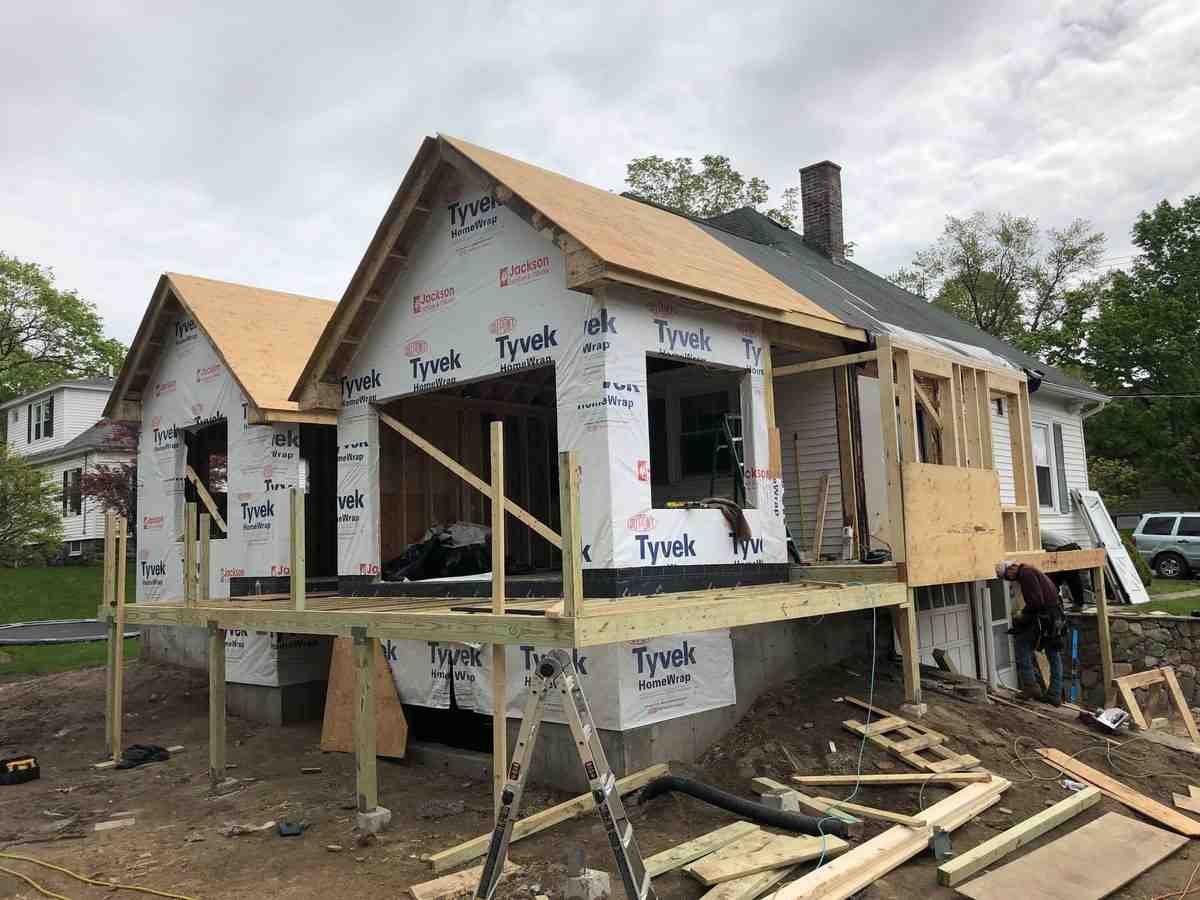
We specialize in high-quality home construction and remodeling services, delivering exceptional craftsmanship tailored to meet your vision and needs. Whether you’re planning a renovation, new construction, or a custom remodel, our experienced team is committed to exceeding expectations with precision, attention to detail, and reliable service.
Our service area includes the Merrimack Valley, North Shore, Seacoast, and Southern NH Areas. We take pride in the quality of our workmanship and our prompt professionalism.
Contact us today to bring your project to life!