

Detached garage cost varies significantly based on size, materials, and finishes. Understanding these factors upfront helps you budget effectively and avoid surprises during construction.
Quick Answer: Detached Garage Cost Ranges (based on internet data)
While a detached garage might seem straightforward, factors like site preparation, foundation requirements, electrical work, and local building codes can significantly impact your final investment. A simple, unfinished garage will cost substantially less than a heated, insulated space with premium siding and electrical systems. Geographic location also plays a major role, as labor and material costs vary by region.
As Ryan Norman, founder of Norman Builders, I’ve guided homeowners through countless garage projects since 2007. My goal is to help you understand how detached garage cost factors impact your overall investment and long-term satisfaction by breaking down complex pricing into clear, actionable information.
Must-know detached garage cost terms:
Your final detached garage cost is a puzzle where each piece—size, materials, site challenges, and location—influences the total. Customization, like a built-in workbench or extra-tall doors, will also affect the bottom line. Geographic location is a major factor, as labor and material costs vary significantly by region.
Material prices, especially for lumber, can fluctuate, so building flexibility into your budget is wise. Our design-build services help you steer these complexities with full transparency.
Proper site preparation is the crucial first step. This can involve land clearing, excavation, and grading to create a stable base. Soil quality is a key variable; rocky or clay-heavy soil may require more work and impact your foundation budget.
The standard foundation for a detached garage is a concrete slab. Based on internet data (not Norman Builders pricing), foundation costs average $4 to $8 per square foot, but this can increase for complex sites. The slab’s thickness, reinforcement, and features like radiant heat all affect the price. In some areas, a gravel pad can be a budget-friendly alternative if local codes permit. For cold climates, a frost-protected shallow foundation can be an effective solution, as detailed in the Builder’s Guide to Frost-Protected Shallow Foundations.
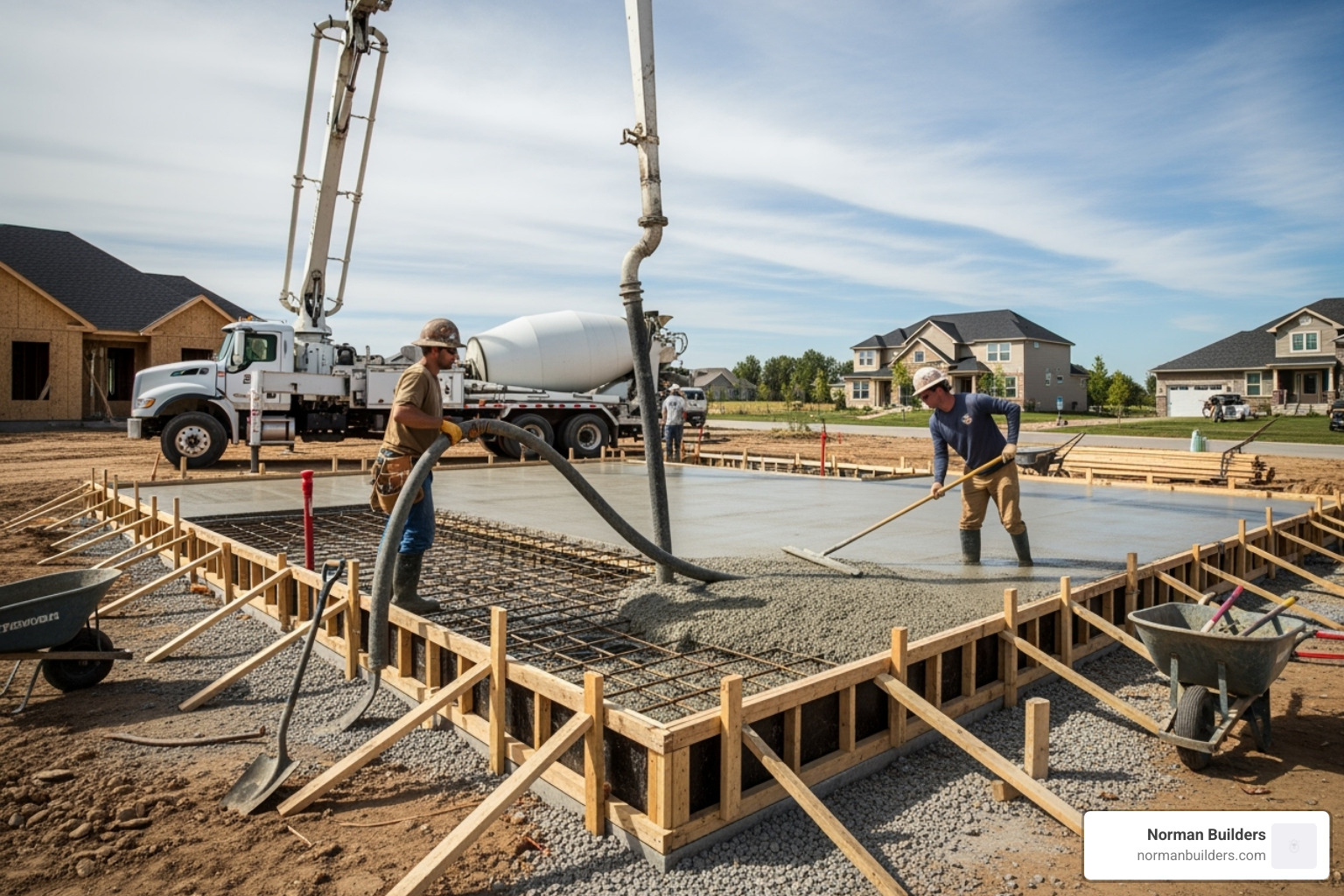
The garage’s structure and exterior are significant cost drivers. Framing typically runs $7 to $16 per square foot, based on internet data (not Norman Builders pricing), but this fluctuates with lumber market conditions.
Siding choices impact both detached garage cost and maintenance. Vinyl siding offers great value, while wood siding provides a classic look that requires more care. Fiber cement siding combines the appearance of wood with superior durability. For a premium, permanent finish, brick or stone are excellent choices.
For roofing, asphalt shingles are the most common and cost-effective option. Metal roofing has a higher upfront cost but offers a longer lifespan and better weather resistance. Coordinating these materials with your home’s style is key, especially when planning larger projects like home additions.
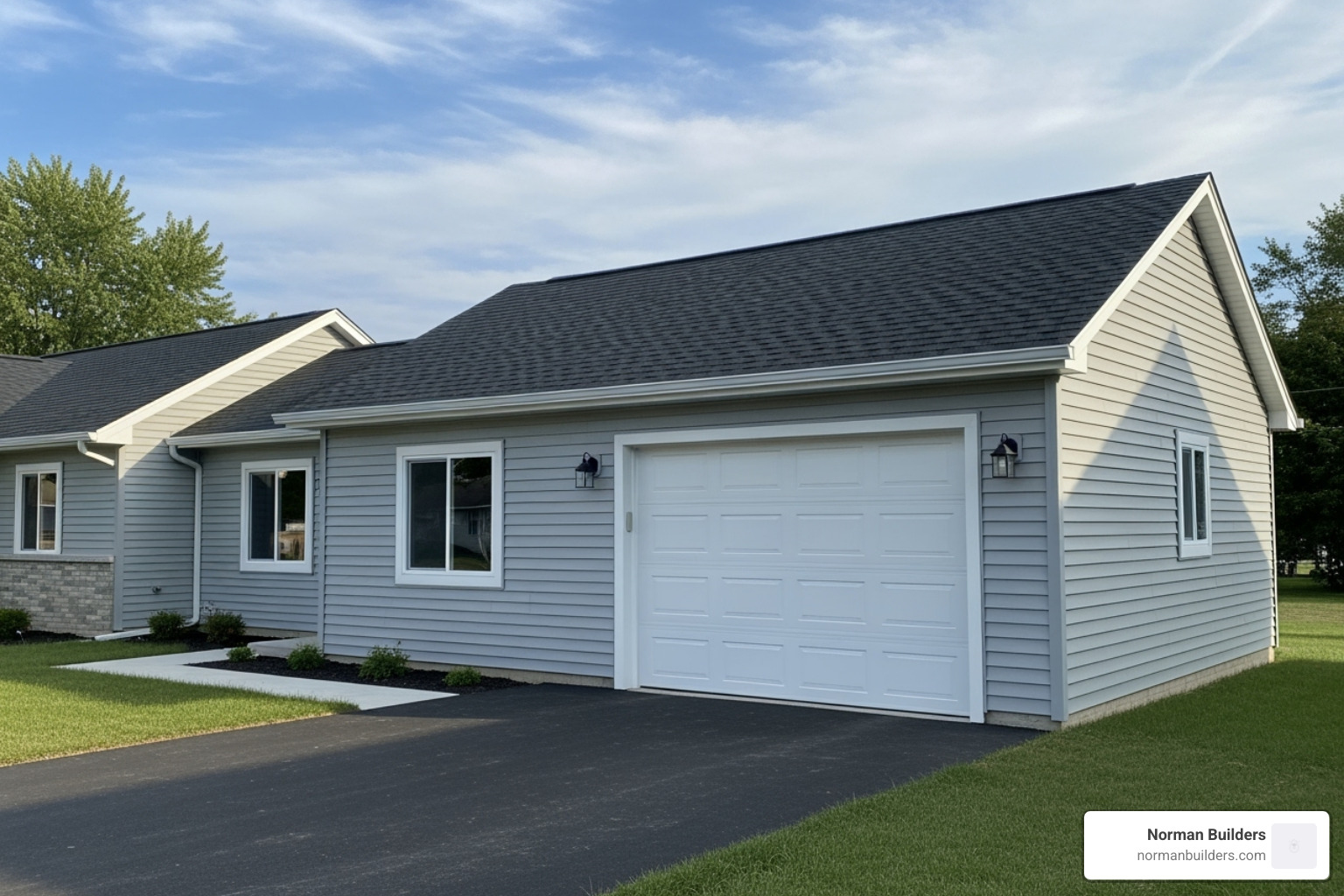
Utilities bring your garage to life. Electrical installation for lights, outlets, and door openers is a must, with costs averaging $1,000 to $3,800 based on internet data (not Norman Builders pricing). Plumbing for a sink or bathroom adds to the cost, depending on the complexity.
Insulation is highly recommended, especially in New England, and averages $0.30 to $6.75 per square foot depending on the type, based on internet data (not Norman Builders pricing). Drywall gives the interior a clean, finished look.
Garage doors are a major component, with prices from $750 to $1,700 or more depending on style and insulation, based on internet data (not Norman Builders pricing). Windows and gutters are other important finishing touches. This level of detail is similar to our approach on basement finishing projects.
Permits and inspections are non-negotiable for safety and legal compliance. Building permits average $150 to $2,000, based on internet data (not Norman Builders pricing), depending on your municipality. You’ll also need architectural plans and potentially engineering for complex designs. Municipal inspections occur at key stages to ensure code compliance. A certificate of localization may also be required. While these are upfront costs, they are essential for protecting your investment.
The size of your desired garage is the most significant factor influencing the total detached garage cost. While larger garages have a higher total price, the cost per square foot often decreases due to economies of scale. It’s generally more cost-effective to build a larger garage initially than to expand a smaller one later.
Here’s a general overview of how different garage sizes compare in cost, dimensions, and use:
| Type of Garage | Average Cost (based on internet data, not Norman Builders pricing) | Typical Dimensions (approx. sq ft) | Common Uses |
|---|
A one-car garage (240-384 sq ft) is ideal for protecting a single vehicle and storing lawn equipment, with costs averaging $10,080 to $28,245+ based on internet data (not Norman Builders pricing). The two-car garage (400-576 sq ft) is the most popular choice, offering flexibility for two vehicles plus a workshop or storage area, with costs averaging $16,800 to $57,600+ based on internet data (not Norman Builders pricing). A three-car garage (700-860 sq ft) provides extensive space for multiple vehicles, a large workshop, or even a boat, with costs averaging $29,610 to $63,525+ based on internet data (not Norman Builders pricing).

Detached garage cost varies significantly based on size, materials, and finishes. Understanding these factors upfront helps you budget effectively and avoid surprises during construction.
Quick Answer: Detached Garage Cost Ranges (based on internet data)
While a detached garage might seem straightforward, factors like site preparation, foundation requirements, electrical work, and local building codes can significantly impact your final investment. A simple, unfinished garage will cost substantially less than a heated, insulated space with premium siding and electrical systems. Geographic location also plays a major role, as labor and material costs vary considerably across different regions.
As Ryan Norman, founder of Norman Builders, I’ve guided homeowners through countless garage projects since 2007. My goal is to help you understand how detached garage cost factors impact your overall investment and long-term satisfaction by breaking down complex pricing into clear, actionable information.
Must-know detached garage cost terms:
The final detached garage cost is a sum of many parts. The primary variables are the garage’s size, design, materials, site complexity, and local labor rates. Custom features like built-in workbenches or extra-tall doors will also add to the expense. Geographic location is a significant influencer, as labor rates and material availability can cause price fluctuations from one town to the next.
Our design-build services help align your vision with your budget from day one, ensuring transparency and no hidden costs.
Before construction begins, the site must be prepared. This can involve clearing trees, excavation, and grading to create a level, stable base. The amount of work depends on your property’s specific conditions. Soil quality is also a factor; rocky or clay-heavy soil may require more extensive work than sandy soil.
The most common foundation is a concrete slab, which can cost, on average, between $4 and $8 per square foot, based on internet data, not Norman Builders pricing. This cost is influenced by thickness, reinforcement, and any special features like radiant heat. In some cases, a gravel pad may be a code-compliant, budget-friendly option. For regions with deep frost lines, a Frost Protected Shallow Foundation (FPSF) can prevent frost heave without deep excavation.
Builder’s Guide to Frost-Protected Shallow Foundations
The structure and exterior of your garage are major cost components. Lumber prices can fluctuate, directly impacting framing costs, which can average between $7 and $16 per square foot, based on internet data, not Norman Builders pricing.
Siding choices significantly impact both cost and appearance. Vinyl siding is a budget-friendly, low-maintenance option. Wood siding offers a classic look but requires more upkeep. Fiber cement siding provides the look of wood with greater durability. Brick or stone are premium options for a permanent, high-end finish. We recommend choosing materials that complement your home’s style.
For roofing, asphalt shingles are a popular and economical choice. Metal roofing costs more initially but offers superior durability and a longer lifespan. These material decisions are even more critical for larger projects like home additions to ensure a cohesive look.
Utilities transform a basic shell into a functional space. Electrical work for lighting, outlets, and garage door openers is essential. Electrical installation can average between $1,000 and $3,800 or more, based on internet data, not Norman Builders pricing, depending on the complexity.
Plumbing is necessary for a utility sink or bathroom. Insulation is a wise investment, especially in New England, and can average between $0.30 and $6.75 per square foot, based on internet data, not Norman Builders pricing. Drywall provides a clean, finished interior.
Garage doors are a key functional and aesthetic element, averaging between $750 and $1,700 or more, based on internet data, not Norman Builders pricing. Windows add natural light, and gutters protect your foundation. These finishing details are similar to what we consider in basement finishing projects.
Administrative tasks like permits and inspections are essential for safety and legal compliance. Building permits are required for nearly all garage projects and can average between $150 and $2,000 or more, based on internet data, not Norman Builders pricing. You will also need architectural plans for the permit application. Engineering fees may be required for complex designs or challenging sites. Throughout construction, municipal inspections ensure code compliance. These steps, while adding to the initial detached garage cost, protect your property value.
When homeowners ask me about detached garage cost, the first question I always ask back is: “How big are you thinking?” Size is the single biggest factor that will shape your budget. Larger garages often provide better value per square foot, as fixed costs like permits and site prep are spread over a larger area. It’s generally more economical to build the size you need now than to add on later.
| Detached Garage Type | Average Cost (based on internet data, not Norman Builders pricing) | Typical Dimensions (approx. sq ft) | Common Uses |
|---|---|---|---|
| One-Car Garage | $10,080 – $28,245+ | 12’x20′ to 16’x24′ (240-384 sq ft) | Single vehicle protection, basic storage, small workshop space |
| Two-Car Garage | $16,800 – $57,600+ | 20’x20′ to 24’x24′ (400-576 sq ft) | Two vehicles, ample storage, workbench area, small home gym |
| Three-Car Garage | $29,610 – $63,525+ | 32’x24′ to 38’x26′ (700-860 sq ft) | Multiple vehicles, extensive storage, large workshop, home business space |
A one-car garage (240-384 sq ft) is ideal for protecting a single vehicle and storing lawn equipment, with costs averaging $10,080 to $28,245+ based on internet data (not Norman Builders pricing). The two-car garage (400-576 sq ft) is by far the most popular, offering flexibility for two vehicles plus a workshop or storage area, with costs averaging $16,800 to $57,600+ based on internet data (not Norman Builders pricing). A three-car garage (700-860 sq ft) provides extensive space for multiple vehicles, a large workshop, or even a boat, with costs averaging $29,610 to $63,525+ based on internet data (not Norman Builders pricing).
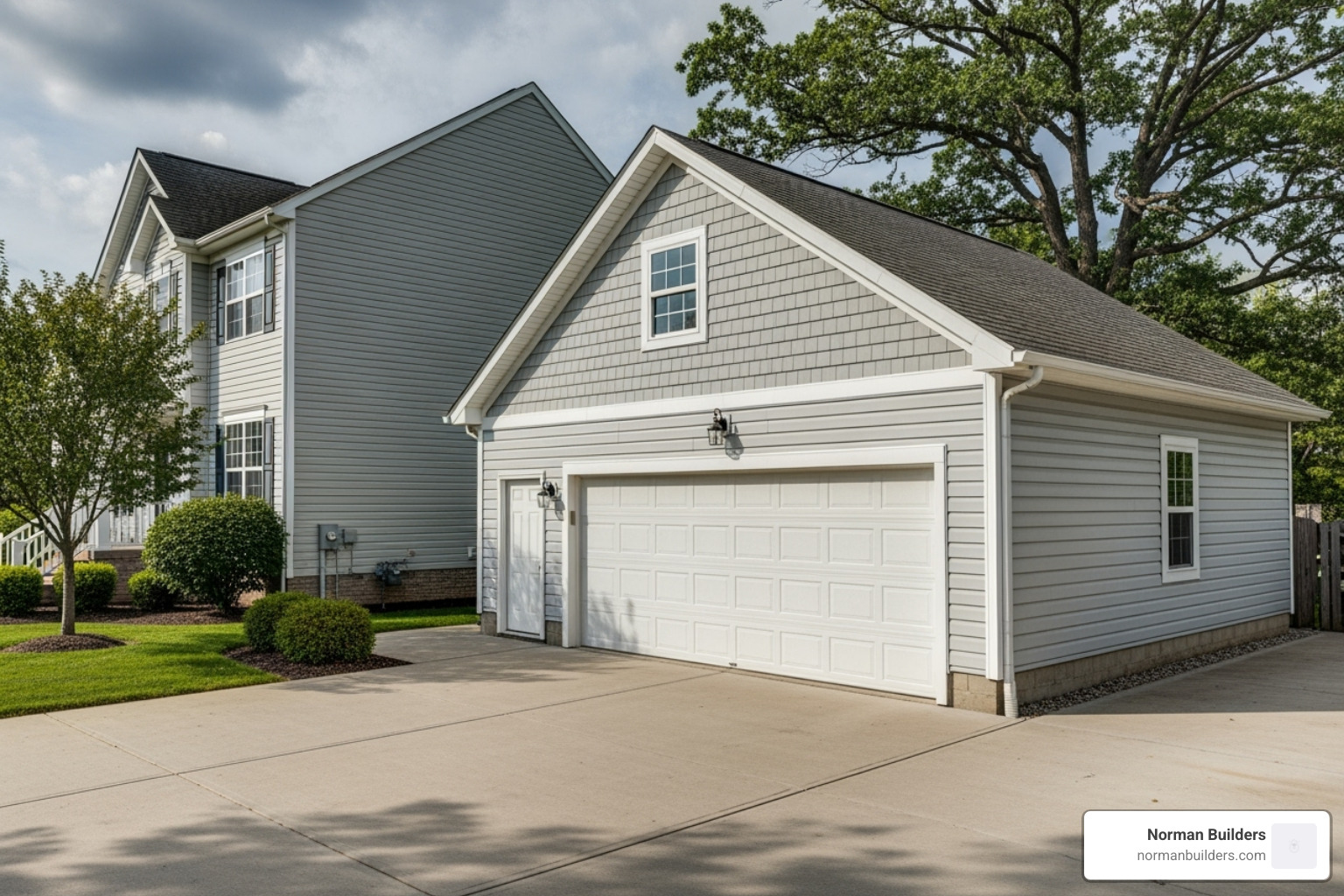
While prefab kits are an option, we specialize in site-built, custom garages that offer superior quality and long-term value. Building from scratch on your property allows for complete control over the design and materials.
Quality craftsmanship ensures your garage is built to last, using proper framing techniques and materials suited for your climate. This approach allows for full customization, from extra-high ceilings for a car lift to specific window placements for a light-filled workshop. This level of personalization isn’t possible with prefab kits.
The long-term durability of a custom-built garage means fewer repairs and a structure that adds significant value to your property. It’s the same philosophy of quality we apply to all our custom home building projects.
A well-built detached garage is more than just convenient; it’s a smart financial decision that can significantly increase your property value. Based on internet data, not Norman Builders pricing, a new garage can add $12,000 to $36,000 or more to your home’s worth. Today’s buyers seek flexibility and functionality, and a detached garage provides secure parking, dedicated storage, and a versatile space that can adapt to their needs.
This space can be transformed into a workshop, home gym, or a quiet home office. In some areas, it can even be converted into an accessory dwelling unit (ADU) for rental income or guest quarters, further boosting its value.
A detached garage pays dividends in several ways. It boosts curb appeal, especially when its design complements your home. Protected parking is a highly valued feature, shielding vehicles from weather damage. The increased storage helps keep the main house uncluttered, which is a major selling point.
Perhaps most importantly, a detached garage offers versatile space that can evolve with a family’s needs, from a home gym to an art studio. This adaptability is highly prized in the real estate market. Most homeowners see a return on investment of 60-80% or more of their construction costs, based on internet data, reflecting the high demand for such functional spaces.
Choosing between a detached and an attached garage depends on your property and lifestyle. Detached garages offer superior design flexibility, as they aren’t constrained by your home’s architecture. They also provide a safety buffer by separating your living space from vehicles and flammable materials. This separation also reduces noise from workshops or hobbies and increases privacy for a home office or studio.
Attached garages offer the primary benefit of convenience, allowing direct entry into your home. They may also have slightly lower utility costs by sharing a wall with the house.
From a cost perspective, detached garages are typically 10-15% more expensive to build than attached versions, based on internet data. This is due to the need for a fourth wall, a separate foundation, and longer utility runs. However, many homeowners find the flexibility, safety, and customization potential of a detached garage justifies the additional investment.
More info about garage additions
Here are answers to the most common questions we receive from homeowners planning a detached garage project.
Smart planning can lead to significant savings on your detached garage cost without sacrificing quality.
The total timeline can vary, but a typical project follows this general schedule:
Overall, expect a detached garage project to take 6 to 17 weeks from start to finish, barring weather delays or complex custom features.
Whether you need an architect depends on your project’s complexity and local codes. For simple, standard designs, a design-build firm like ours can often create the necessary plans. For a highly custom or complex garage (e.g., with a second-story living space or on a challenging site), an architect’s expertise is invaluable.
Your local building department may require stamped architectural plans for larger or more complex structures. A design-build firm can manage this entire process, coordinating the design, engineering, and construction for a seamless experience.
More info about construction services
Planning a detached garage is manageable when you understand the factors that influence the detached garage cost. From site prep to finishing touches, each choice affects your budget and the final product. A well-built garage is a valuable investment that improves your daily life and boosts your property’s value, whether you need simple vehicle storage or a versatile workshop.
At Norman Builders, we’ve helped homeowners in the Seacoast and Southern New Hampshire regions with these projects since 2007. Our commitment is to custom-built quality and personalized service. We don’t use one-size-fits-all solutions; instead, we work with you to meet your specific needs and budget.
Our design-build approach streamlines the process, saving time and money while ensuring your vision is realized. We believe in transparency and quality craftsmanship, which have been the foundation of our business for over fifteen years.
Ready to explore the possibilities for your property? We’d love to discuss your ideas.
Contact Norman Builders to discuss your project
Please note: Our services are exclusively available in Massachusetts, specifically in Andover, MA, the North Shore, and New Hampshire, covering the Seacoast and Southern NH regions.

We specialize in high-quality home construction and remodeling services, delivering exceptional craftsmanship tailored to meet your vision and needs. Whether you’re planning a renovation, new construction, or a custom remodel, our experienced team is committed to exceeding expectations with precision, attention to detail, and reliable service.
Our service area includes the Merrimack Valley, North Shore, Seacoast, and Southern NH Areas. We take pride in the quality of our workmanship and our prompt professionalism.
Contact us today to bring your project to life!