

The cost of building room over garage varies widely based on multiple factors, making it essential to understand what drives pricing before starting your project.
| Key Cost Factors | Impact on Budget |
|---|---|
| Room size (350-700 sq ft) | Determines base cost |
| Structural reinforcement | $5,000-$40,000 additional |
| Intended use (bonus room vs full suite) | 30-100% price difference |
| Geographic location | 20-50% regional variation |
| Finish quality | 25-75% cost range |
Adding a room above your garage has become one of the most popular home additions in recent years, and for good reason. This approach maximizes your living space without expanding your home’s footprint, creating valuable square footage while preserving your yard and property boundaries.
For homeowners looking to add bedrooms, home offices, or recreational spaces, an above-garage addition offers a practical solution that can significantly increase both functionality and property value.
I’m Ryan Norman, founder of Norman Builders, and over the past 16 years, I’ve overseen dozens of projects involving the cost of building room over garage additions throughout Massachusetts and New Hampshire, helping homeowners transform underused space into beautiful, functional living areas.
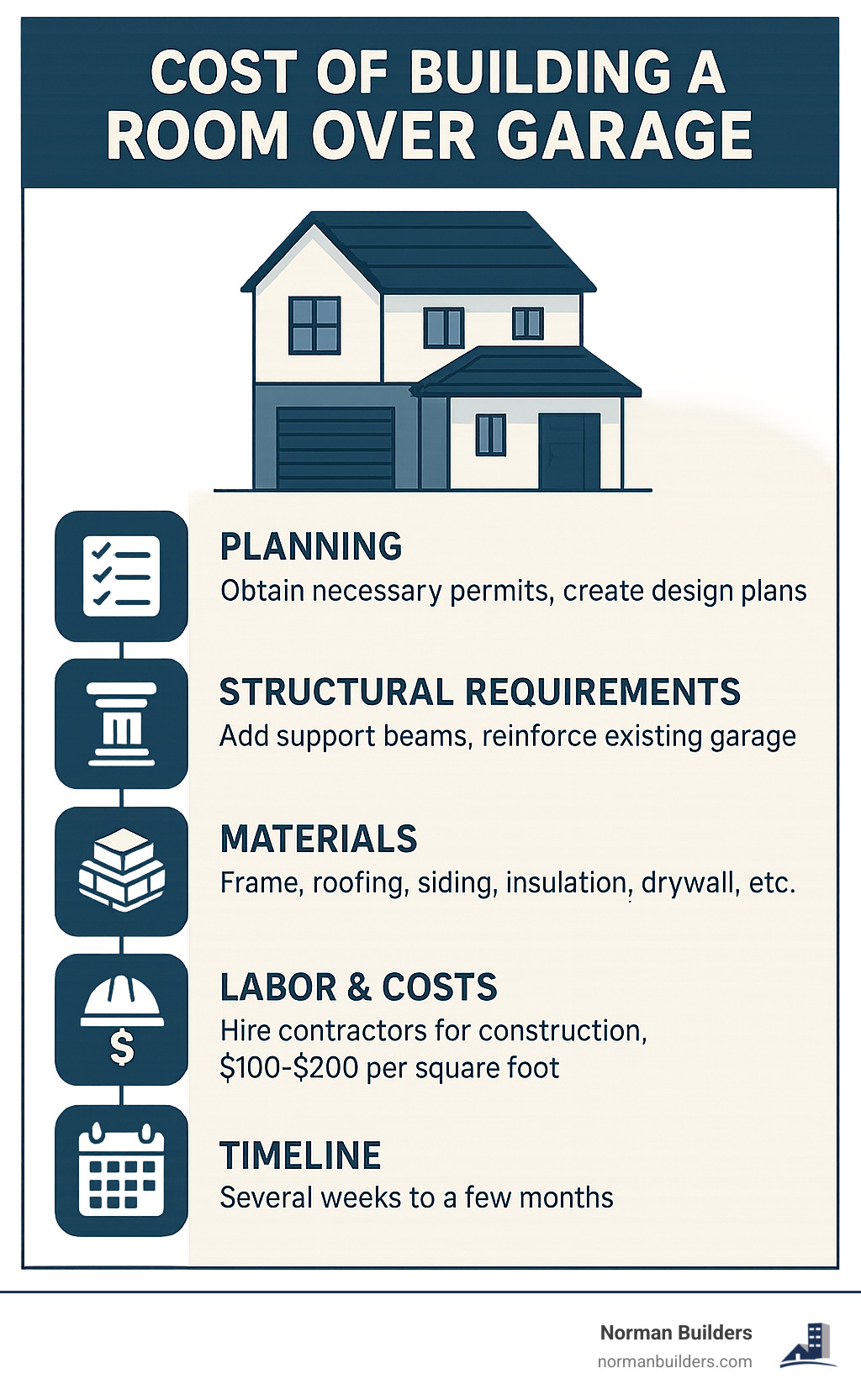
Cost of building room over garage glossary:
– cost to build a brick garage
– garage construction cost
– cost to build a double garage
Planning to transform that empty space above your garage in 2025? Let’s talk numbers. The national average for a room over garage addition currently ranges from $45,000 to $150,000 – quite a spread, right? That’s because every project is unique, with dozens of variables affecting the bottom line.
When we break down the cost of building room over garage, most homeowners can expect to invest between $100 and $350 per square foot. Basic finishes land you at the lower end, while premium materials and luxury features push you toward the higher end. Most above-garage rooms fall between 350 and 700 square feet, depending on your existing garage footprint.
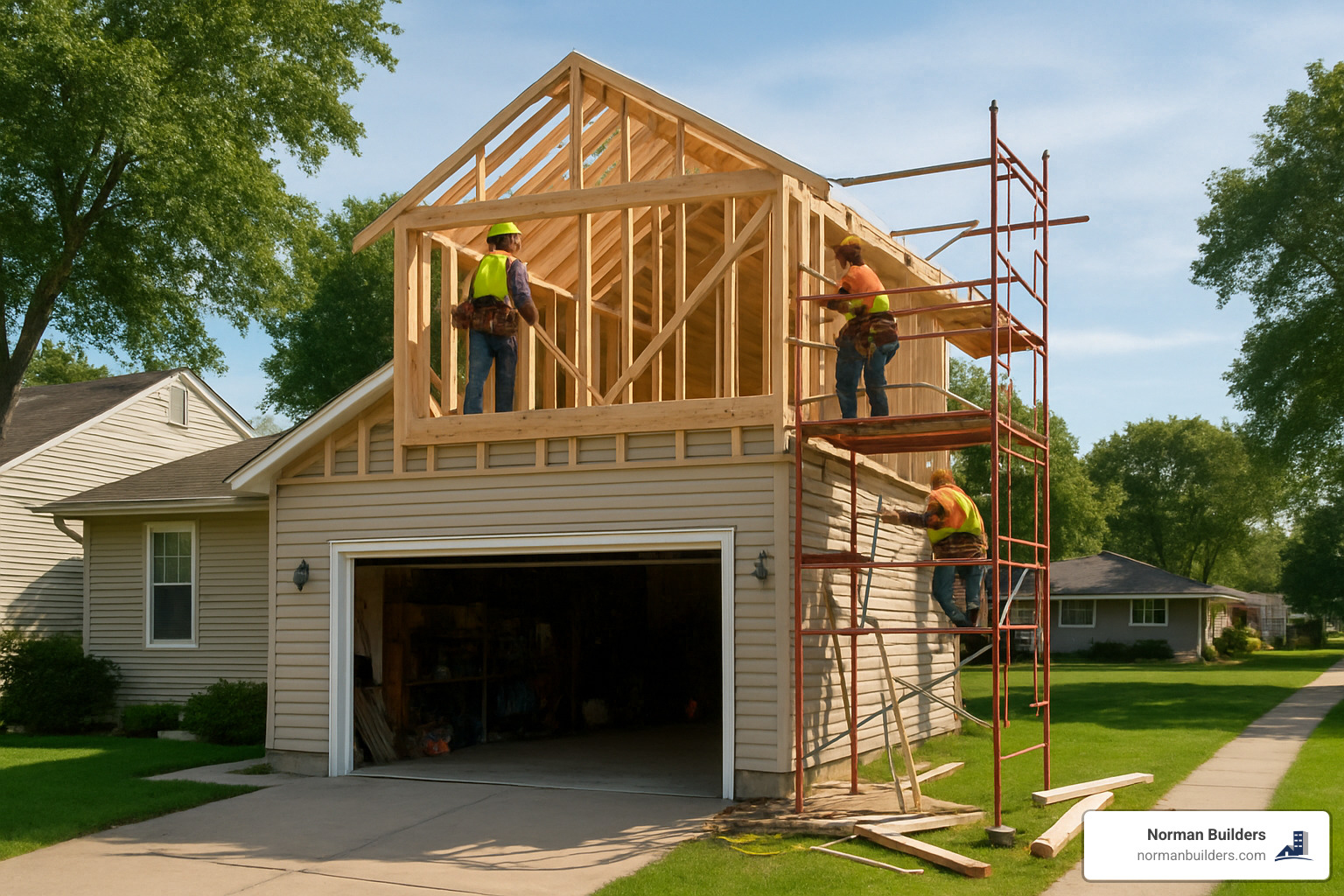
Here’s the thing many homeowners don’t realize until they’re knee-deep in planning: structural reinforcement often becomes the budget-buster. Most garages weren’t built with the idea of supporting a second story. This crucial structural work can add substantially to your project, depending on your garage’s current condition and foundation.
Labor costs make up about half of your budget these days. Skilled contractors typically charge between $50 and $100 per hour, with specialized trades like electricians and plumbers commanding premium rates. In today’s market, expect labor to account for 50-60% of your total investment.
Your choice of finishes dramatically impacts the final price tag. Are you envisioning standard drywall and vinyl flooring, or are you dreaming of custom millwork and hardwood floors? The difference can be significant.
Temperature control is particularly important for above-garage spaces, which can roast in summer and freeze in winter. Mini-split systems have become the go-to solution, offering efficient heating and cooling without extensive ductwork. These systems provide excellent zone control – perfect for spaces that might not be used continuously.
Don’t skimp on insulation! In our New England climate, spray foam insulation has become the gold standard for above-garage rooms. Beyond superior thermal performance, it creates an effective sound barrier between your garage and the living space above. While more expensive initially, the energy savings and comfort benefits make it worth considering.
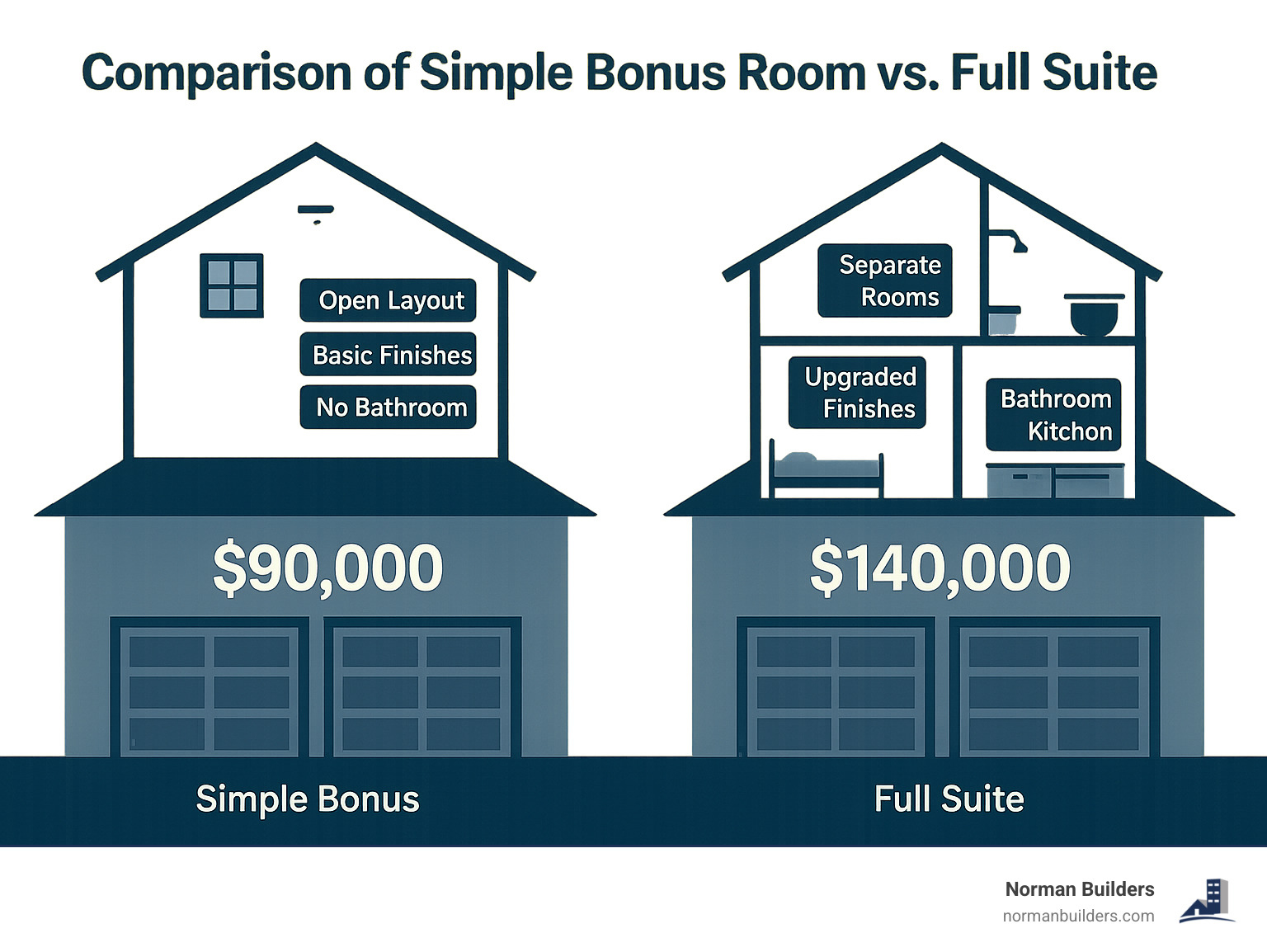
Let’s dig deeper into what drives the cost of building room over garage per square foot. For a typical two-car garage (about 20×24 feet or 480 square feet), several key components make up your budget.
Framing is a major expense, especially when you consider what’s needed to support a living space. Plan for $5 to $13 per square foot for framing alone. This includes not just walls, but properly sized floor joists that can handle the intended live load.
Building atop an existing garage? You’ll likely need a complete roof tear-off, which typically costs between $1,000 and $3,000 depending on complexity and materials. Most existing garage roofs simply aren’t designed to serve as floor structures.
I wish I had better news about material costs, but 2025 projections show continued price volatility. Lumber, insulation, drywall, and finishing materials have all seen significant increases. My advice? Build a 10-15% contingency into your budget – you’ll thank yourself later.
Contractor overhead and profit typically add 10-20% to your project cost. This covers business expenses, insurance, project management, and yes, the contractor’s profit margin. While it’s tempting to go with the lowest bid, established contractors with proper insurance and proven track records are worth the investment.
Some features can dramatically increase the cost of building room over garage. Understanding these big-ticket items helps you prioritize where to spend and where to save.
Adding plumbing is perhaps the most significant budget-expander. That bathroom you’re considering? It’s not just about the fixtures you see, but the complex behind-the-scenes work: supply lines, drain lines, venting, and potentially a pump system if gravity drainage isn’t feasible.
Dormers are game-changers for above-garage spaces, dramatically improving headroom, natural light, and overall usability. They’re architectural features that transform a basic room into something special – but that change comes at a price. Each dormer adds to your budget but delivers tremendous value in terms of comfort and aesthetics.
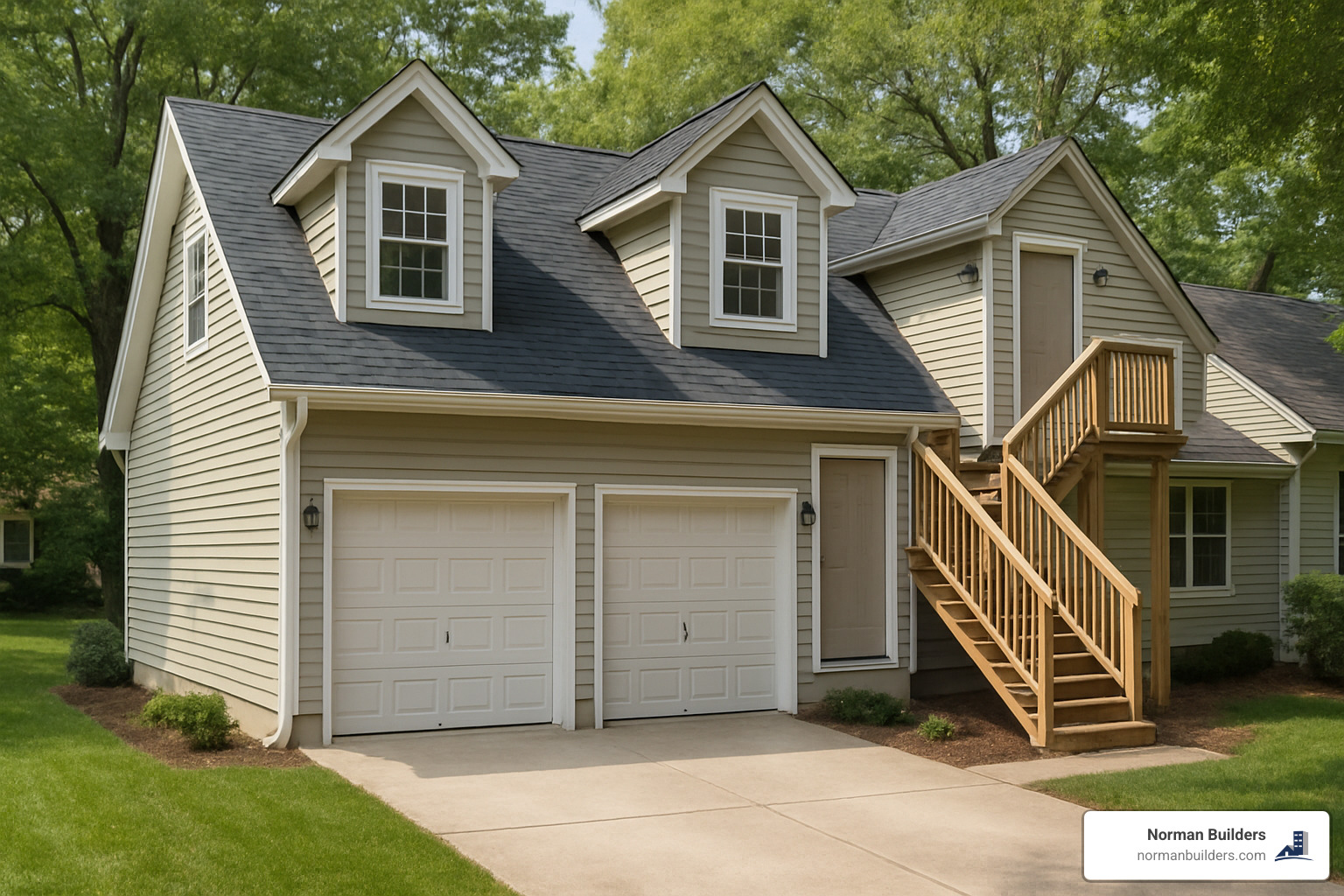
Exterior stairs provide independent access to your new space – perfect if you’re thinking about a home office, guest suite, or future rental possibility. A well-built exterior staircase needs proper foundations, weather-resistant materials, and code-compliant railings. While not inexpensive, this investment significantly increases your space’s versatility.
Smart-home wiring has moved from luxury to expectation in new construction. Integrating features like automated lighting, climate control, and security systems adds to your upfront costs but improves both functionality and potential resale value.
Don’t overlook soundproofing! Nothing ruins a beautiful above-garage space like the rumble of the garage door opener or car engines below. Effective acoustic isolation—including resilient channels, acoustic insulation, and specialized drywall—adds to your square footage cost but dramatically improves comfort, especially for bedrooms or home offices.
Navigating the permitting process is a critical early step in your above-garage addition project. Building permits for this type of addition typically range from $500 to $8,500, depending on your location and the scope of work. This wide range reflects the significant regional variations in permit fees and requirements.
Beyond basic building permits, you’ll need to consider zoning regulations and potential HOA restrictions. Some neighborhoods have strict guidelines about exterior modifications, height limitations, or even the permissible uses of additional living space. We always recommend researching these requirements early to avoid costly redesigns or delays.
Engaging a structural engineer is essential for a room over garage project. Their expertise ensures that your existing structure can support the additional load or specifies the necessary reinforcements. Structural engineering fees typically range from $500 to $3,000 depending on the complexity of your project and the extent of on-site evaluations required.
Architectural plans represent another upfront cost, typically ranging from $2,000 to $8,000 depending on the complexity of your design and the level of detail required. While it might be tempting to economize here, comprehensive plans help prevent costly mistakes during construction and ensure that all contractors are working from the same detailed specifications.
The inspection process includes both rough and final inspections. Rough inspections occur when framing, electrical, plumbing, and mechanical systems are installed but before they’re concealed by drywall. Final inspections verify that all work complies with building codes and the approved plans. Each inspection may carry a fee, and failing inspections can lead to costly corrections and delays.
A typical timeline for a room over garage addition spans 4 to 9 months from initial planning to completion:
The construction process follows a logical sequence:
Each phase requires coordination between different trades and timely inspections to maintain momentum. Weather can significantly impact the timeline, particularly during the framing and roofing stages when the structure is exposed to the elements.
For more detailed information about the construction process and associated costs, visit our Garage Construction Cost page.
The cost of building room over garage can vary dramatically depending on where you live. If you’re in busy metropolitan areas like NYC, expect to pay 30-50% more than you would for an identical project in the Midwest. This isn’t just about higher labor rates—it’s also due to stricter building codes, heftier permit fees, and the increased cost of getting materials to your doorstep.
Labor shortages continue to be a reality across the construction industry, especially for specialized trades. Throughout Massachusetts and New Hampshire, we’ve noticed that securing qualified electricians, plumbers, and finish carpenters has become a delicate dance of advance planning. Book your dream team early—it makes all the difference for both your timeline and your wallet.
Material freight costs have become increasingly significant in recent years. With fuel prices fluctuating and supply chains still recovering from recent disruptions, the cost of simply getting materials to your job site can add surprising expenses. When possible, locally sourced materials can offer some relief, though specialty items might still need to come from farther afield.
From an investment perspective, adding space above your garage typically offers solid returns. Most homeowners recoup about 60-80% of their investment in increased property value—even more in areas where square footage comes at a premium. This makes it one of the smarter home improvement investments you can make.
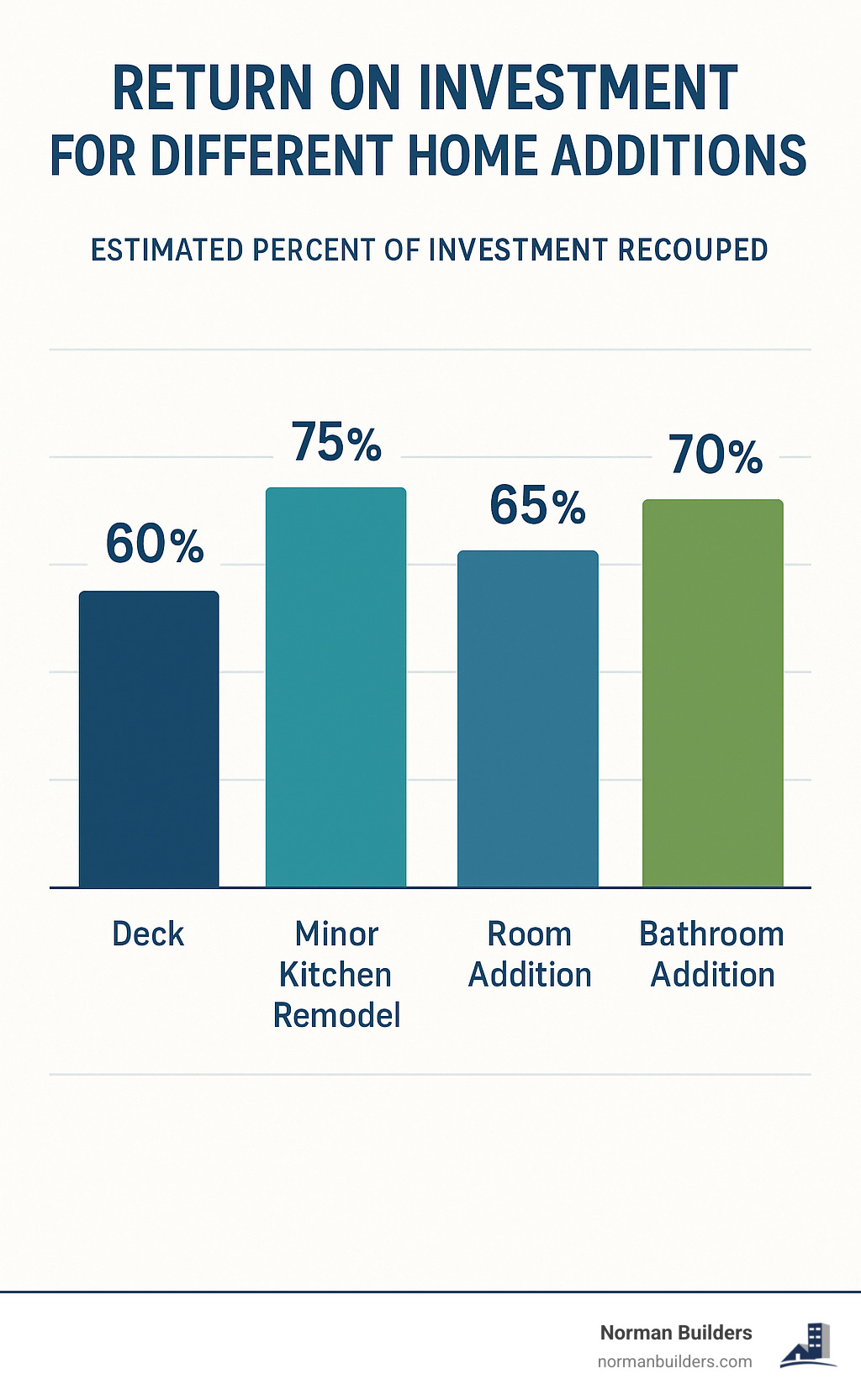
If your local zoning allows for Accessory Dwelling Units (ADUs), the financial picture gets even brighter. A thoughtfully designed space with its own entrance and essential amenities can generate monthly rental income that gradually offsets your initial investment. According to research published by Forbes, ADUs are increasingly valued for their flexibility and income potential in prime real estate markets.
For the budget-conscious homeowner, several smart strategies can help manage costs without sacrificing quality. DIY demolition can save you $1,000-$3,000, though remember to factor in proper disposal costs. Sweat-equity painting typically saves $2-$4 per square foot and gives you complete control over the finish quality. Reusing quality fixtures from architectural salvage stores or high-end second-hand sources can add character while reducing costs. Finally, getting multiple bids often reveals surprising price variations for identical work—we recommend at least three competitive quotes.
When it comes to financing your above-garage addition, several options stand out:
Cash-out refinancing potentially offers the lowest interest rates by tapping into your home’s equity, though closing costs can be substantial. HELOCs (Home Equity Lines of Credit) provide flexible access to funds as your project progresses, with interest paid only on what you actually use. Specialized renovation loans like the FHA 203(k) or Fannie Mae HomeStyle programs allow you to finance both purchase and renovation costs under a single mortgage—particularly useful if you’re buying a home you plan to improve.
For more detailed information about garage addition costs, visit our Cost of Building a Garage Attached to House page.
Understanding the value boost from your garage room addition helps justify what can be a significant investment. A comparative market analysis of similar homes in your neighborhood—with and without above-garage living space—provides the clearest picture of potential returns. In our years serving communities across Massachusetts and New Hampshire, well-executed above-garage additions typically add 60-80% of their cost to a home’s market value.
Appraisers generally value additional living space at $100-$300 per square foot, depending on your specific market. Premium features like en-suite bathrooms, separate entrances, or high-end finishes can push valuations toward the upper end of this range.
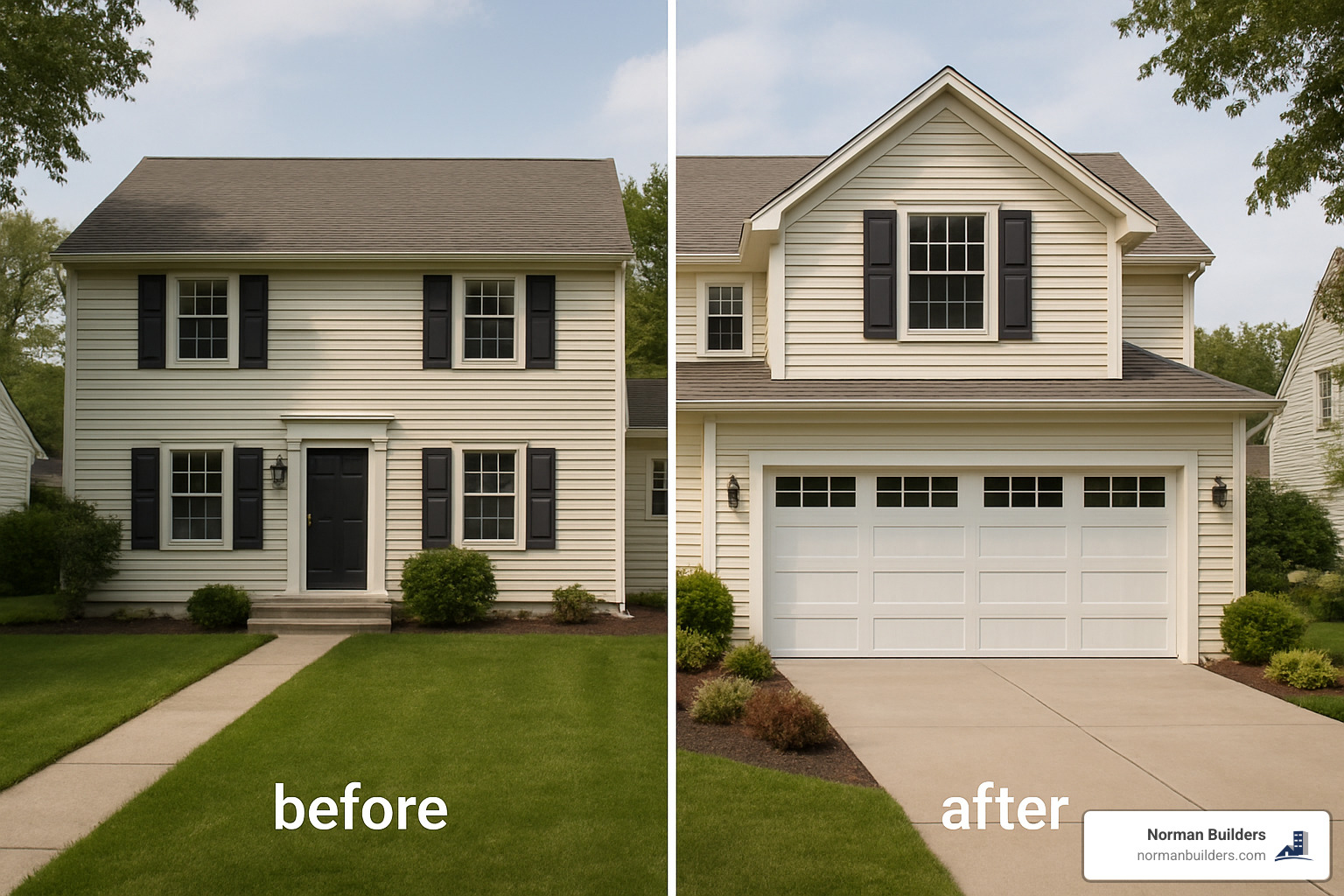
Beyond just adding square footage, the curb appeal boost from a thoughtfully designed addition can significantly improve your property’s overall value. Architectural elements that complement your existing home rather than compete with it typically yield better returns. We’ve seen how additions that look like they’ve always been part of the original structure command higher valuations than those that appear hastily added on.
The versatility of your new space also impacts its value proposition. Rooms designed with multiple functions in mind—like a guest suite that doubles as a home office—typically attract more buyer interest than single-purpose spaces. This flexibility becomes particularly valuable when you eventually decide to sell, as it appeals to a wider range of potential buyers with diverse needs.
For more insights on garage addition projects, check out our detailed guide on the Cost of a Garage Addition.
Please note: Our services are exclusively available in Massachusetts, specifically in Andover, MA, the North Shore, and New Hampshire, covering the Seacoast and Southern NH regions.
Looking to maximize your budget when adding space above your garage? Skipping plumbing is definitely your best bet for keeping costs down. When my clients ask about economical approaches, I always share these tried-and-true strategies:
Keep the design simple with a rectangular footprint that matches your existing garage dimensions. Every bump-out, dormer, or architectural flourish adds thousands to your bottom line. Simple designs not only cost less to build but also minimize the chance of water intrusion issues down the road.
If your garage connects to your home, using existing interior access saves a substantial chunk of change. An exterior staircase can add $5,000-$15,000 to your project, whereas modifying an existing stairwell or hallway might cost half that amount.
When it comes to finishes, be strategic rather than stingy. Cost-effective but durable materials like luxury vinyl plank flooring give you the look of hardwood with better durability and moisture resistance at a fraction of the cost. Standard drywall with simple trim profiles keeps your space looking clean and finished without breaking the bank.
For climate control, mini-split systems have become my go-to recommendation. They’re energy-efficient, don’t require extensive ductwork, and provide both heating and cooling. While the upfront cost is comparable to extending your home’s HVAC, the long-term energy savings often make mini-splits the smarter investment.
Consider phasing your project if budget is tight. Complete the structural work, insulation, electrical, and basic finishes first, then add built-ins, advanced lighting, or other amenities as your budget allows in the future.
Even with these cost-saving measures, quality doesn’t come cheap. Plan on investing $100-$200 per square foot for a properly built space that meets building codes and provides comfortable, usable living area.
When clients ask about ROI timelines, I explain that returns come in several forms, some immediate and others long-term:
The moment your project is completed, you’ll typically see an immediate equity increase of 60-80% of your investment amount. This instant boost to your property value provides financial security even if you have no plans to sell soon.
If your local zoning allows for Accessory Dwelling Units (ADUs), the math becomes even more favorable. In the New England markets we serve, a well-designed space with separate access can generate monthly rental income of $1,000-$2,000, depending on size and amenities. This income stream can help offset your investment surprisingly quickly.
The long-term appreciation factor is often overlooked but shouldn’t be. Your additional square footage appreciates alongside the rest of your property, potentially yielding a complete return within 5-10 years in our growing New England markets.
Don’t discount the energy efficiency benefits either. Modern building materials and techniques create spaces that are dramatically more efficient than older construction. If your project includes upgrading the existing garage envelope with better insulation and air sealing, you might see immediate returns through reduced energy bills.
There’s also the matter of tax implications – both positive and negative. While your property taxes will likely increase based on the added value, energy efficiency improvements may qualify for tax incentives or rebates. I always recommend consulting with a tax professional about your specific situation.
For most homeowners I work with, the combination of immediate equity, potential income, and quality-of-life improvements makes an above-garage addition one of the smartest investments in their property.
“Can we stay in our home during construction?” is one of the most common questions I hear from homeowners. The short answer is yes – most families do remain in their homes during above-garage additions, though you should prepare for some disruption to your normal routine.
Noise and dust are the most noticeable impacts. Construction typically runs 7-8 hours daily during weekdays. We implement comprehensive dust containment measures, but some dust infiltration is inevitable, particularly during demolition and drywall installation. If anyone in your household has respiratory sensitivities, you might want to plan for them to be away during these specific phases.
Expect occasional brief utility interruptions, especially when connecting new electrical circuits to your existing panel. If your addition includes plumbing that ties into existing systems, water service might be temporarily affected – we always provide advance notice so you can plan accordingly.
Depending on the structural work required, you may lose garage access for storage or parking during significant portions of the project. Most of our clients temporarily park in their driveway or on the street and find alternative storage solutions for the duration.
There are also privacy considerations to keep in mind. Construction crews will be on your property daily, and certain phases may require limited access to your main home, particularly when connecting the new space to existing structures.
Living on-site sometimes extends the construction timeline compared to vacant properties. Work hours are typically limited to daytime, and certain particularly noisy activities may need to be scheduled around your family’s needs.
At Norman Builders, we’ve refined several strategies to minimize disruption:
– Establishing clear work hours and communication protocols
– Using dust barriers and dedicated access points for construction crews
– Maintaining a clean job site with daily cleanup
– Coordinating utility work to minimize interruptions
– Providing weekly progress updates and advance notice of particularly disruptive phases
With proper planning and communication, the temporary inconvenience is manageable for most families – and certainly preferable to the cost and hassle of relocating during construction.
Please note: Our services are exclusively available in Massachusetts, specifically in Andover, MA, the North Shore, and New Hampshire, covering the Seacoast and Southern NH regions.
Weighing the cost of building room over garage requires looking at the big picture – from structural needs and material choices to permits and design elements. Each decision shapes not just your budget, but the space you’ll enjoy for years to come.
A thoughtfully designed above-garage addition delivers so much more than extra square footage. It improves your property value, maximizes your existing footprint, and transforms underused space into something truly special. Whether you’re dreaming of a peaceful guest suite, a productive home office, a fun recreational area, or even a potential income-generating rental, this investment typically pays dividends both immediately and over time.
Here in New England, where space is often at a premium and weather presents unique challenges, an above-garage addition makes particular sense. The structural work involved creates an opportunity to improve insulation and energy efficiency, while the additional living area adapts your home to changing needs without requiring a larger lot.
At Norman Builders, we’ve guided countless Massachusetts and New Hampshire homeowners through this transformative process. There’s something deeply satisfying about watching clients realize the untapped potential sitting right above their cars! Our team understands the specific building codes, weather considerations, and architectural styles that make New England construction unique, ensuring your project complements your existing home beautifully.
The real magic happens when craftsmanship meets careful planning. That perfect dormer that floods the space with natural light. The custom built-ins that maximize storage without sacrificing style. The seamless transition between your existing home and new addition that makes it feel like it was always meant to be there. These details transform a simple room addition into a space your family will treasure.
Ready to explore the possibilities for your home? We invite you to visit our Cost of a Garage Addition page or reach out directly for a personalized consultation. As a one-stop shop for custom craftsmanship, we’ll guide you through every phase – from initial concept to the final coat of paint.
Please note: Our services are exclusively available in Massachusetts, specifically in Andover, MA, the North Shore, and New Hampshire, covering the Seacoast and Southern NH regions.

We specialize in high-quality home construction and remodeling services, delivering exceptional craftsmanship tailored to meet your vision and needs. Whether you’re planning a renovation, new construction, or a custom remodel, our experienced team is committed to exceeding expectations with precision, attention to detail, and reliable service.
Our service area includes the Merrimack Valley, North Shore, Seacoast, and Southern NH Areas. We take pride in the quality of our workmanship and our prompt professionalism.
Contact us today to bring your project to life!