

Contractors for home remodeling are professionals who manage renovation projects from start to finish. If you’re looking to hire a remodeling contractor, here’s what you need to know:
Changing your home requires more than just a vision—it demands the right expertise to bring that vision to life. Contractors for home remodeling serve as the orchestrators of your renovation journey, handling everything from initial designs to final inspections. They coordinate subcontractors, manage budgets, steer permits, and ensure that your project meets local building codes and quality standards.
The right contractor can mean the difference between a stressful renovation nightmare and a smooth change that adds value and enjoyment to your home. While the internet is filled with horror stories about renovation projects gone wrong, working with qualified professionals dramatically increases your chances of success.
Home remodeling projects come in all shapes and sizes—from quick cosmetic refreshes to complex structural overhauls. Experienced contractors can help you determine the scope that makes sense for your needs and budget, whether you’re updating a tired kitchen, adding a primary suite, or reimagining your entire home’s layout.
I’m Ryan Norman, founder of Norman Builders, and with over 15 years of experience working with contractors for home remodeling projects ranging from small renovations to custom homes, I’ve seen what makes remodeling partnerships successful.
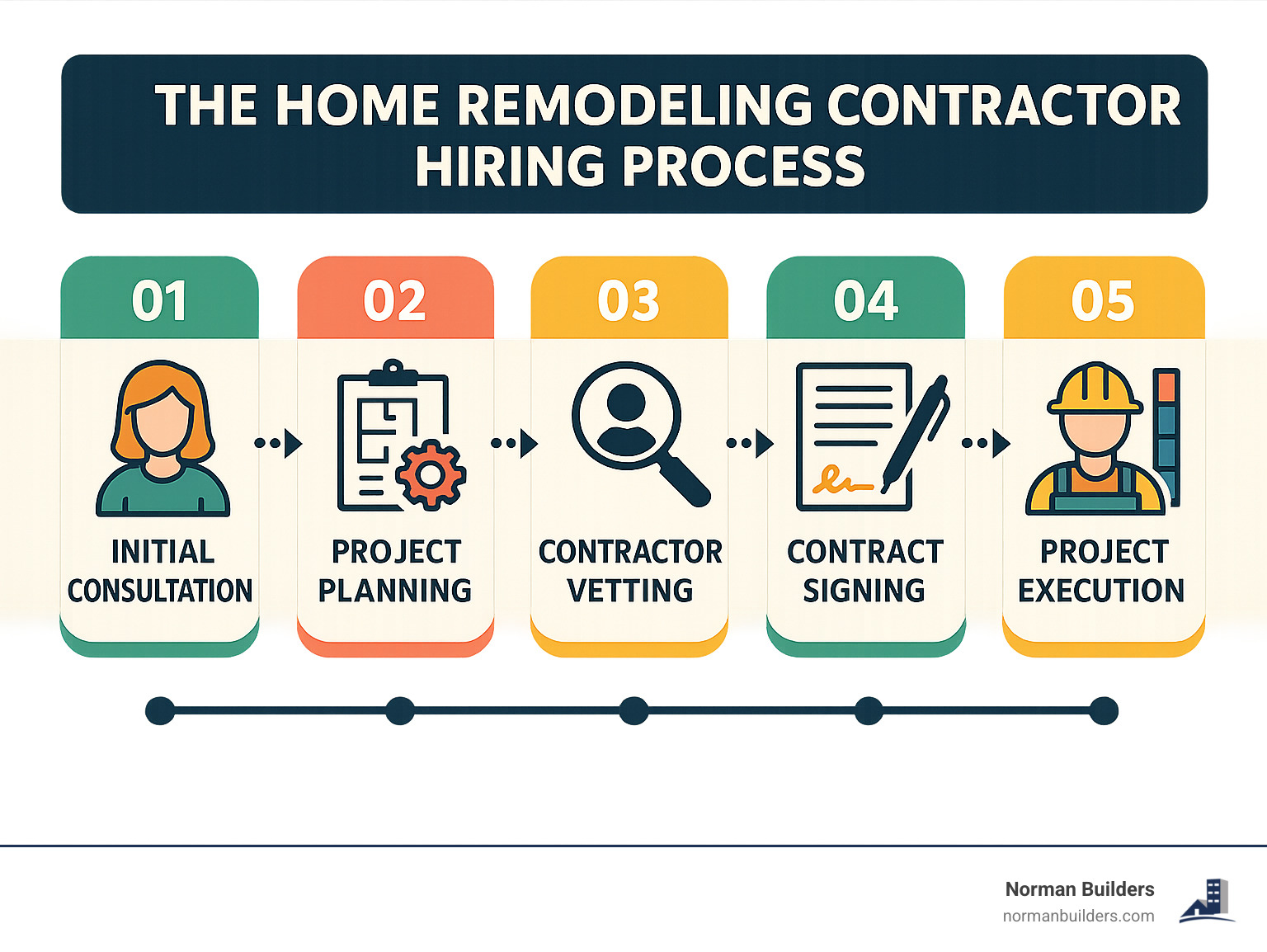
Contractors for home remodeling terms simplified:
– high end home construction
– home renovation companies near me
– luxury home remodeling
Contractors for home remodeling are the maestros who orchestrate your renovation symphony. They transform your Pinterest boards and magazine clippings into the home you’ve been dreaming about. But what exactly does a day in their life look like?
When you hire a remodeling contractor, you’re bringing on a professional who manages everything from the initial blueprints to the final paint touch-ups. They’re juggling project timelines, balancing budgets, hiring skilled tradespeople, sourcing quality materials, pulling permits, keeping you in the loop, and solving the inevitable surprises that lurk behind old walls.
The contracting world offers different flavors of professionals depending on your needs. General contractors act as your renovation quarterback, coordinating all the players needed for your project. Design-build firms offer one-stop shopping by handling both the creative design and the nuts-and-bolts construction under one roof. For focused projects, specialized contractors bring deep expertise in specific areas like kitchen changes or bathroom makeovers.

You might be tempted to channel your inner HGTV star and manage your renovation yourself. For hanging a shelf or painting a room, that’s perfectly reasonable. But for anything involving multiple trades or structural changes, there’s wisdom in bringing in the pros.
As one seasoned finish carpenter puts it, “At the end of the day, there is honor in doing a job well done.” This craftsmanship ethos is why quality contractors take such pride in their work—and why their projects stand the test of time.
Contractors for home remodeling bring invaluable advantages to your project. They have the project management expertise to keep your renovation running like a well-oiled machine. Their knowledge of permit navigation helps you avoid the headaches of code violations or stop-work orders. Their industry connections often translate into better pricing and availability for materials and subcontractors. When the unexpected happens (and in remodeling, it always does), their problem-solving skills quickly turn challenges into solutions. And perhaps most importantly, their quality assurance means you won’t be revisiting the same repairs months later.
As one relieved homeowner shared: “It’s worth the extra cost to know that I won’t need to be revisiting the same project 6 months later.” That peace of mind is priceless.
Contractors for home remodeling handle everything from simple updates to dramatic changes. The kitchen often takes center stage as the heart of home renovations. Whether you’re refreshing cabinet fronts or reconfiguring the entire layout with professional-grade appliances, kitchen projects blend beauty with functionality.
Bathroom renovations follow closely behind in popularity. From powder room refreshes to spa-like primary bathroom retreats, these spaces offer big impact in relatively small footprints.
Some homeowners take the comprehensive approach with whole-house renovations, breathing new life into older homes while preserving their unique character. Others focus on expanding their living space through room additions that seamlessly blend with the existing structure.
Smart homeowners also look to underused spaces like basements and attics as opportunities to gain living area without changing their home’s exterior footprint. Meanwhile, energy-efficiency upgrades—from new windows to improved insulation—deliver comfort while lowering utility bills.
One contractor recently shared a success story of completing a kitchen remodel on a tight $10,000 budget by making strategic material choices and reinforcing inexpensive cabinets with extra shims and screws. This kind of professional ingenuity maximizes value regardless of your budget.
For more detailed information about the remodeling process and possibilities, check out our More info about Home Remodeling page.
Please note: Our services are exclusively available in Massachusetts, specifically in Andover, MA, the North Shore, and New Hampshire, covering the Seacoast and Southern NH regions.
Finding the right contractors for home remodeling is a bit like dating – you need to do your homework before committing to a relationship that will impact your home and wallet. The difference between posting proud “after” photos and starring in your own renovation horror story often comes down to how thoroughly you vet potential contractors.

Before you hand over your house keys and a deposit check, take time to verify these essential credentials:
State Licensing serves as the baseline qualification for any legitimate contractor. Requirements vary by state, but most require contractors to be licensed for projects above a certain value. This isn’t just a piece of paper – it means they’ve demonstrated basic competency and knowledge of building codes.
Liability Insurance protects your property if something goes wrong. Imagine a contractor accidentally putting a ladder through your picture window or backing a truck into your garage door. Their liability insurance covers these mishaps so you’re not left holding the bill.
Workers’ Compensation Insurance might seem like their problem, not yours – until a worker falls off your roof and sues you as the property owner. This coverage protects you from liability if someone gets injured while working on your home.
Bonding acts as your safety net if a contractor abandons your half-finished kitchen or fails to pay suppliers (who could then place liens on your property). Think of it as insurance for the contractor’s performance.
Business Stability matters tremendously. A company that’s been renovating homes for 15 years likely has systems in place and a reputation to protect. As one seasoned contractor told me, “Renovating a home is more than a project—it’s a privilege.” The best contractors for home remodeling approach your project with this mindset, treating your home with the respect it deserves.
Don’t just take someone’s word that they’re properly credentialed. Trust, but verify:
Most state licensing boards maintain online databases where you can confirm a contractor’s status in seconds. For New Hampshire contractors, check through the Office of Professional Licensure and Certification.
For insurance certificates, go straight to the source. Request that the contractor’s insurance company send verification directly to you. This prevents the possibility of seeing outdated or altered documents.
Lien releases are your protection against subcontractors filing claims against your property if the general contractor doesn’t pay them. Make these part of your payment schedule – no lien release, no next payment.
The Better Business Bureau can reveal patterns of complaints or unresolved issues. A single complaint isn’t necessarily a deal-breaker (sometimes personalities just clash), but multiple similar complaints suggest a real problem.
Your local building department can be a goldmine of information. A quick call can reveal whether a contractor regularly pulls proper permits and passes inspections, or tries to fly under the radar.
Beyond the paperwork, dig into what previous clients really think:
Google reviews offer unfiltered feedback that can be eye-opening. Search the company name plus “reviews” to find honest assessments from past clients. Pay special attention to how the company responds to negative reviews – do they address concerns professionally or get defensive?
Social proof means talking to actual humans who’ve worked with this contractor. Ask for references from recent clients with projects similar to yours, and actually call them. Ask specific questions about communication style, how they handled surprises, and whether the project stayed on budget.
Onsite visits to completed projects give you the chance to see workmanship up close and perhaps chat with homeowners about their experience. A confident contractor will be happy to arrange this.
Industry reputation matters too. Ask your architect, designer, or even the folks at building supply stores what they know about the contractor. These professionals see behind the scenes and know who pays bills on time and treats subcontractors well.
Online portfolios should showcase a variety of completed projects. Look for work similar to what you’re planning, and notice the details in the photos. Quality contractors proudly display their craftsmanship.
As one satisfied homeowner shared, “We read through verified customer reviews to assess contractor reliability before making our decision.” This simple step helped them find a trustworthy professional who delivered on their promises.
The contractor who will be in your home for weeks or months should feel like someone you can trust and communicate with easily. The right credentials matter, but so does your gut feeling about whether this is someone who respects your home and vision.
More info about Home Remodeling Contractors Near Me
Let’s talk money—the part of remodeling that keeps most homeowners up at night. Understanding the financial landscape will help you steer your renovation journey with confidence. Contractors for home remodeling can be your financial guides, helping you develop realistic budgets that align with your dreams and the current market realities.

Home remodeling costs are like snowflakes—no two are exactly alike. The final price tag depends on your project’s scope, material choices, location, and even the time of year. Here are the typical ranges for common projects based on national internet data averages (not Norman Builders pricing):
Whole Home Renovations tend to run between $50,000 and $150,000+, though complex projects in historic homes can easily exceed this range. Kitchen Remodels, the most popular renovation project, typically cost between $12,000 and $40,000, while Bathroom Renovations range from $6,000 to $25,000. If you’re looking to expand your living space, Room Additions generally fall between $20,000 and $75,000.
Converting underused spaces can be a cost-effective way to gain square footage—Basement Conversions typically run $10,000 to $50,000, while Attic Conversions range from $8,000 to $45,000.
Here in New England, particularly in the Merrimack Valley and Southern New Hampshire where Norman Builders operates, costs can differ from national averages due to our regional labor rates, material availability, and unique architectural considerations.
The savvy homeowner always includes a contingency fund of 10-20 % for those “uh-oh” moments that inevitably arise during renovation. As one of our contractors recently shared with a client, “Accept and budget for unavoidable costs like weather delays or hidden damage. It’s not a matter of if you’ll find something unexpected behind those walls—it’s a matter of what and how much.”
Working with experienced contractors for home remodeling can help you make your renovation dollars go further. I’ve seen remarkable changes happen on modest budgets when homeowners and contractors collaborate creatively.
Consider reusing materials where possible—those solid wood cabinets might just need new doors or hardware rather than complete replacement. That original hardwood flooring hiding under your carpet? It might be salvageable with some refinishing.
Many homeowners find success with phased work, breaking larger renovations into manageable chunks that can be completed as budget allows. This approach lets you spread costs over time while still moving toward your ultimate vision.
Don’t overlook potential tax credits and rebates for energy-efficient upgrades. Your new windows, insulation, or HVAC system might qualify for incentives that effectively discount your project cost. For the latest information on available energy-efficiency incentives, check out the Department of Energy’s tax credits guide.
Value engineering is a contractor’s term for finding smart alternatives that achieve similar results without breaking the bank. For instance, one of our recent kitchen projects used a quartz countertop on the island (the visual focal point) but more affordable solid surface material on perimeter counters.
A contractor I know recently completed a kitchen remodel for around $10,000 by making strategic choices: “I used inexpensive stock cabinets and reinforced them with shims and additional screws. For countertops, maple butcher-block at $16 per square foot provided a warm, durable surface at a fraction of stone prices.”
Unless you’ve been squirreling away cash for years, you’ll likely need financing for your remodeling project. Fortunately, several options can help turn your renovation dreams into reality.
Home Equity Loans or Lines of Credit (HELOCs) are popular choices that use your home’s equity as collateral. These typically offer lower interest rates than other financing options, and in some cases, the interest may be tax-deductible (consult your tax advisor).
For homeowners buying fixer-uppers, FHA 203(k) Rehabilitation Loans can be a game-changer, combining home purchase and renovation costs into a single mortgage with a lower down payment than conventional loans.
Personal loans offer a quicker approval process than equity-based financing, though usually at higher interest rates. These unsecured loans are based on your credit score and income rather than your home’s value.
Some contractors for home remodeling offer financing options through partnerships with lenders, which can streamline the process and sometimes provide competitive terms.
For smaller projects, credit cards might be appropriate, especially if you can take advantage of 0 % introductory rates and pay off the balance before higher interest kicks in.
“Discuss material costs and sourcing to find potential savings,” advises Ryan Norman of Norman Builders. “We often have access to trade discounts or can suggest alternative materials that provide the look you want at a price point that works for your budget.”
The most important financial advice? Be honest with yourself—and your contractor—about what you can truly afford. The best contractors for home remodeling will help you maximize value within your budget rather than pushing you toward options that stretch your finances to the breaking point.
Please note: Our services are exclusively available in Massachusetts, specifically in Andover, MA, the North Shore, and New Hampshire, covering the Seacoast and Southern NH regions.
Understanding the typical timeline for remodeling projects helps set realistic expectations. Contractors for home remodeling follow a structured process that includes multiple phases, turning your vision into reality through careful planning and execution.

The remodeling journey follows a predictable path, though the duration varies based on your project’s complexity. A small bathroom refresh might wrap up in just a few weeks, while that dream whole-home change could be your companion for 6-12 months or more.
It all begins with the planning phase, typically lasting 2-8 weeks, where you’ll have initial consultations, develop designs, select materials, and refine your budget. If your project requires architectural plans, the design phase extends another 2-6 weeks as drawings are created and refined to capture your vision perfectly.
Before hammers start swinging, your contractors for home remodeling will handle the often-frustrating permitting process, which can take 1-6 weeks depending on your local building department’s efficiency. As one contractor told me with a wink, “I’ve become best friends with the permit clerks over the years—it pays to be nice to the folks who can move your paperwork to the top of the pile!”
Once permits are in hand, the physical change begins with demolition (1-2 weeks), followed by rough-in work (2-4 weeks) where the bones of your project—framing, electrical, plumbing, and HVAC—are installed. Throughout this process, various inspections ensure everything meets code requirements.
The project really starts to take shape during the finishes phase (2-8 weeks), when drywall, flooring, cabinets, countertops, and fixtures are installed, and paint and trim applied. Finally, you’ll conduct a final walk-through to create a punch list, followed by 1-2 weeks of project completion work to address any remaining items.
“Expect the unexpected,” advises Ryan Norman of Norman Builders. “Even with the best planning, we might find hidden issues once walls are opened. The key is maintaining open communication about how these surprises affect timelines and budgets.”
The permit process can be one of the most intimidating aspects of remodeling for homeowners, but quality contractors for home remodeling handle this bureaucratic maze on your behalf.
Your contractor will prepare and submit detailed permit applications with all required documentation, including plans and specifications custom to your local building department’s requirements. They ensure all work meets or exceeds building code requirements, which establish minimum standards for safety and quality.
Throughout your project, various inspections verify compliance with these codes. A typical project might require foundation, framing, electrical, plumbing, mechanical, and final inspections, each representing a milestone in your renovation journey.
Beyond building codes, your contractor steers local zoning ordinances that dictate what can be built where. These regulations can be particularly strict in established neighborhoods or near property lines. And if you’re renovating an older home or one in a historic district, your contractor will manage any historical considerations and additional approvals required to preserve architectural character.
“When working with older homes in New Hampshire, we often match new drywall thickness to existing plaster thickness,” shares a Norman Builders craftsman. “It’s these small details that maintain a home’s character while modernizing its functionality.”
For more information about navigating the specific requirements in the Exeter area, check out our guide to Remodeling Home Exeter NH.
The difference between a stress-inducing renovation and a smooth change often comes down to project management. Successful remodeling projects stay on schedule through thoughtful planning and consistent communication.
Milestone planning provides the backbone of your project timeline. Rather than viewing your renovation as one massive undertaking, your contractor breaks it into clear phases with specific completion targets. These milestones create natural checkpoints to assess progress and make adjustments if needed.
Weekly check-ins between you and your contractor keep everyone informed about progress and upcoming work. These regular touchpoints provide opportunities to address questions and make decisions before they impact the schedule.
When changes arise—and they almost always do—professional contractors for home remodeling use formal change order management to document modifications to the original scope. These change orders clearly address schedule and budget impacts, preventing misunderstandings later.
Smart contractors practice material pre-ordering, identifying and securing long-lead items early to prevent delays. They’ll also provide clear decision timelines so you know exactly when selections must be made to maintain momentum.
“We can’t control the weather, but we can plan around it,” notes a seasoned contractor. “Having contingency plans for common delays like rain interruptions or material backorders is just part of efficient project management.”
By understanding the typical timeline and processes involved in home remodeling, you’ll be better prepared for the journey ahead, with realistic expectations about how long your project will take from the first design meeting to the final walk-through.
Please note: Our services are exclusively available in Massachusetts, specifically in Andover, MA, the North Shore, and New Hampshire, covering the Seacoast and Southern NH regions.
The foundation of a successful relationship with contractors for home remodeling is proper documentation. A well-crafted contract isn’t just a formality—it’s your roadmap and safety net for the entire project.

Think of your remodeling contract as the instruction manual for your project. It should spell out exactly what you’re getting, when you’ll get it, and what happens if things don’t go according to plan. A thorough contract includes a detailed scope of work that precisely outlines what will (and won’t) be done, including specific materials, products, and finishes.
Your payment schedule should be clearly defined and tied to project milestones rather than calendar dates. This protects you from paying for work that hasn’t been completed and gives your contractor the cash flow they need to keep your project moving forward.
“I always tell my clients to read every word of their contract,” says Ryan Norman of Norman Builders. “Understanding what you’re signing is the best way to ensure your project meets your expectations.”
Realistic start and completion dates give you a timeline to plan around, while a well-defined change order process prevents misunderstandings when you decide to upgrade those countertops or add recessed lighting. And because even the best-planned projects can hit snags, your contract should include a dispute resolution procedure that outlines how disagreements will be handled.
Don’t overlook the importance of mechanics lien information. This protects your property from claims by subcontractors or suppliers if your general contractor fails to pay them. Similarly, your contract should detail the workmanship warranty (typically 1-5 years) and include documentation for manufacturer warranties on products and materials.
Beyond the basics, make sure your contract with contractors for home remodeling includes several key provisions that can save you headaches down the road.
A proper draw schedule ensures payments are tied to completion of specific phases, not arbitrary dates or percentages. “Never pay more than 10% upfront,” advises one industry veteran. “Your payment schedule should reflect actual progress on your project.”
Your contract should require proof of insurance throughout the project. This protects you if a worker is injured on your property or if your home is damaged during construction. Similarly, cleanup requirements should be spelled out in detail—both for daily tidying and final cleaning when the project wraps up.
Be clear about permit responsibility. Most reputable contractors handle permitting as part of their service, but your contract should specify who obtains and pays for required permits. Likewise, your contract should list all subcontractors who will work on your project and verify their insurance coverage.
Material specifications might seem tedious, but detailed descriptions of all materials—including brand names, model numbers, colors, and finishes—prevent misunderstandings and substitutions. And don’t forget cancellation terms that outline conditions under which either party can terminate the contract and any associated penalties or refunds.
“The most successful projects I’ve managed always had crystal-clear contracts,” notes a contractor with 20 years of experience. “When everyone knows exactly what to expect, we can focus on creating beautiful spaces instead of resolving misunderstandings.”
After investing in your home, you want assurance that your improvements will stand the test of time. That’s where warranties and guarantees come in.
Materials vs. labor warranties cover different aspects of your project. Manufacturer warranties handle product defects, while contractor warranties address workmanship issues. Make sure you understand the distinction and what each covers.
Some warranties can follow your home to new owners if you decide to sell, adding value to your property. Ask about transferability when reviewing warranty terms.
The best contractors for home remodeling often offer lifetime guarantees on certain aspects of their work. This reflects their confidence in quality and commitment to customer satisfaction. As one homeowner shared, “When our contractor offered a lifetime guarantee on their tile work, I knew they were confident in their craftsmanship.”
Be aware of warranty limitations that might void your coverage, such as improper maintenance or unauthorized modifications. And keep all warranty documentation in a safe, accessible place—you might not need it for years, but when you do, you’ll be glad you have it.
At Norman Builders, we believe in standing behind our work with robust warranties that give our clients peace of mind. Our projects aren’t just about creating beautiful spaces—they’re about delivering lasting value through quality craftsmanship.
For homeowners considering luxury renovations, our approach to documentation and warranties is especially important. Learn more about our premium approach at Luxury Home Remodeling.
The paperwork might not be the most exciting part of your remodeling journey, but it’s arguably the most important for ensuring a smooth process and lasting results.
Communication isn’t just nice to have—it’s essential for your remodeling success. The best contractors for home remodeling make staying in touch as much a priority as their craftsmanship.

Every successful renovation begins with a thorough kick-off meeting where you’ll discuss not just the work itself, but how you’ll stay connected throughout the process. Many modern contractors offer dedicated project portals where you can track progress, approve selections, and message your team without playing phone tag.
“We send clients progress photos every Friday,” shares one contractor. “Even when there’s not dramatic visual change, it helps them feel connected to what’s happening in their home.” These regular visual updates are especially valuable if you’re living elsewhere during construction.
The rhythm of updates should match your project’s pace—daily check-ins during critical phases, weekly summaries as work progresses, and immediate alerts for any findies or decisions needed. Communication goes both ways—your contractor will need timely responses from you about selections and approvals to keep things moving forward.
“Maintaining transparent collaboration isn’t just about preventing problems,” explains a veteran builder. “It’s about creating the space for creative solutions when unexpected challenges arise—and they always do in remodeling.”
Not all contractors for home remodeling are created equal, and recognizing warning signs early can save you tremendous headaches.
Watch out for contractors who can’t produce proper licensing and insurance documents. This isn’t just paperwork—it’s your protection. Similarly, be wary of vague bids that don’t break down costs. A legitimate estimate should detail materials, labor, and other expenses, not just offer a bottom-line figure.
High-pressure sales tactics are another warning signal. Quality contractors understand you need time to make important decisions about your home. They’ll guide you through options without rushing your choice.
“I once had clients who’d paid a previous contractor 50% upfront,” recalls a remodeler. “He disappeared after demolition, leaving them with an unlivable kitchen.” Protect yourself by never paying more than 10-15% of the total project cost before work begins.
Be especially cautious of contractors who suggest working without proper permits. While it might seem like a money-saving shortcut, unpermitted work can create legal issues, complicate home sales, and even compromise safety.
Pay attention to how responsive a contractor is during the bidding process. If they’re difficult to reach before you’ve signed a contract, this problem will only intensify once work is underway. And always check references—quality professionals have a trail of satisfied clients eager to recommend them.
The final signatures on your punch list aren’t really the end of your remodeling journey—they mark the beginning of living with and maintaining your improved home.
Smart homeowners create a maintenance schedule based on manufacturer recommendations for different surfaces and materials. That gorgeous quartz countertop, engineered hardwood floor, or custom tile shower each has specific care requirements to maintain both beauty and warranty coverage.
Keep a digital or physical maintenance log documenting when you perform regular upkeep and any repairs. This record becomes invaluable when selling your home or making warranty claims. Speaking of warranties, store all this documentation in one accessible place, along with your contractor’s contact information for any future questions.
“I recommend clients do seasonal walk-throughs of their remodeled spaces,” suggests one thoughtful contractor. “Check for any signs of settling, moisture issues, or wear that might need attention before they become larger problems.”
Don’t forget to keep small amounts of your paint colors, grout, and other finishing materials for inevitable touch-ups. Even the best-executed remodels will eventually need minor repairs, and matching these elements later can be challenging.
The care you invest in maintaining your newly remodeled space doesn’t just preserve its beauty—it protects the significant investment you’ve made in your home. With proper attention, the work of contractors for home remodeling can continue bringing you joy for decades to come.
Please note: Our services are exclusively available in Massachusetts, specifically in Andover, MA, the North Shore, and New Hampshire, covering the Seacoast and Southern NH regions.
Shopping around for contractors for home remodeling is a bit like dating – you want to meet a few prospects before settling down for a long-term relationship. Most home improvement experts suggest collecting at least three different bids before making your decision.
These multiple estimates do more than just compare prices. They give you a feel for how different contractors approach your project, their communication style, and their understanding of your vision. When reviewing these bids, dig deeper than just the bottom line. Pay attention to the detailed scope of work, material quality, projected timelines, payment structures, and warranty coverage.
The lowest bid rarely represents the best value. As one of our clients wisely shared after completing their kitchen renovation, “Paying a bit more upfront for quality craftsmanship saved us from dealing with repairs and disappointment down the road.” That extra 10-15% might be the difference between a project that lasts for decades versus one that needs attention after just a few years.
In home remodeling, permits are like insurance policies—nobody enjoys dealing with them, but they provide crucial protection. Professional contractors for home remodeling typically handle permit applications as part of their service package. They understand the local building codes, have relationships with inspectors, and know exactly what documentation is needed.
That said, as the property owner, you bear the ultimate responsibility for ensuring your project meets all legal requirements. Your contract should clearly spell out who will apply for permits, who covers the associated fees, who schedules the required inspections, and who addresses any code compliance issues that arise.
One contractor with 20+ years of experience put it perfectly: “Navigating the permit maze is one of the most valuable services we provide. It protects homeowners from potential fines, ensures their home remains insurable, and guarantees the work meets safety standards that protect their family.”
Even with the best planning and intentions, disagreements can surface during a renovation. Maybe there’s confusion about a design detail, unexpected issues behind a wall, or a misunderstanding about material selections. Your contract with contractors for home remodeling should include a clear dispute resolution process that typically follows these steps:
First, address concerns directly with your contractor through honest conversation, followed by written documentation of what was discussed and agreed upon. Most issues can be resolved at this stage with clear communication.
If direct talks don’t solve the problem, consider bringing in a mediator—a neutral third party who can help facilitate a resolution that works for everyone. This option keeps things less formal while still moving toward a solution.
For more complex disputes, arbitration provides a structured process where both sides present their case to an arbitrator who makes a binding decision. This approach is usually faster and less expensive than going to court.
Litigation should be your absolute last resort. The time, expense, and stress of court proceedings rarely justify the outcome, especially for typical remodeling disputes.
The best approach is preventive: “Maintaining open, regular communication about timelines, expectations, and changes as they arise” creates an environment where small issues get addressed before they grow into disputes. A good contractor will welcome these conversations rather than avoid them.
Please note: Our services are exclusively available in Massachusetts, specifically in Andover, MA, the North Shore, and New Hampshire, covering the Seacoast and Southern NH regions.
Finding the right contractors for home remodeling takes time and research, but the effort pays dividends in a smoother renovation experience and superior results. When homeowners and contractors build partnerships based on mutual respect, clear communication, and shared expectations, magic happens in the change of your living spaces.
As you start on your remodeling journey, remember these essential insights we’ve covered:
Thoroughly vetting potential contractors isn’t just due diligence—it’s your insurance policy against renovation nightmares. Take the time to check licenses, insurance, references, and portfolios before signing any contracts.
The planning phase might feel tedious, but it’s actually where the foundation of success is laid. Investing time in detailed planning and material selection before the first hammer swings will save you countless headaches down the road.
Get everything in writing! Those comprehensive contracts aren’t just paperwork—they’re the roadmap that guides your entire project and protects everyone involved when questions arise.
Communication isn’t just important—it’s everything. The most successful renovations maintain open dialogue from first meeting to final walkthrough, with both homeowners and contractors staying engaged throughout the process.
Even with perfect planning, surprises happen in remodeling. Preparing for the unexpected with contingency funds and flexible timelines isn’t pessimistic—it’s realistic and wise.
At Norman Builders, we see each remodeling project as a unique opportunity to transform our clients’ homes and improve their daily lives. Our team brings over 15 years of experience in the Merrimack Valley, North Shore, Seacoast, and Southern NH areas, delivering exceptional craftsmanship and personalized service that turns renovation dreams into lived realities.
Whether you’re envisioning a kitchen that makes cooking a joy again, a bathroom that feels like a private spa retreat, or a whole-house remodel that better suits your family’s evolving needs, we’re here to guide you through the process with expertise and integrity. Explore our home remodeling ideas for inspiration, or reach out to discuss how we might bring your vision to life.
The journey to your newly remodeled home begins with finding the right partner—a contractor who listens carefully to your goals, respects your budget constraints, and delivers quality workmanship built to stand the test of time. We’d be honored to be that partner for your next project.
Please note: Our services are exclusively available in Massachusetts, specifically in Andover, MA, the North Shore, and New Hampshire, covering the Seacoast and Southern NH regions.

We specialize in high-quality home construction and remodeling services, delivering exceptional craftsmanship tailored to meet your vision and needs. Whether you’re planning a renovation, new construction, or a custom remodel, our experienced team is committed to exceeding expectations with precision, attention to detail, and reliable service.
Our service area includes the Merrimack Valley, North Shore, Seacoast, and Southern NH Areas. We take pride in the quality of our workmanship and our prompt professionalism.
Contact us today to bring your project to life!