

Contractor design and build is a project delivery method where a single entity handles both the design and construction phases under one contract, streamlining the traditional building process and reducing owner risk.
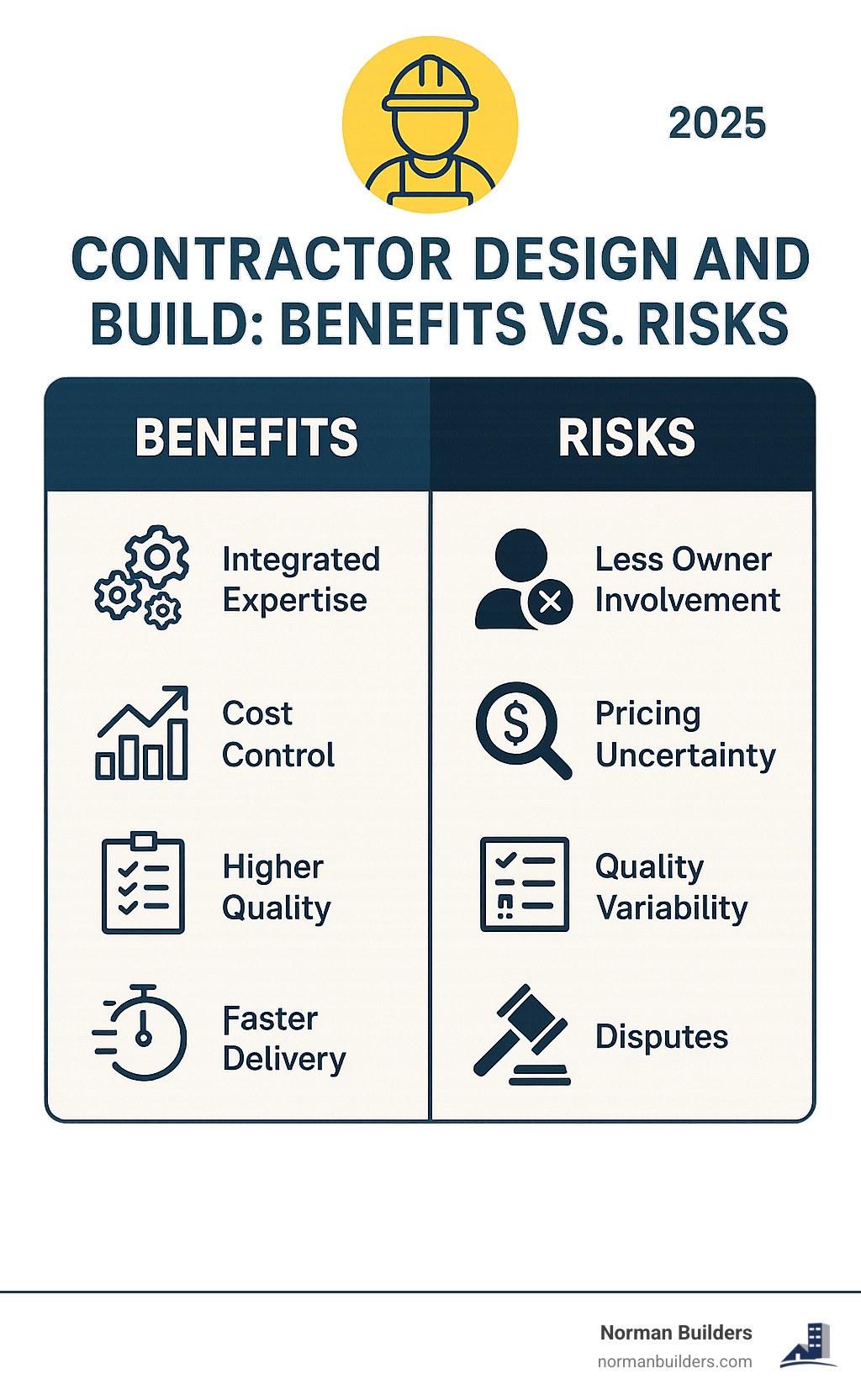
Key Benefits of Contractor Design and Build:
The construction industry is experiencing a major shift. Design-build now represents the fastest-growing project delivery method in the United States, with projections showing it will account for over 47% of construction spending by 2028 – that’s $2.6 trillion in construction volume.
This growth isn’t happening by accident. Homeowners and commercial clients are finding that the traditional approach of hiring separate architects and contractors often leads to finger-pointing, cost overruns, and schedule delays. The contractor design and build model eliminates these pain points by creating a unified team with shared accountability.
The old way: Hire an architect, get plans, bid to contractors, hope everything works out.
The new way: Partner with a design-build contractor who manages everything from concept to completion.
As someone who’s been in the construction industry since 2007, I’ve seen how contractor design and build projects deliver better outcomes for homeowners through improved communication and shared responsibility.
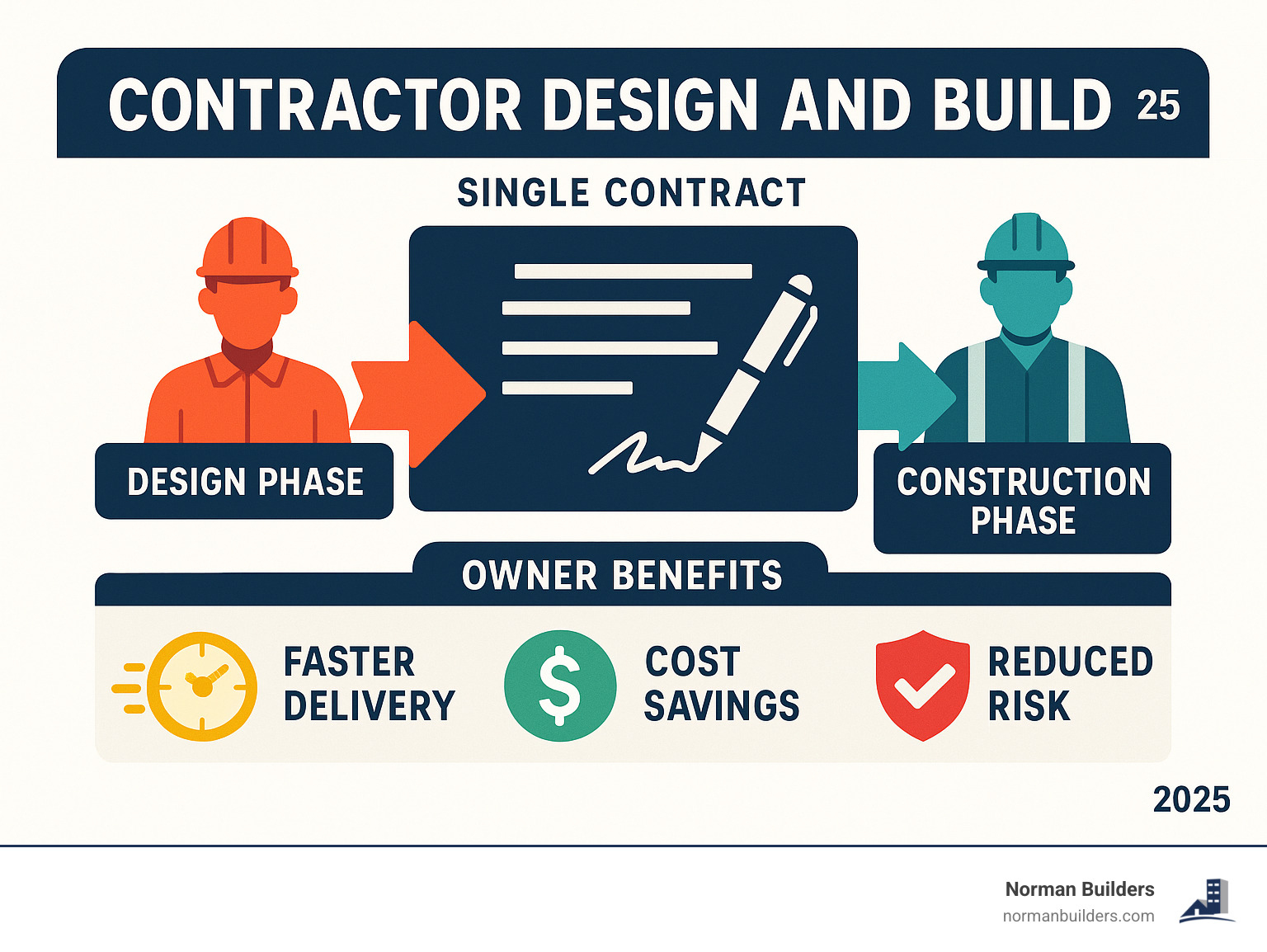
Simple contractor design and build word guide:
Picture this: you’re planning to build your dream home, but instead of juggling phone calls between an architect who designed something beautiful but impractical, and a contractor who keeps saying “that’s not what I would have done,” you work with one team that handles everything. That’s the magic of contractor design and build.
The design-build model brings together creative design and skilled construction under one roof. It’s like having a conversation between your architect and builder that never stops, from the first sketch to the final walkthrough.
What makes this approach so powerful is the single-point responsibility. When problems arise, there’s no finger-pointing between separate companies. The design-build team owns both the vision and the execution, which means they’re motivated to make sure both work together seamlessly.
The collaboration culture that emerges is something special. I’ve watched our designers and builders hash out solutions over coffee that would have taken weeks to resolve through traditional back-and-forth between separate firms.
Risk-sharing happens naturally in this model. Instead of the owner bearing the risk of design and construction conflicts, the design-build team takes on that responsibility. They design with construction realities in mind from day one.
In contractor design and build, the design-builder entity holds complete responsibility for both phases. This is a fundamental shift in how construction projects are managed.
Instead of hiring an architect who creates plans and then hoping a contractor can build them within budget, you’re hiring a team that designs and builds. The architect and engineer work as part of an integrated unit, not as separate entities.
This architect-engineer integration means that when our design team sketches out a custom kitchen island, they’re already thinking about how the plumbing will run, where the electrical outlets need to go, and how the installation will happen.
As a homeowner, you sign one contract with one entity. You have one point of contact and one party responsible for your entire project.
The design-build world offers several approaches, each with its own strengths depending on your project needs.
Architect-led design-build puts the design professional in charge, with construction services supporting the architectural vision. This works well when you’re building something that pushes creative boundaries.
Contractor-led design-build positions the construction company as the lead, with architects and engineers working as part of the construction team. This approach excels when you need practical solutions delivered efficiently.
Progressive design-build offers a middle ground that’s gaining popularity. It lets you work with the design-build team through the design phase, then decide whether to proceed with construction based on the proposed approach and pricing.
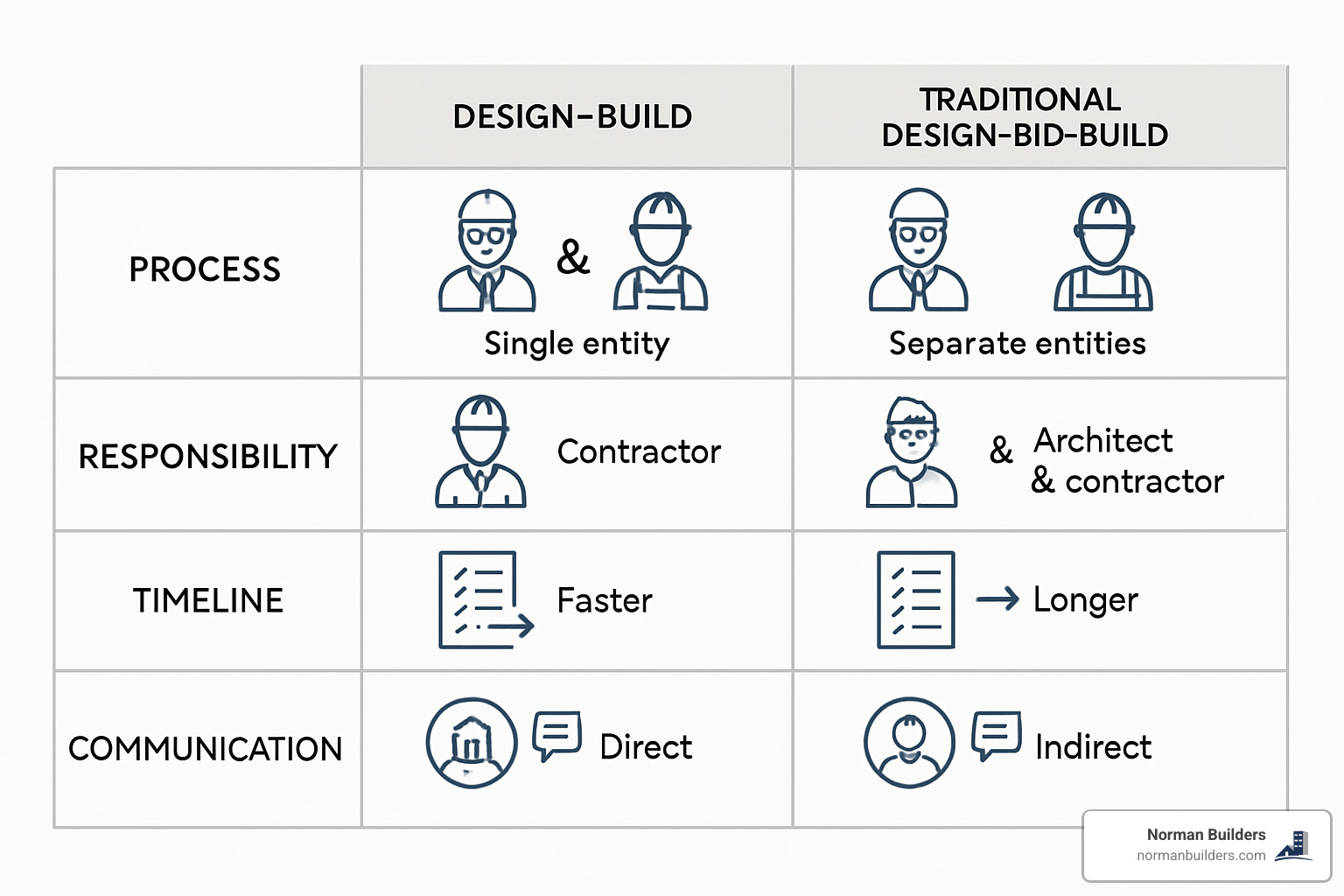
When homeowners first hear about contractor design and build, they often ask: “How is this different from the way we’ve always built things?” The answer reveals why this approach is changing the construction industry.
The traditional design-bid-build method feels familiar because it’s been around for decades. You hire an architect, wait for plans, send those plans to contractors for bids, then hope everything works out. It’s a linear process that seems logical on paper but often creates headaches in real life.
Contractor design and build flips this script entirely. Instead of three separate phases happening one after another, everything happens simultaneously with one integrated team. While traditional projects move step-by-step through design, then bidding, then construction, our approach overlaps these phases in a coordinated dance.
The speed difference is dramatic. Research shows that design-build projects are completed 33.5% faster than traditional methods. But it’s not just about speed – it’s about how that speed is achieved through better collaboration rather than cutting corners.
The construction manager/general contractor model tries to bridge some of these gaps, but it still maintains the fundamental separation between design and construction. You still have multiple contracts, multiple points of responsibility, and the potential for finger-pointing when things go wrong.
Here’s where contractor design and build really shines: it completely changes who’s responsible when problems arise. In traditional delivery, owners often find themselves caught in the middle when the architect and contractor disagree about who’s responsible for a mistake or oversight.
With design-build, that uncomfortable position disappears. We can’t blame the architect for a design error because we’re responsible for both the design and its execution. This single point of responsibility creates powerful incentives for us to get things right the first time.
The numbers back this up. Design-build projects have fewer change orders, less cost growth, and significantly fewer claims than traditional projects. When everyone is on the same team with shared accountability, problems get solved through collaboration rather than litigation.
Budget management in contractor design and build projects operates on a completely different principle than traditional delivery. Instead of crossing your fingers and hoping the construction bids come in close to the architect’s estimate, you get real-time cost feedback throughout the design process.
This early price certainty is possible because the same team responsible for building your project is also creating the design. We know what things cost to build because we’re the ones who will be building them.
Guaranteed Maximum Price (GMP) contracts provide cost certainty while maintaining design flexibility. Lump sum contracts take this further, providing ultimate cost certainty. Cost-plus models work well for complex renovations where existing conditions make it difficult to define the scope precisely upfront.
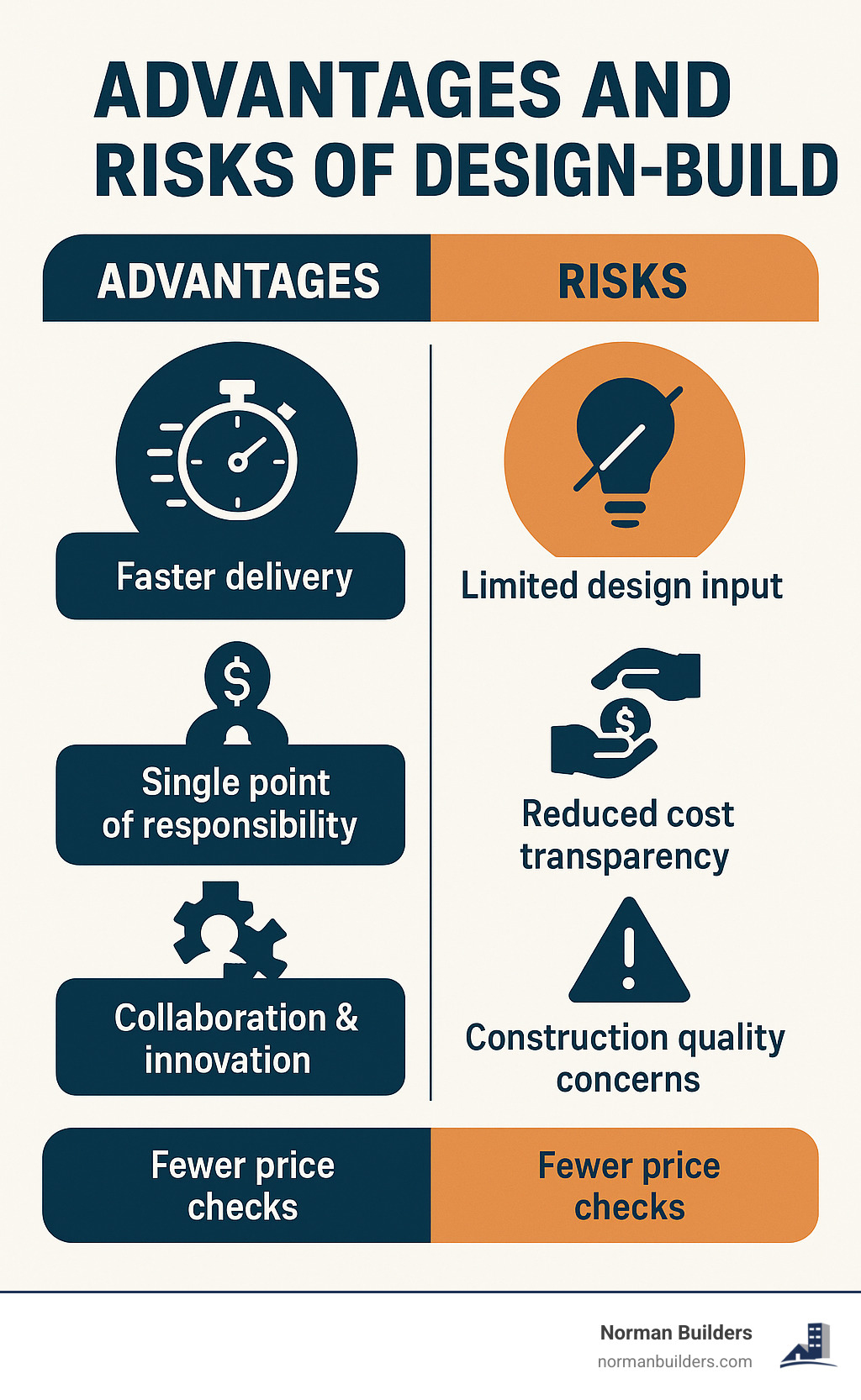
Let’s be honest about contractor design and build – it’s not a magic bullet that solves every construction challenge, but the advantages are compelling when you look at the data and real-world results.
The benefits go beyond just the impressive statistics. What really gets me excited about this approach is how it changes the entire dynamic of building. Instead of hoping your architect and contractor will play nicely together, you get a team that’s been working together from day one.
Value engineering becomes a natural part of the process rather than an afterthought. When our design team suggests using reclaimed beams for a kitchen island, they already know what those beams will cost and how long they’ll take to source.
The scientific research on collaboration benefits backs up what we see in our projects. Teams that work together consistently outperform the traditional “throw it over the wall” approach.
After working with hundreds of homeowners since 2007, I’ve heard the same themes consistently. Here’s what our clients tell us they love most about the design-build approach:
Speed tops the list almost every time. Nobody wants to live through construction longer than necessary, and when design and construction can overlap, projects simply move faster.
Cost savings matter to everyone, but it’s not just about the final price tag. It’s about avoiding those heart-stopping moments when you find your dream kitchen design costs twice what you budgeted.
Quality outcomes improve when the same people designing your project are also responsible for building it. There’s no incentive to create beautiful drawings that are impossible to execute well.
Single point of accountability eliminates the finger-pointing that can make traditional projects so stressful. When something goes wrong, it’s our responsibility, period.
Reduced claims and disputes might not sound exciting, but the industry data shows significantly fewer legal disputes on design-build projects.
Contractor design and build does come with some risks that you should understand before jumping in.
Limited design competition is probably the biggest concern. In traditional delivery, you might get three contractors bidding on the same set of plans. With design-build, you’re typically selecting one team early in the process.
Scope creep can be sneaky in design-build projects. Because design and construction happen simultaneously, it’s easy for the project to gradually expand beyond what you originally planned.
Over-reliance on one entity puts a lot of eggs in one basket. If your design-build contractor doesn’t have the skills or integrity to deliver, you don’t have the same checks and balances.
We take these risks seriously and have developed strategies to address them. Transparency clauses in our contracts give homeowners detailed cost breakdowns and regular progress reports. Independent peer reviews at key milestones provide an outside perspective on design quality and cost reasonableness.
Clear scope definition with formal change order procedures ensures that any modifications require explicit owner approval. Phased contracts can work well for larger projects, allowing homeowners to evaluate our performance during the design phase before committing to the full construction contract.
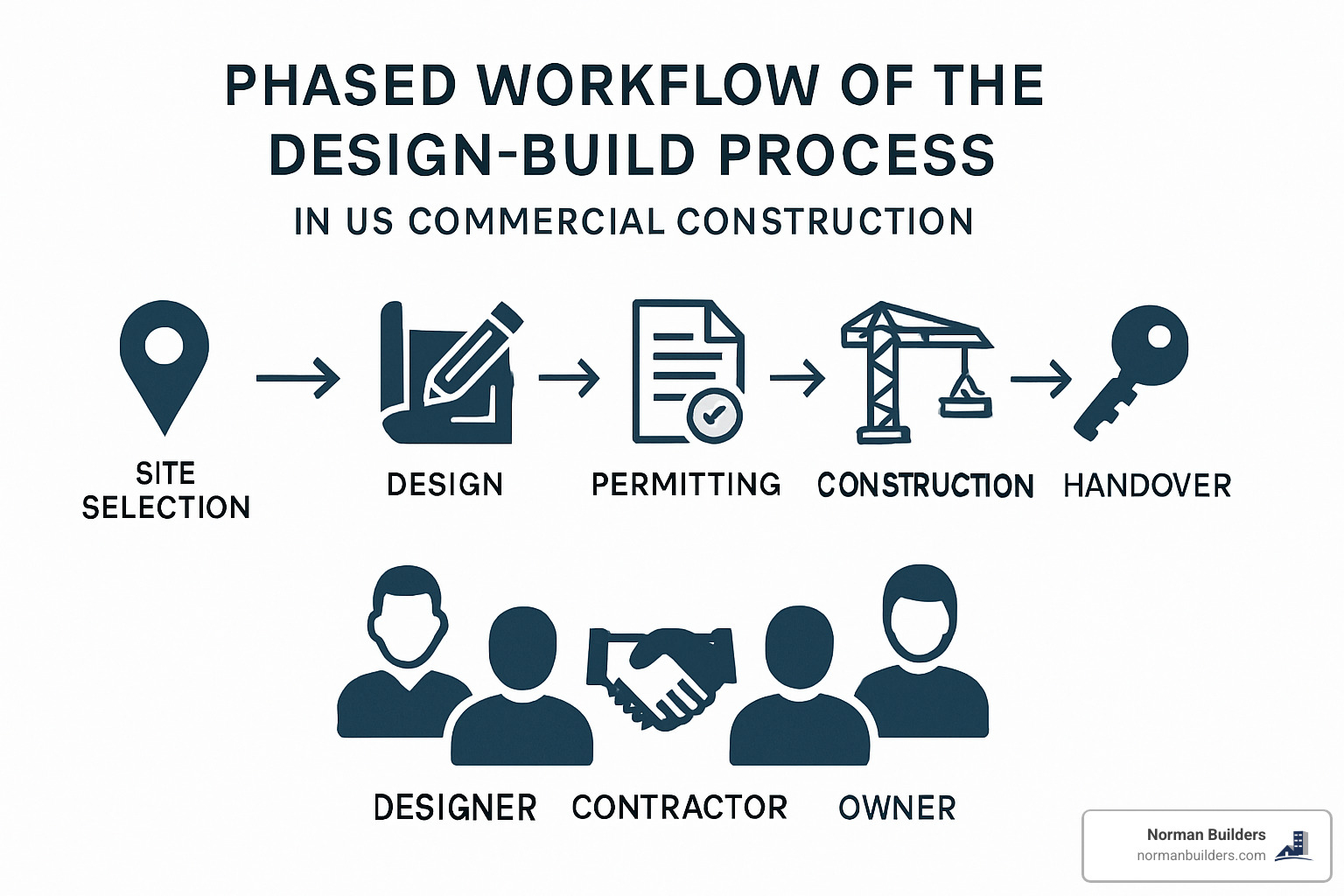
Understanding how a contractor design and build project actually flows from start to finish helps homeowners know what to expect. After working on projects throughout the Merrimack Valley, North Shore, and Southern New Hampshire since 2007, we’ve refined our design-build process to maximize collaboration while keeping projects moving forward smoothly.
The magic happens in how these phases overlap and inform each other. Unlike traditional projects where design happens first and construction planning comes later, we’re thinking about both simultaneously from day one.
Site selection and feasibility kicks off every project, even if you already own your lot. We evaluate soil conditions, zoning requirements, and utility availability with fresh eyes. Having construction expertise involved from the very beginning helps spot potential challenges that might not be obvious to architects working alone.
Concept design and budget development happen hand-in-hand during the next phase. While our design team sketches initial ideas, our construction team develops preliminary budgets. This isn’t just ballpark estimating – we’re already thinking about specific materials, labor requirements, and local market conditions.
Design development and estimating get more detailed as we refine the vision. Every design decision gets immediate cost feedback. Want to upgrade to hardwood floors throughout? We can tell you exactly what that means for your budget.
Permitting and final design flow smoothly because we’re managing both simultaneously. Our experience with local building departments in Massachusetts and New Hampshire helps streamline approvals.
Construction and commissioning begin with a team that’s already intimately familiar with every detail of the project. There’s no learning curve because the people building your home are the same people who designed it.
Change management in contractor design and build projects feels completely different from traditional construction. Instead of formal change orders that often become contentious negotiations, we use an integrated approach that treats changes as natural parts of the building process.
Design contingency gets built into both our design approach and budget planning. We know that homeowners will want to make adjustments as they see their vision taking shape.
Our integrated change log captures every potential modification and evaluates it through the lens of both design and construction. When a homeowner wants to move a wall or upgrade a fixture, we can immediately assess how that affects structural requirements, electrical systems, plumbing, and scheduling.
Real-time pricing becomes possible because we’re handling both design and construction under one roof. Instead of waiting days or weeks for change order pricing, we can provide immediate cost feedback on proposed modifications.
Value engineering in our contractor design and build approach happens continuously rather than as a separate phase that feels like cost-cutting. We conduct regular sessions where architects, engineers, and construction professionals collaborate to optimize every aspect of the design.
These multi-discipline sessions focus on lifecycle cost rather than just upfront expenses. We might recommend investing more in insulation to reduce long-term energy costs, or suggest a different structural system that’s more efficient to build and maintain.
The beauty of this approach is that value engineering happens early when changes are easy and inexpensive to implement, rather than during construction when modifications become disruptive and costly.
Choosing your contractor design and build team feels a bit like choosing a spouse – you’re committing to a long-term relationship that will shape a major part of your life. Unlike traditional projects where you can evaluate the architect and contractor separately, you’re making one decision that affects every aspect of your project.
The Design Build Institute of America recommends qualifications-based selection rather than simply choosing the lowest bidder. Think of it this way: you wouldn’t choose a surgeon based on who charges the least. The same logic applies to your contractor design and build team.
DBIA credentials matter because they indicate a commitment to the design-build process and ongoing education. But credentials are just the starting point. What really matters is how the team communicates, their experience with projects like yours, and whether you feel comfortable with them.
During our initial conversations with potential clients, we focus heavily on communication style. Building a home or completing a major renovation involves hundreds of decisions, and you need a team that explains things clearly, listens to your concerns, and keeps you informed throughout the process.
When evaluating design-build contractors, we recommend asking these essential questions:
Contractor design and build isn’t the right choice for every project, and honest contractors will tell you that upfront. It works best when certain conditions align with your situation and goals.
Project size matters. While design-build can work for small projects, the benefits become more pronounced with larger, more complex undertakings. A simple bathroom renovation might not benefit as much from integration as a whole-house renovation or new home construction.
Complexity is another key factor. Projects that require close coordination between design and construction – like homes with challenging sites, complex mechanical systems, or unusual architectural features – benefit significantly from having everyone on the same team.
Schedule pressures make design-build particularly attractive. If you need to move quickly, the ability to overlap design and construction activities can save months.
After nearly two decades in this business, we’ve learned to spot the warning signs that indicate a design-build proposal might not be what it seems.
Unbalanced fees are a major red flag. If the design fee seems too low compared to industry standards, it might indicate that design will be shortchanged, or that costs will be made up elsewhere in the project.
Vague allowances for items like fixtures, finishes, and appliances should make you nervous. Allowances should be clearly defined and adequate for your expectations.
Missing design hours in the proposal suggest the team doesn’t understand the design process. The proposal should include adequate time for design development, revisions, and owner input.
When homeowners ask about costs, I always start with a reality check: contractor design and build projects can range anywhere from $150 to $500 per square foot for custom homes, with luxury projects reaching $1,500 per square foot or more. These figures come from industry data and internet research, not our actual pricing.
I know that’s a huge range, but it reflects the enormous differences between projects. A straightforward custom home with standard finishes might fall toward the lower end, while a luxury home with premium materials and complex systems could be at the high end.
Here’s what I find interesting though – design-build projects often deliver better value than traditional delivery methods, even when the upfront costs look similar. The integration of design and construction typically means fewer surprise costs, better budget control, and higher quality outcomes that save money over time.
After working in the Merrimack Valley and Southern New Hampshire since 2007, I’ve seen contractor design and build work exceptionally well for certain types of projects.
Custom homes are probably the sweet spot for this approach. When you’re creating something unique that reflects your family’s lifestyle, having the design and construction teams work together from the start makes all the difference.
Whole house renovations also benefit tremendously from integrated delivery. These projects are complex puzzles where you’re working within existing structures, dealing with surprises, and trying to blend old with new.
Fast-track projects are another natural fit. When time is important – maybe you need to move by a certain date – the ability to overlap design and construction phases can shave months off your timeline.
This is one of the biggest misconceptions about contractor design and build – people worry they’re giving up control over the design. The truth is exactly the opposite.
Design-build is actually more collaborative than traditional delivery, not less. The difference is that you’re working with an integrated team rather than trying to coordinate between separate professionals who might have different priorities.
We conduct regular design workshops where you can review progress, provide feedback, and make refinements. Most design-build contracts include owner approval milestones at key phases – schematic design, design development, and construction documents.
The real advantage comes when you want to make changes. Instead of wondering how your architect and contractor will handle modifications, you get immediate feedback on cost and schedule implications.
The construction industry is changing, and contractor design and build is leading that change. What started as a way to solve the age-old problem of architects and contractors pointing fingers at each other has evolved into something much more powerful – a collaborative approach that consistently delivers better results for homeowners.
Think about it: projects that finish faster, cost less, and have fewer headaches along the way. That’s not just marketing talk – those are the real outcomes we see when design and construction teams work together from day one.
The numbers tell part of the story. Contractor design and build projects deliver 33.5% faster completion times and 6.1% cost savings compared to traditional methods. But the real story is in what those numbers mean for your daily life during construction. Instead of sleepless nights wondering if your architect and contractor are on the same page, you get to focus on the fun stuff – picking out that perfect tile or watching your vision come to life.
At Norman Builders, we’ve been refining our approach to contractor design and build since 2007. Every project teaches us something new about how to make the process smoother for our clients. Whether it’s a custom home in Andover or a whole house renovation on the North Shore, we’ve learned that success comes from treating every project as a true partnership.
The future looks bright for integrated construction delivery. As more homeowners find the benefits of having one team handle everything from initial sketches to final walkthrough, we expect this approach to become the standard rather than the exception.
If you’re planning a custom home or major renovation, contractor design and build might be exactly what you need to turn your dreams into reality without the typical construction stress. The collaborative approach eliminates many of the traditional headaches while often delivering better results in less time.
Ready to explore how this approach could work for your project? Our comprehensive guide to Design Build Construction provides even more detail about the process and showcases examples of how we’ve helped homeowners throughout our service area create the homes they’ve always wanted.
The old way of building – with its separate contracts, finger-pointing, and inevitable surprises – doesn’t have to be your way. There’s a better path forward, and it starts with choosing the right team to guide you through it.
Please note: Our services are exclusively available in Massachusetts, specifically in Andover, MA, the North Shore, and New Hampshire, covering the Seacoast and Southern NH regions.

We specialize in high-quality home construction and remodeling services, delivering exceptional craftsmanship tailored to meet your vision and needs. Whether you’re planning a renovation, new construction, or a custom remodel, our experienced team is committed to exceeding expectations with precision, attention to detail, and reliable service.
Our service area includes the Merrimack Valley, North Shore, Seacoast, and Southern NH Areas. We take pride in the quality of our workmanship and our prompt professionalism.
Contact us today to bring your project to life!